

- Joint Commission accredited
- Two AZ centers
- Ages 12-17
- Admissions 24/7
Residential treatment for teen self-harm in Arizona.
Self-harm is your teen coping the only way they can right now, and that can change. Joint Commission-accredited residential care built on skills therapy for teens who cut or self-injure, ages 12 to 17. Two Phoenix-metro centers, serving families statewide.
- Free & confidential · No obligation · (480) 485-3424
- 4.7 Google · 34 reviews
- AZDHS-licensed residential facility
- Most major private insurance accepted
- Free consultation
- Counselor online now
Talk with a licensed counselor
Wherever in Arizona you're calling from, share where to reach you and a licensed admissions counselor calls back, usually within minutes. We'll talk through fit, coverage, and next steps. No pressure.
- It's now where you are · typical callback under 10 minutes.
- Secure, private, and HIPAA-protected. By submitting you agree to be contacted about care; message/data rates may apply.
- 4.7 Google · 34 reviews
- Joint Commission accredited
Licensed in Arizona. Accredited nationally. Independently verified.





Every credential is independently verifiable. Joint Commission · AZDHS registry · LegitScript.
 Joint Commission accreditedAZDHS-licensed · LegitScript certified
About Nexus Teen Academy
Nexus Teen Academy: accredited teen self-harm treatment in Arizona.
Nexus Teen Academy is a licensed, Joint Commission-accredited teen self-harm residential treatment provider in Arizona, treating adolescents ages 12 to 17 who cut, burn, or self-injure, alongside the depression, anxiety, and trauma underneath.
Two gender-separate residences in the Phoenix metro, North Scottsdale (boys) and Cave Creek (girls), provide clinician-led, C-SSRS-screened care with 24/7 awake supervision: the subacute level between outpatient therapy and hospitalization, in a real home. AZDHS-licensed, Joint Commission accredited, and LegitScript certified.
North Scottsdale
Boys, 12-17 · Phoenix metro
Cave Creek
Girls, 12-17 · Phoenix metro
2
Accredited Arizona centers
12-17
Ages we treat, gender-separate
24/7
Awake clinical staff, every hour
1:1
A primary therapist, by name
Where residential care fits
The subacute level between weekly therapy and a hospital bed.
Therapy once or a few times a week. Your teen stays home and at school.
Live-in clinical care with 24/7 awake staff, daily therapy, and accredited school, in a real home.
You are hereShort-term acute stabilization for immediate medical or safety crisis.
Not sure which level your teen needs? A licensed counselor will walk through it with you on the phone, free, and tell you honestly if a lower level of care is the better fit.
Speak with our admissions teamThe program
What our teen self-harm treatment program includes.
Every teen at both Arizona centers receives the same complete, Skills-based teen self-harm treatment program: psychiatric and C-SSRS risk assessment, daily individual skills therapy, skills groups, weekly family therapy, psychiatric medication management, and accredited academics, coordinated by one Nexus Teen Academy clinical team and tracked on daily skills therapy diary cards.
Psychiatric & C-SSRS risk assessment
A DSM-5-informed psychiatric evaluation plus a structured C-SSRS suicide-risk screen, so the line between self-injury and suicidal intent is drawn before the plan is built.
Individual behavior plan
A chain analysis maps your teen’s specific triggers, urges, and what the behavior relieves; the written plan targets those exact links and is shared with you in full.
Individual therapy
One-to-one therapy with the same clinician every day, not a weekly hour.
Group therapy & coping skills
Daily skills groups building mindfulness, distress tolerance, emotion regulation, and interpersonal effectiveness, practiced with peers.
Weekly family therapy
Validation and setback-response training for parents, in person or by secure telehealth, so families in Tucson, Flagstaff, and across Arizona stay involved.
Psychiatric & medication management
Prescriber-led care for the depression or anxiety beneath the self-harm; any medication is evaluated case-by-case and explained in full.
Accredited academics
Accredited classes every weekday with credit transfer, so your teen stays on track to graduate.
Discharge & relapse-prevention plan
A written safety and relapse-prevention plan your teen helps author: warning signs, coping skills to deploy, step-down providers near home, and 24/7 crisis contacts.
- Dual-diagnosis care, depression, anxiety, trauma, self-harm & substance use, together
Dual-diagnosis care
Conditions we treat: self-harm, depression, anxiety, and trauma.
Teen self-harm rarely occurs alone. By the time an Arizona family is considering residential treatment, self-injury usually co-occurs with depression, anxiety, trauma, or severe self-criticism, and these drivers reinforce the behavior.
Treating the cutting without treating what drives it is why the behavior keeps coming back.Nexus Teen Academy provides one clinical team and one integrated treatment plan that addresses teen self-harm and every co-occurring condition together. This level of care is known as dual-diagnosis care, delivered in a single Arizona residential setting.
Primary conditionSelf-harm & NSSI
Everything below is treated in the same plan, by the same team.
Anxiety & panic
Common co-occurring condition.
Substance use
Co-occurring substance use.
Suicidal ideation
Assessed and monitored first.
Safety firstAnger & mood swings
Emotion-regulation support.
Self-harm
Structured, safety-focused care.
Safety firstLow self-esteem
Rebuilding self-worth.
Trauma & PTSD
Treated with TF-CBT.
Bipolar disorder
Mood-disorder management.
- Whatever your teen is facing, care stays coordinated in one integrated plan, one clinical team, and one residential setting.
The setting
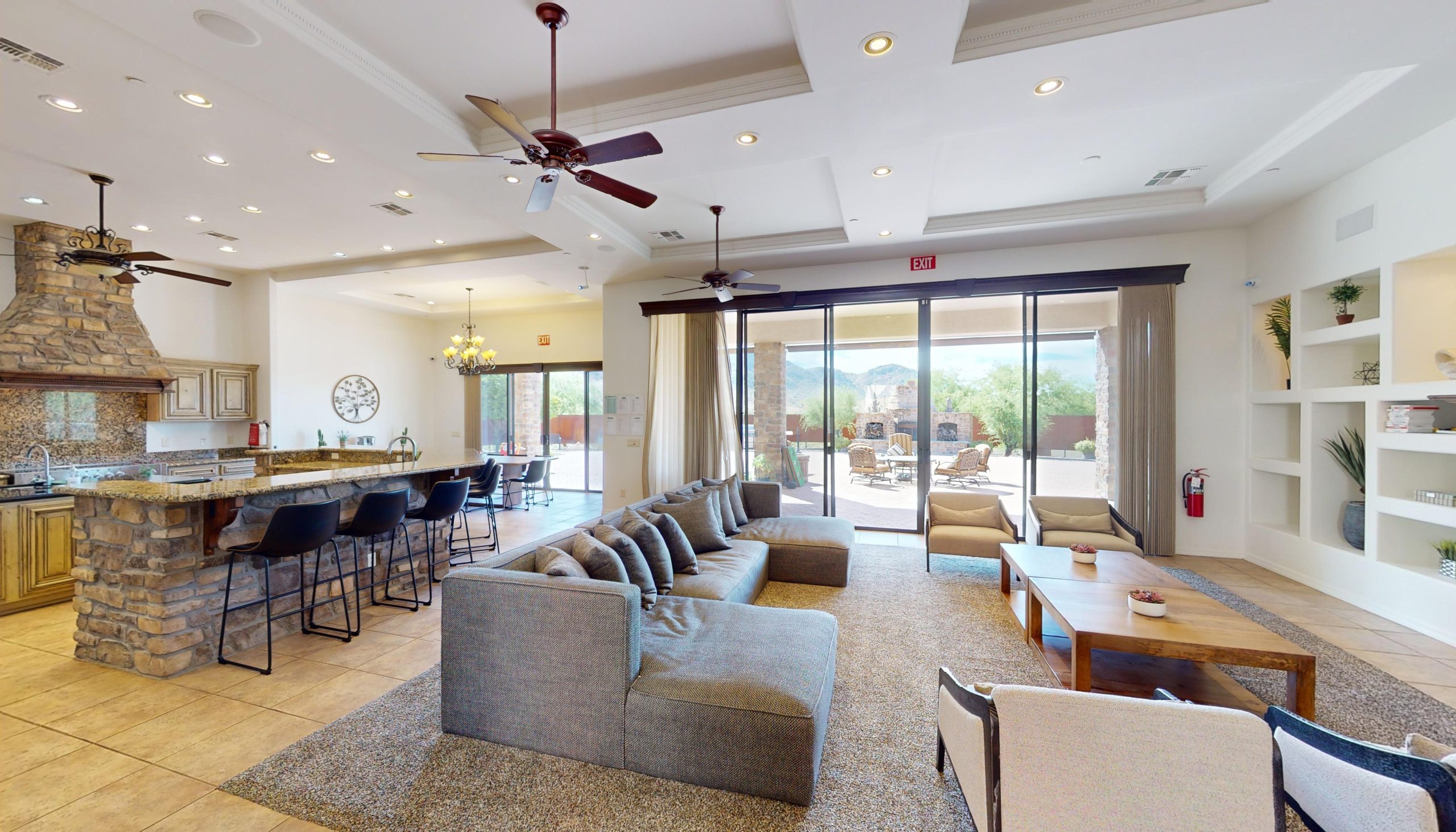
See inside our Arizona teen residential home.
Two gender-separate residences in the Phoenix metro, the boys’ home in North Scottsdale and the girls’ home about 20 minutes north in Cave Creek. Both are licensed, home-like residential settings built for comfort, safety, and 24/7 supervision.
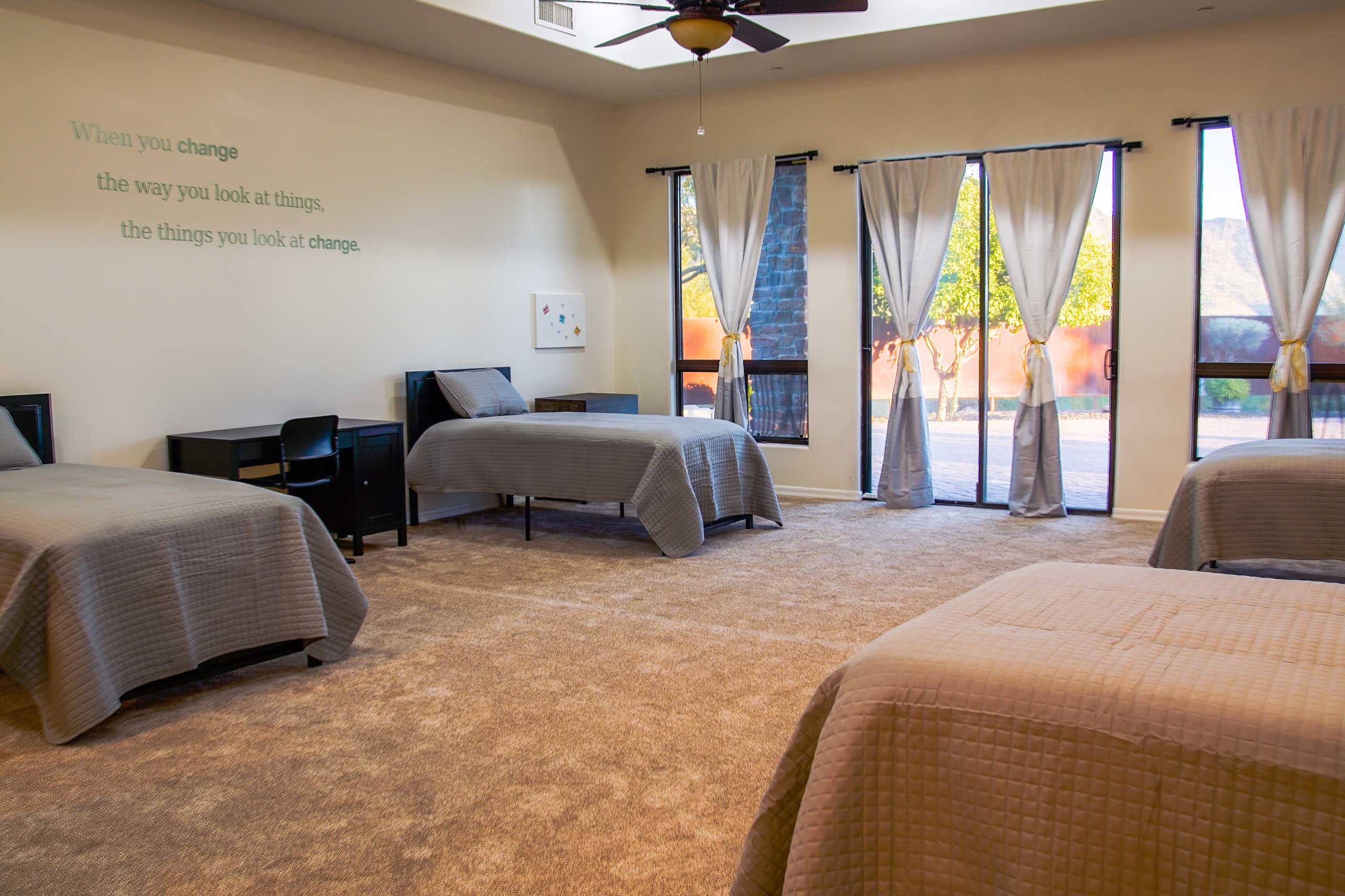


Take a self-guided 3D walkthrough of the home
Life inside
A typical day in teen residential treatment.
Structure is part of the treatment. Every day at both Arizona centers follows the same rhythm, school, therapy, movement, meals, sleep, so your teen always knows what comes next.
7:30aWake, breakfast & check-in
A predictable morning routine, breakfast, and a daily mood check-in.
 9:00a
9:00aAccredited school
Small-group classes with credit transfer, so no one falls behind.
 11:00a
Individual & group therapy
CBT and one-to-one time with a therapist your teen knows.
2:00pExperiential & movement
Art, mindfulness, and outdoor time built into each day.
5:30pDinner & community
Shared evening meals and peer connection.
8:30pWind-down & overnight care
A steady wind-down routine, with awake staff on-site through the night.
Weekends run differently
Saturday and Sunday follow a lighter routine than the weekday schedule above.
Click here for a free consultationTap to call (480) 485-3424 and our admissions team will walk you through a full weekend. Someone answers any time.Awake clinical staff are on-site every hour, including overnight, at both Arizona centers.
How healing happens
Evidence-based therapies: CBT, and family therapy.
Nexus Teen Academy coordinates every evidence-based therapy, CBT and weekly family therapy, into one integrated treatment plan at both Arizona centers, reviewed weekly and measured with the PHQ-9.
Core therapies
 1
1Individual therapy. CBT & TF-CBT
Individual CBT and TF-CBT targeting negative thought patterns, low energy, and any underlying trauma.
2Group therapy & coping skills
Distress tolerance, emotion regulation, and mindfulness, practiced in peer groups.
 3
3Family therapy, every week
Weekly family therapy that repairs communication and prepares the home your teen returns to.
Supporting care, running alongside
Holistic & experiential
Art, movement, and mindfulness that rebuild motivation and self-worth.
Psychiatric & medication support
Prescriber-led evaluation; medication weighed case-by-case, explained in full, monitored closely.
Accredited academics
Accredited classes each weekday with credit coordination, so recovery and graduation progress together.
Your teen's clinical team
Meet our licensed clinical team.
Every teen works with a named, credentialed clinician. Faces, roles, and licenses are shared before day one.
 LPC, BC-TMH
 LCSW, DSW
 DNP, PMHNP-BC
Alexandria Penner
Psychiatric Nurse Practitioner
 24/7 on-siteBSN, RN
Ashley Morton
Nursing · 24/7 medical support
Arizona-licensed clinical team.Every Nexus Teen Academy clinician is licensed in Arizona. Verify any license on the AZ Board of Behavioral Health Examiners directory.
What families say
What Arizona families say about Nexus Teen Academy.
Trustindex verifies that the original source of the review is Google. Nexus Academy was a wonderful place for my daughter. The staff were amazing and so supportive. They worked with our entire family. Highly recommend Nexus.Trustindex verifies that the original source of the review is Google. Sending your child or teen to a residential treatment facility is a difficult and heart-wrenching decision. The team at Nexus Teen Academy was exceptional. Our daughter's therapist was a great fit for her and played a significant role in helping us grow as a family. Family therapy is a crucial part of your child's recovery, and Nexus does an excellent job of involving the family in the healing process. We are grateful for their support in guiding our daughter toward a path of recovery.Trustindex verifies that the original source of the review is Google. The program at Nexus was a lifesaver for my 15-year-old daughter. After a tough year in and out of different levels of care, my husband and I had truly hit a breaking point and knew a residential facility was needed, but we were adamant about finding a place that was safe, respectful, and loving for our daughter. The entire team at Nexus was caring and engaged from day one, despite my daughter NOT making that easy for the first couple of weeks. There were definitely days in the beginning where we wondered if this was even working, but the team encouraged my husband and me to stay the course, and thank goodness we did. After completing Nexus residential and PHP programs, our daughter has done a complete 180. Her mental health struggles aren't 'magically gone' - but she has learned not to let them control her and our family dynamic is leagues better than where we started. Maybe the craziest part of this whole experience was when she recently acknowledged that she was really struggling before and thanked me for sending her to the program - I almost fainted. All this to say, I can't recommend the team at Nexus enough to any family with a teen who is going through a hard time.Trustindex verifies that the original source of the review is Google. Our 12 year old attended Nexus in summer of 2025. I opted for this location due to the reviews from other parents regarding similarly aged children. It's a whole different ballgame when a parent is trying to figure out what is best for their tween, knowing they will have exposure to older teenagers and older problems. That sad, Nexus is such a cohesive program. Our experience has been nothing short of wonderful, given the impossible circumstanes. All staff seems to be personally invested in each child's recovery and wellbeing. Our child left Nexus in a much more healed state than when they went in. I was so nervous about taking this huge step after poor hospital experiences and previous PHP's not being as helpful as we hoped. The staff is on top of relational dynamics in the house, and there is some separation between the younger residents and older ones, while still promoting overall cohesiveness. I feel they did a tremendous job supporting our 12 year old developmentally, bringing out a sense of childhood again. They also masterfully navigated our complicated family dynamic, going above and beyond to ensure our child's needs were met, the program requirements were met, in alignment with our family's needs. In a way, our child's time away at Nexus brought them back to us in a way we hadn't seen in a long time. I am so grateful. The PHP program, as well, is top notch and operates from heart. I would recommend both Nexus RTC and their PHP program to any parent in a similar situation. I have offered to connect with any parent in a similar place, so feel free to inquire about connecting with the staff. I know how terrifying this all is, and while we're not totally out of the woods, our child is currently attending school full time again with 2 evening therapy sessions each week. I attribute this assimilation into developmentally typical structure entirely to the care and support we all received from Nexus staff, from intake to therapy to medical and everyone else involved. Thank you, nexus, for helping our child- and our family- in our healing. I am forever grateful.Trustindex verifies that the original source of the review is Google. When we realized we needed a place for our teen to go longer term it was one of the hardest, scariest things I have been through as a mother. Nexus really made it easier and not quite so scary. They have a really caring staff, the kids love the staff. They truly care about your child, it’s not just another kid in and out of their house. I felt like our family was important and they were focused on what my child needed to help her through this difficult time. There was a lot of ups and downs with this process and we had some really hard times and conversations but the staff was always there to help guide us. I would truly say if you are struggling and your teen needs residential Nexus is an amazing place for treatment. The house is beautiful and it is truly comfortable for the kids. I would definitely recommend Nexus.Trustindex verifies that the original source of the review is Google. I would like to share that we had a great experience at Nexus Teen Academy. All of the staff is great with communication and assisted us through the process. I am very grateful for all of the resources, help and treatment for my teen throughout their stay. The have an amazing team and would recommend to anyone who needs the help.Trustindex verifies that the original source of the review is Google. I highly recommend Nexus Teen Academy. The structure, support, and care they provided made a significant impact on my child, and it was also maintainable post-residency. During the residency, I attended a parent group led by the therapists who worked with the kids; where we learned critical skills and distinctions which helped with life afterward. It was also great to be in contact with other parents during this time, and the parenting group was great for this.Trustindex verifies that the original source of the review is Google. Four years ago at the age of 13 my daughter completely stopped participating in school and started to display symptoms of major depression anxiety and an unknown mood disorder.Her attendance at school was greatly impacted in such a way that attending once or twice a week became standard until the age of 16.Alcohol addiction and juvenile legal troubles followed and became common issues up until the moment my daughter entered into Nexus Teen Academy.To be completely honest as a completely broken single parent,after trying many attempts at therapy/medications I had lost hope and had given up on expecting anything could fix the crisis we had been living in for the last for years. Nexus Academy changed my perspective, my daughter completed 33 days and for the first time in years I saw the spark and light come back to her eyes and soul.She left Nexus displaying insight and a desire to get back on track with her education. With all professions , one will find flaws and opportunities for improvement .I believe Nexus understands this and showed an openess to suggestions and constructive criticism.Trustindex verifies that the original source of the review is Google. Nexus was a life changing experience. I went in at 17 and experienced my 18th in there, to which the staff and residents all made sure I felt special. My goals were formed around gaining a better sense of self identity, self respect, and healing myself from the inside out. All of which happened in ways I never expected. I was shown how healthy communication, empathy in your home life, and phone-free relationships, all shape you as a person. Each and every one of the staff and administrators at Nexus are solely devoted to the children’s lives and well being. If there was ever an issue, i felt confident to go to them about it and it was swiftly handled. It was one of the most difficult goodbyes I have ever experienced in my life, as I grew family-life bonds with every person there. Thank you all!!!!! I appreciate every way you showed up for me and how you supported me in my stay. I will carry this experience with me forever.Trustindex verifies that the original source of the review is Google. My daughter was referred here after her various visits to psychiatric hospitals.I was so scared to be apart from my child but Nexus made me feel better about my decision because of their loving and welcoming environment. I love everything about this place, they really love the kids and support parents along the way. I appreciate everyone that loved and supported my child while she was at her lowest. I recommend this place to anyone that may feel like they have tried all they can and they do not know what to do next because Nexus will help you with the next steps in your journey.Google rating score: 5.0 of 5, based on 23 reviews
★★★★★
“Nexus Academy was a wonderful place for my daughter. The staff were amazing and so supportive. They worked with our entire family. Highly recommend Nexus.”
★★★★★
“Sending your child or teen to a residential treatment facility is a difficult and heart-wrenching decision. The team at Nexus Teen Academy was exceptional. Our daughter’s therapist was a great fit for her and played a significant role in helping us grow as a family.”Read the full review →
★★★★★
“The program at Nexus was a lifesaver for my 15-year-old daughter. After a tough year in and out of different levels of care, my husband and I had truly hit a breaking point and knew a residential facility was needed.”Read the full review →
These come straight from our public Google Business Profile, anyone can read all 34 and add their own.
Getting started
How admission works, from first call to first day.
Our promise while you decide
- You set the pace, with no pressure to decide
- Clear answers to every clinical and financial question
- An honest recommendation, even if another program is the better fit
1
- Today · 24/7
- ~15 minutes
One calm call
A licensed Nexus Teen Academy admissions counselor reviews your teen's situation, history, and what you have already tried, then tells you whether residential treatment fits and what the next step is.
- What to have ready: nothing. Just call, questions are welcome, and there is no obligation.
2
- Same day
- Free & confidential
Coverage check
With your okay, we confirm your benefits straight with your private insurance plan, and translate the result into plain numbers: what is covered, what is not, and a realistic out-of-pocket, before any decision.
- What you get: your coverage answer, usually the same day, every option mapped, including in-network and out-of-network paths.
3
- Within 24-48 hrs
- Licensed clinicians
Clinical assessment
Licensed clinicians assess your teen's history, needs, strengths, and safety, then recommend the appropriate level of care.
- Your input matters: what you have seen at home is a key part of the clinical assessment.
4
- Within days
- Named coordinator
Plan the arrival
One coordinator manages logistics with you: the packing list, travel into Phoenix, school records for credit transfer, and how the first day will go.
- No surprises: you will have the packing list, schedule, and your coordinator's direct line in writing.
5
- Welcome day
- Never out of the loop
A gentle, planned arrival
Your teen meets the clinical team and settles in. Your first family update is scheduled before you leave, and you have direct contact with the team from day one.
- From here: predictable days, weekly updates, and a team your teen knows by name.
Coverage & cost
Does insurance cover teen residential treatment in Arizona?
Residential mental-health treatment is a covered behavioral-health benefit on most major private insurance plans. Nexus Teen Academy accepts most major commercial insurers. Wherever in the state you are, we verify your exact private benefits, in-network or out-of-network, free, confidentially, and usually the same day, then explain any out-of-pocket cost in plain English before you commit.
- 1You send your plan detailsTwo required fields. Member ID optional. Takes about a minute.
- 2We verify with your insurer directlyIn-network or out-of-network, free and confidential, usually the same day.
- 3You get the number in plain EnglishYour exact out-of-pocket cost, explained before you commit to anything.


- Meritain
- UMR
- + more
Out-of-network or unsure about your plan? Call anyway, cost should never be the reason a teen doesn't get help.
- Free benefits check
Verify your insurance in 2 minutes
See exactly what your plan covers for residential self-harm treatment, free, confidential, no obligation.
After discharge
Aftercare and relapse prevention that follows your teen home.
Before discharge, your Nexus Teen Academy case manager builds the aftercare plan with you: step-down or outpatient care near your community, telehealth continuation, school re-entry with your home district, and a relapse-prevention plan, so progress holds once your teen is back in Tucson, Flagstaff, Prescott, Yuma, or the Valley.

Answers
Teen depression treatment FAQs
The questions families ask us most, answered plainly, centers, distance, insurance, licensing, and privacy.
A licensed admissions counselor can answer it on the phone right now, no script, no pressure, and no obligation to enroll.
Talk to a counselorAnswered 24/7 at (480) 485-3424Centers & getting there
Nexus Teen Academy runs two licensed, gender-separate residential homes for teens ages 12 to 17: a boys residence in North Scottsdale and a girls residence in Cave Creek, both in Maricopa County on the north edge of the Phoenix metro. For most Arizona families that is the nearest residential treatment for teen self-harm, and both centers sit within a half-day drive of nearly every town in the state.
Every week. Tucson sits about two hours out on I-10, Flagstaff roughly two and a half on I-17, Prescott near ninety minutes, and Yuma about three hours on I-8; out-of-state families route through Phoenix Sky Harbor. When the drive is unrealistic, weekly family therapy moves to secure video.
Recovery from self-harm involves visible scars and personal group work that single-gender housing makes easier. Boys live in North Scottsdale, girls in Cave Creek; both homes are AZDHS-licensed for ages 12 to 17 and run the same clinical model. Groups are clinician-led because self-harm can spread socially, and a managed milieu prevents that.
Weekly family therapy is built into the program, in person or by secure telehealth, where parents train in validation and in responding to a setback without panic or punishment. Families across Arizona stay part of the plan from the first week.
Care & cost
On most major commercial plans, residential behavioral-health care is a covered benefit. Nexus Teen Academy accepts most private insurance and verifies your specific coverage, network status, and likely out-of-pocket before you commit, free, confidential, and usually the same day.
Cost depends on your plan, length of stay, and network status, so a flat figure would mislead. Most families use insurance, and the free benefits check turns coverage into real numbers, what the plan pays and the realistic out-of-pocket, before any decision.
Residential care becomes the indicated level when self-injury continues despite outpatient therapy, escalates in frequency or severity, pairs with suicidal thinking, or cannot be kept safe at home between sessions. A licensed counselor can tell you in one call whether that threshold has been crossed.
Structured skills therapy is the best-evidenced approach for reducing teen self-harm. In residential care it becomes a daily practice, individual sessions plus skills groups rather than a weekly hour, with urges tracked on daily diary cards.
Length of stay is clinical, not fixed; many teens stay several weeks to a few months, reviewed weekly against measurable goals. Before discharge the team writes a relapse-prevention plan with you: a safety plan your teen helped author, a skills-trained outpatient therapist near home, and staged school re-entry.
Understanding self-harm
Usually not. Most teen self-injury is nonsuicidal, an attempt to manage unbearable emotion rather than to end life. The two overlap, though: prior self-injury is one of the strongest predictors of a later suicide attempt, so every teen entering the program is screened on the Columbia protocol (C-SSRS) and supervised continuously.
Physical: unexplained cuts, burns, or patterned marks, and long sleeves in Arizona heat. Behavioral: locked doors, avoiding pools or PE, guarded belongings, and social withdrawal. Emotional: harsh self-criticism, shame after conflict, numbness, and sudden mood crashes. Several persisting together warrant a professional evaluation.
Cutting, burning, scratching, hitting, hair pulling, skin picking, and other forms of nonsuicidal self-injury (NSSI). The program also treats the drivers, depression, anxiety, trauma, shame, and substance use, inside one integrated plan.
The statewide picture
Arizona teen mental health, by the numbers.
Teen self-harm has climbed alongside the depression, anxiety, and trauma that drive it, and for a growing number of Arizona families weekly outpatient therapy is no longer enough. The state’s own data shows why a middle level of care, residential treatment, exists.

4 in 10
Arizona high-schoolers reported their mental health was not good most or all of the time.
3 in 10
Seriously considered suicide, and about 1 in 10 attempted.
97%
Rise in adolescent depression diagnoses in Arizona, 2016-17 to 2020-21.
55%
Rise in anxiety diagnoses over the same period.
Arizona’s 988 and Teen Lifeline lines meet the emergency, but a crisis call is stabilization, not ongoing treatment.
Residential care is the step between outpatient therapy and the hospital, the middle is what has been missing.
Sources: Arizona Department of Health Services, Adolescent Mental Health Report; Arizona Youth Risk Behavior Survey (2021); National Survey of Children’s Health.
Talk to an Arizona counselor, 24/7Across Arizona
Teen self-harm treatment across Arizona, from two Phoenix-metro centers.
Both Nexus Teen Academy residences sit in the Phoenix metro (Maricopa County), so families from every corner of Arizona can reach accredited residential care and stay close to the process. Admissions are answered 24/7.
Within a half-day of most of the state
About two hours from Tucson on I-10, 2½ hours from Flagstaff on I-17, 1½ hours from Prescott, and three hours from Yuma on I-8, with Sierra Vista and Lake Havasu City a similar reach.
Telehealth & travel, handled
Secure weekly family telehealth for families outside the metro, plus help planning the drive or the flight into Phoenix Sky Harbor, so distance never means dropping out of treatment.
Aftercare mapped to your community
A skills-trained outpatient therapist and step-down care lined up near home before discharge, plus school re-entry coordinated with your own district.
Nexus Teen Academy, Scottsdale · boys’ residence
8611 E Cholla St, Scottsdale, AZ 85260
Admissions 24/7
Nexus Teen Academy, Cave Creek · girls’ residence
2695 E Saddle Mountain Rd, Cave Creek, AZ 85331
Admissions 24/7
See a center on the map
Tap Cave Creek or Scottsdale below to load its interactive map right here.
Google Maps loads only when you choose, so nothing is shared with Google before you opt in.
Explore each Nexus Teen Academy location
Scottsdale (boys)
North Scottsdale, 85260 · off Loop 101
Cave Creek (girls)
Saddle Mountain Rd, 85331 · 20 min north
Phoenix metro
Served from both centers
Yuma & SW Arizona
Travel, telehealth & aftercare