

- Boys only, ages 12 to 17
- Staff awake overnight
- Joint Commission accredited
Residential Treatment for Teenage Boys in Arizona
A boy aged 12 to 17 lives at Oak, the licensed Nexus Teen Academy house for boys residential treatment in Arizona, while daily therapy, on-site psychiatry and an accredited classroom run inside the same building. Families place sons here from Phoenix, Tucson, Flagstaff and across the state.
- AZDHS licensed, on a quiet residential street in North Scottsdale below the McDowell Sonoran Preserve
- 4.7 on Google · 34 reviews
- Behavioral health residential license, AZDHS
- Commercial insurance checked at no cost
- Free consultation
- Counselor on shift now
Talk to admissions about your son
Leave a number and a licensed counselor rings back, usually within minutes, to cover what is happening at home, whether residential is the right level, and what your plan pays.
- It is now in Phoenix, and admissions is staffed · callbacks usually inside 10 minutes.
- HIPAA covers what you type, and it is used for a single return call about care. Sending it agrees to that call or a text, and standard rates can apply.
- 4.7 on Google · 34 reviews
- Joint Commission accredited
Verify the license yourself: AZDHS, Joint Commission, LegitScript.





Every claim checks out at the issuer: Joint Commission · AZDHS registry · LegitScript.

 Joint Commission accreditedAZDHS licensed · LegitScript verified
Boys residential treatment, Arizona
Where boys live while the treatment runs.
Teen residential treatment, also called a residential treatment center or RTC, is a licensed live-in program where adolescents are treated and supervised day and night without being in a hospital. Oak is the Nexus Teen Academy boys’ house in North Scottsdale, AZDHS licensed and Joint Commission accredited. The continuum runs outpatient, then intensive outpatient, then a partial hospitalization program, then residential, then inpatient psychiatric care. Residential is the first level where a clinician sees the night, the meal and the argument instead of a forty-five minute account of them.
One licensed professional counselor or licensed clinical social worker owns his individualized treatment plan and meets him daily. A psychiatric nurse practitioner prescribes on site, and a certified teacher runs the accredited classroom. The program runs one gender only. Boys arrive describing a punched door or a failed semester rather than a mood, so the groups, the staffing and the classroom are built for that presentation instead of adapted to it. Girls are treated separately at the Cave Creek house, twenty minutes north.
12 to 17
Boys only, no mixed-gender groups
24/7
Staff awake on site through every night
30+
Opening plan in days, then clinical
1:1
One therapist for the whole stay
Secure form · About 2 minutes · Free, no obligation
Thank you, we have your details
Our admissions team will reach out to you soon. Here’s what happens next:
- An admissions counselor contacts you, free and confidential
- If you asked about coverage, we check your benefits with your insurer
- You get honest answers and clear next steps, with no obligation
Diagnoses admitted and treated
The diagnoses underneath the behavior you see.
Treatment aims at a confirmed diagnosis rather than a reported symptom, so the DSM-5 intake evaluation runs before any plan is written. Most boys leave that evaluation with more than one diagnosis recorded.
Co-occurring presentations are the norm here rather than the exception.A dual diagnosis of cannabis or opioid use over depression, ADHD or trauma is treated as one picture by one team, not split across two referrals. ADHD shows this most clearly, because most boys diagnosed with it carry at least one further condition alongside it.
Full residential program
Every diagnosis below, treated in one house
Depression
Major depressive and persistent depressive disorder.
Self-harm
Screened daily, with the function treated.
Anxiety
Generalized and social anxiety, panic, school refusal.
Suicidal thoughts
Scored on behavior, access and history.
PTSD
Trauma history taken first, then TF-CBT and EMDR.
Trauma
Complex and developmental trauma, stabilized before processing.
Substance use
Cannabis, nicotine, counterfeit pills and alcohol.
Mood & behavior disorders
Bipolar spectrum and disruptive mood dysregulation.
ADHD & impulse control
External structure carries the executive load.
Anger & aggression
Oppositional and conduct patterns sit underneath.
Low self-worth
Rebuilt on evidence he can check.
Psychotic & personality patterns
Emerging traits evaluated openly at intake.
- One team, one plan, so nothing in the diagnosis gets referred out to another provider.
What the week contains
How his week is built, all under one roof.
Each component is reviewed weekly against measurable movement on his admitting diagnosis. A DSM-5 evaluation opens the stay, and the written plan names the confirmed diagnoses and the measures each one is reviewed against.
 1
Individual therapy, daily
One-to-one CBT with his clinician, every day of the working week, with TF-CBT, EMDR and motivational interviewing set per boy.
 2
Two groups every weekday
Two clinician-led groups each weekday, at 9:00 and again at 11:00.
 3
Family therapy & the Saturday group
Weekly sessions in person or by secure video, plus the Saturday Family Empowerment Group alongside parents at the same stage.
 4
Psychiatry & medication management
The psychiatric nurse practitioner prescribes inside the house, you are consulted before any change, and a nurse records every dose.
 5
Accredited on-site school
Small classes hold the semester, credits leave on an official transcript, and re-entry is coordinated with his own district.
 6
Experiential & equine work
Friday equine therapy with Ignite Equine, plus art, music and psychodrama, for boys who engage through activity first.
Cost & insurance
Does insurance cover residential treatment for a teenage boy?
Usually yes in part, because the stay bills as licensed residential behavioral health treatment rather than as room and board. What varies is your network position, what the deductible has already absorbed and whether the carrier wants prior authorization first.
- 1Name the carrier on the policyA parent name and a callback number are required, the member ID is optional.
- 2The team goes to the carrierThe residential benefit is checked in-network or out, at no charge.
- 3The figures come back to youYour share of the stay, stated plainly, before any decision is made.


- Meritain
- UMR
- + more
Arizona families placing a son here are almost all on commercial insurance. Where a plan sits out of network, a single case agreement or out-of-network benefit is the usual route, the utilization review is handled for you, and a decision that returns short can be appealed.
- No charge, no obligation
Your figures in about two minutes
We go to the carrier and come back with the residential benefit, in-network or out, before you make any decision.
Choosing a level of care
When outpatient, an IOP or a PHP stops holding him.
Residential is the right level when symptoms keep climbing between appointments and the week at home can no longer be supervised. Almost nobody says that on the first call.
Parents describe behavior, not diagnoses. The behavior then gets a consequence long before it gets an evaluation, which is how a treatable attention disorder turns into a discipline file.
Intake runs that order backwards. The DSM-5 evaluation comes first, and the structure is then built around whatever it actually finds underneath the anger.
What the referral describes
A punched door, a failed semester, cannabis found in a bag, or a boy who has stopped speaking at home.
What the evaluation finds
Depression, trauma, ADHD, an anxiety disorder or substance use sitting underneath, often several at once.
What the plan targets
The diagnosis takes the clinical hours while the behavior takes structure. Parent training runs alongside, so the structure survives the drive home.
Lethality and substance risk
Suicide risk and overdose risk in teenage boys.
A boy asked how he feels will routinely under-report, so risk here is scored on behavior, access and history rather than on what he volunteers.
How risk is established
Behavior, access to means and prior attempts are assessed, earlier provider records are read, and cannabis, nicotine and opioid use are screened on every admission.
What the house controls
Staff stay awake on every night shift, substances and means of self-harm stay out of unsupervised reach, and a registered nurse administers and records every dose.
What he leaves with
A written safety plan and means restriction agreed with you, plus naloxone access and overdose recognition taught to the whole family.
Relapse prevention, rehearsed
The plan for a bad week is practised before discharge, with a prescriber and a therapist already booked near home.
- If tonight is the emergency, the checks wait. Call or text 988 or drive to the nearest emergency department, and admissions times the transfer from there.
Admission criteria
Who is admitted, and who starts elsewhere.
Admission is a clinical decision, taken on the evaluation rather than on the enquiry. Referrals arrive from parents directly and from clinicians already treating the boy.
12 to 17
Boys only, one population in the house
2
Referral routes: parents and treating clinicians
Step-downs from a psychiatric admission
Fits here
Admitted here
- Boys aged 12 to 17, one population in the house
- Depression, anxiety, PTSD and trauma
- ADHD, anger, oppositional and conduct patterns
- Substance use, treated inside the same plan as the mood disorder
- Boys stepping down from a psychiatric admission
Hospital first
Handled first, then admitted
HospitalOak, on discharge
- Acute crisis is stabilized at a hospital first, and the transfer is timed to that discharge
- Managed withdrawal is completed as medical detox before the admission date
- Anything medically unstable is treated at that level of care beforehand
Another route
A separate system
- State-funded placements run through the Arizona Department of Child Safety and the providers it contracts
- Where this is the wrong fit, admissions names the program that is the right one
Unsure where he fits? Call (480) 485-3424
What to check before choosing any Arizona boys program, this one included.
1
Check 1
The license class
Search the AZDHS provider registry by facility name. A behavioral health residential license carries treatment standards, where wilderness and boarding programs are licensed on supervision.
- Search the registry
2
Check 2
Who delivers therapy
Ask whether the clinicians are employed or visiting contractors. The ones here are named below with registry links.
- Named on this page
3
Check 3
The school arrangement
Confirm the classroom is accredited and the credits count, because a lost semester outlasts the placement by years.
- Credits that count
4
Check 4
The record at source
Take every accreditation claim back to the issuing body, and read whole reviews rather than the lines a website selects.
- Whole reviews, not quotes
Admissions will walk you through every one of these on a single call, at no cost and in confidence.
Why the level works
What residential reaches that a weekly appointment cannot.
Outpatient therapy gets one hour of a boy’s week and has to take his word for the other hundred and sixty-seven. Living on site inverts that ratio, and three specific things follow from it.
Screens after midnightCravings after schoolThe kitchen-table argument
A weekly appointment: 1 of 168 hoursSeven days

12am6am12pm6pm11pm
Therapy hourHours taken on his word
1Observed
The clinician sees it, rather than hearing about it
Sleep, appetite, screen use, cravings and the moment an argument turns are observed as they happen. A diagnosis built on that is better evidenced than one built on a boy’s recall of a bad week.
2Rehearsed
Skills get rehearsed before they are needed
Equine work, daily movement and group practice put regulation into the body while nothing is at stake, so the exit from a rising conflict is already familiar when it happens at your kitchen table.
3Boys only
A single-gender group lowers the cost of speaking
Boys rarely open a subject no other boy has opened. With one population in the room, someone has usually gone first, which is what converts a silent presentation into a treatable one.
How a stay actually moves.
1
Weeks 1 to 2
Assess and settle
Risk contained, the DSM-5 evaluation finished, medication reviewed, and the conditions for going home written down with you.
2
Weeks 3 to 5
The clinical work
Daily individual and group hours on the confirmed diagnosis, substance treatment beside it where it applies, and a school timetable that holds.
3
The middle stretch
Bringing you in
The weekly hour shifts from recounting the argument to rehearsing it, until it lands somewhere other than where it always lands.
4
Before discharge
The handover
The next level of care, the appointments near home and the first month back, all agreed before the date is set.
Want to know who would hold his case?A clinician answers on (480) 485-3424
Who would treat your son
The people treating him, each license on record.
Clinicians here are employed rather than visiting, so the person who assesses your son is the person who treats him. Allie Nichols, LAC, and Araceli Montaño, LMSW, carry the therapy caseload at Oak, and every Arizona license below is searchable by name in the state registry.
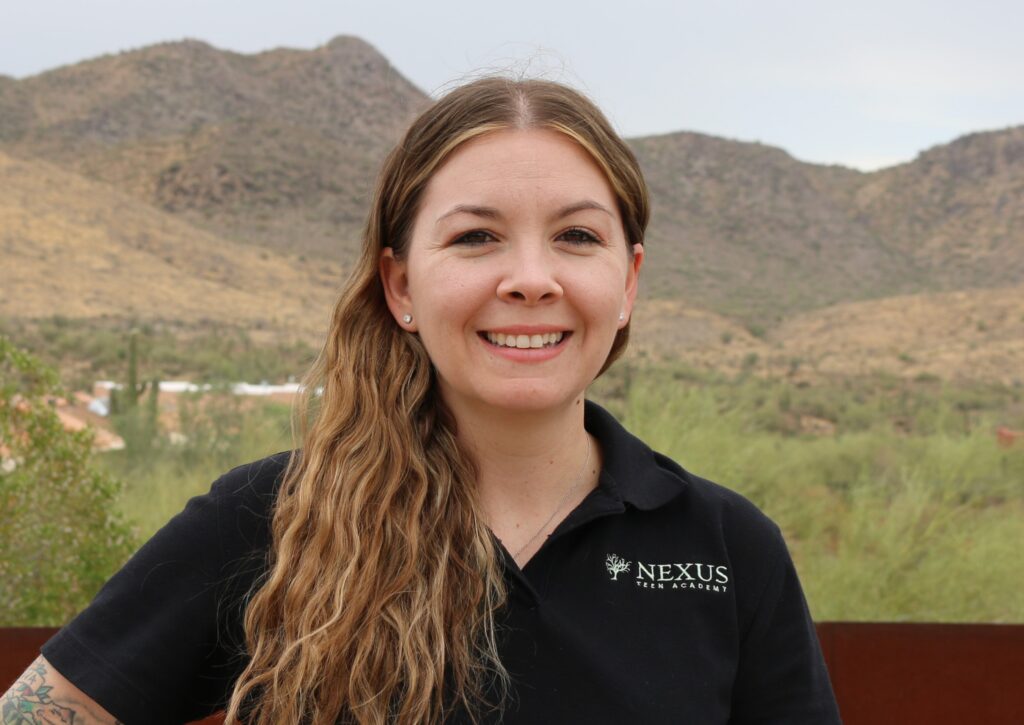 LPC, BC-TMH
Hannah Carr-Unquera
Executive Director
Carries clinical authority for both houses, licensed in Arizona and board certified in telemental health.
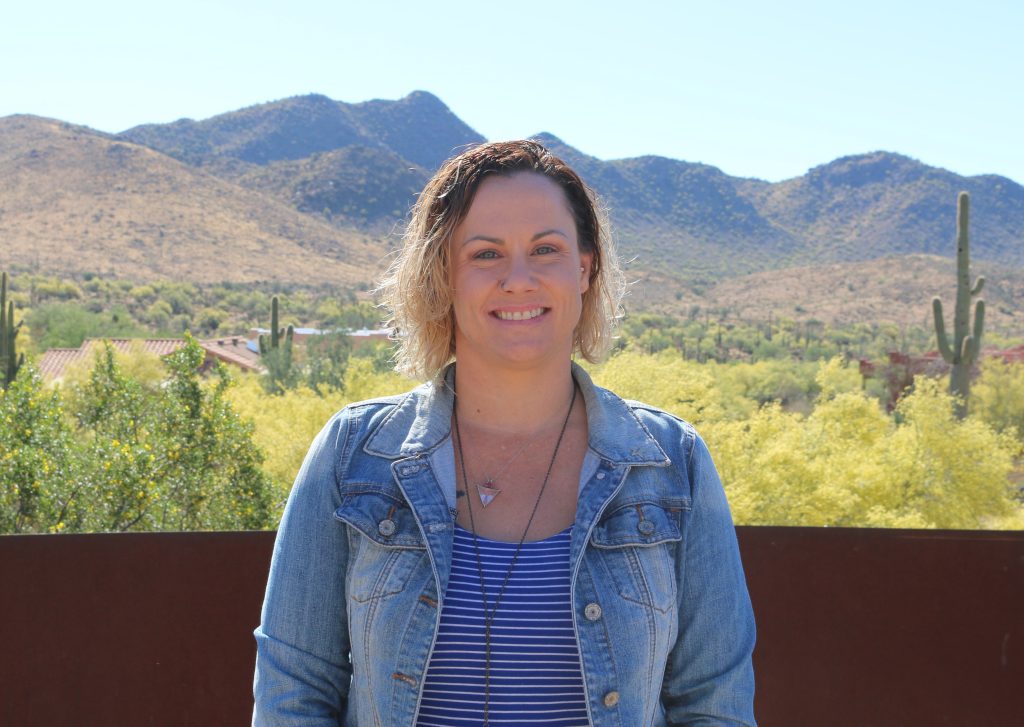 LCSW, DSW
Dr. Tyler White
Director of Adolescent Clinical Services
Authors the treatment plan each boy’s team follows, and oversees the clinicians who deliver it.
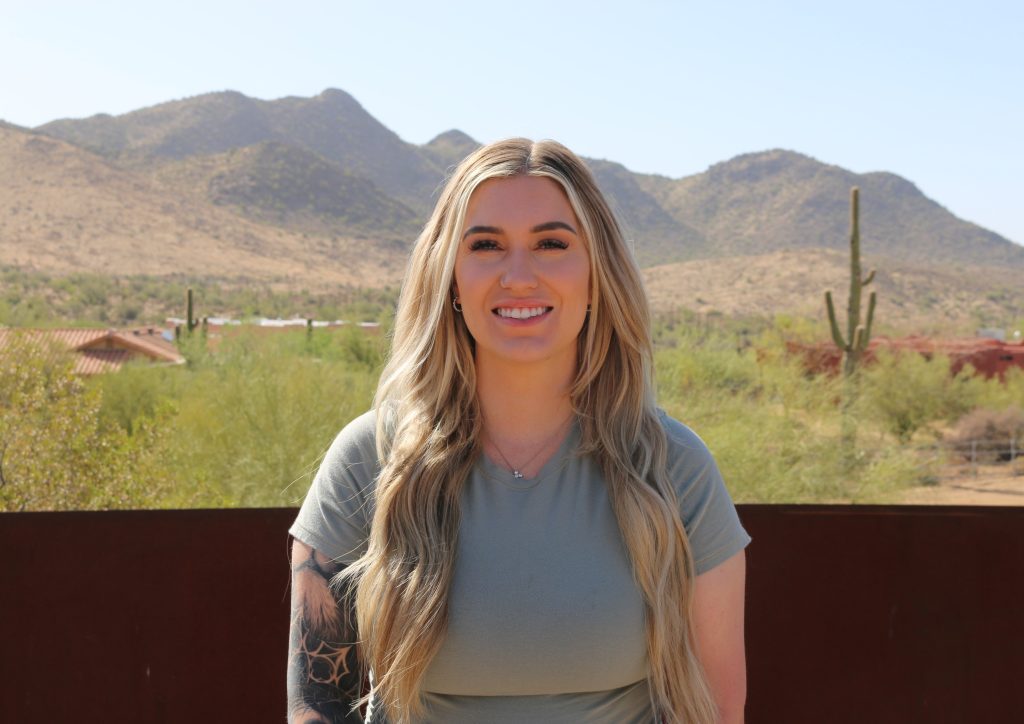 DNP, PMHNP-BC
Alexandria Penner
Psychiatric Nurse Practitioner
Assesses and prescribes inside the house, so medication decisions never wait on an outside referral.
 House team
Ashley Daniels
Director of Family Services & Education
Directs family services and the academic side of both houses, after building residential summer programs for Mount Holyoke College and Bryn Mawr College.
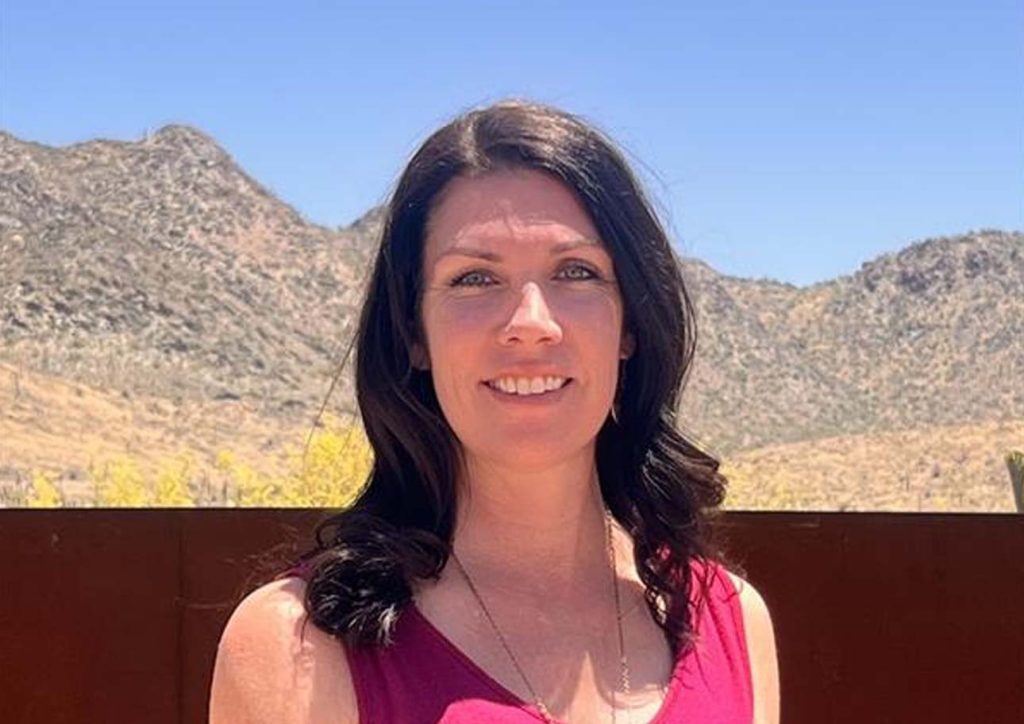 House team
Jennifer Inderberg
Education Supervisor
A twenty-five year classroom career, now running the accredited school, the transcripts and the credit transfers.
 House team
Melissa Stockmar
Director of Food Operations
Leads the kitchen behind every chef-cooked meal, and the cooking group that sends a boy home able to feed himself.
Registry-verifiable clinical team. The AZ Board of Behavioral Health Examiners registry returns every clinician named above, which settles the second of the four checks by name and license number.
Parent reviews
Nexus Teen Academy parent reviews, unedited.

 Carol Trombino
Trustindex verifies that the original source of the review is Google.
Nexus Academy was a wonderful place for my daughter. The staff were amazing and so supportive. They worked with our entire family. Highly recommend Nexus. Hemella SweattSending your child or teen to a residential treatment facility is a difficult and heart-wrenching decision. The team at Nexus Teen Academy was exceptional. Our daughter's therapist was a great fit for her and played a significant role in helping us grow as a family. Family therapy is a crucial part of your child's recovery, and Nexus does an excellent job of involving the family in the healing process. We are grateful for their support in guiding our daughter toward a path of recovery.
 S HThe program at Nexus was a lifesaver for my 15-year-old daughter. After a tough year in and out of different levels of care, my husband and I had truly hit a breaking point and knew a residential facility was needed, but we were adamant about finding a place that was safe, respectful, and loving for our daughter. The entire team at Nexus was caring and engaged from day one, despite my daughter NOT making that easy for the first couple of weeks. There were definitely days in the beginning where we wondered if this was even working, but the team encouraged my husband and me to stay the course, and thank goodness we did. After completing Nexus residential and PHP programs, our daughter has done a complete 180. Her mental health struggles aren't 'magically gone' - but she has learned not to let them control her and our family dynamic is leagues better than where we started. Maybe the craziest part of this whole experience was when she recently acknowledged that she was really struggling before and thanked me for sending her to the program - I almost fainted. All this to say, I can't recommend the team at Nexus enough to any family with a teen who is going through a hard time.
 Amanda HayesOur 12 year old attended Nexus in summer of 2025. I opted for this location due to the reviews from other parents regarding similarly aged children. It's a whole different ballgame when a parent is trying to figure out what is best for their tween, knowing they will have exposure to older teenagers and older problems. That sad, Nexus is such a cohesive program. Our experience has been nothing short of wonderful, given the impossible circumstanes. All staff seems to be personally invested in each child's recovery and wellbeing. Our child left Nexus in a much more healed state than when they went in. I was so nervous about taking this huge step after poor hospital experiences and previous PHP's not being as helpful as we hoped. The staff is on top of relational dynamics in the house, and there is some separation between the younger residents and older ones, while still promoting overall cohesiveness. I feel they did a tremendous job supporting our 12 year old developmentally, bringing out a sense of childhood again. They also masterfully navigated our complicated family dynamic, going above and beyond to ensure our child's needs were met, the program requirements were met, in alignment with our family's needs. In a way, our child's time away at Nexus brought them back to us in a way we hadn't seen in a long time. I am so grateful. The PHP program, as well, is top notch and operates from heart. I would recommend both Nexus RTC and their PHP program to any parent in a similar situation. I have offered to connect with any parent in a similar place, so feel free to inquire about connecting with the staff. I know how terrifying this all is, and while we're not totally out of the woods, our child is currently attending school full time again with 2 evening therapy sessions each week. I attribute this assimilation into developmentally typical structure entirely to the care and support we all received from Nexus staff, from intake to therapy to medical and everyone else involved. Thank you, nexus, for helping our child- and our family- in our healing. I am forever grateful.
 AlishaWhen we realized we needed a place for our teen to go longer term it was one of the hardest, scariest things I have been through as a mother. Nexus really made it easier and not quite so scary. They have a really caring staff, the kids love the staff. They truly care about your child, it’s not just another kid in and out of their house. I felt like our family was important and they were focused on what my child needed to help her through this difficult time. There was a lot of ups and downs with this process and we had some really hard times and conversations but the staff was always there to help guide us. I would truly say if you are struggling and your teen needs residential Nexus is an amazing place for treatment. The house is beautiful and it is truly comfortable for the kids. I would definitely recommend Nexus.
 Vanessa AnayaI would like to share that we had a great experience at Nexus Teen Academy. All of the staff is great with communication and assisted us through the process. I am very grateful for all of the resources, help and treatment for my teen throughout their stay. The have an amazing team and would recommend to anyone who needs the help.
 Sean HayesI highly recommend Nexus Teen Academy. The structure, support, and care they provided made a significant impact on my child, and it was also maintainable post-residency. During the residency, I attended a parent group led by the therapists who worked with the kids; where we learned critical skills and distinctions which helped with life afterward. It was also great to be in contact with other parents during this time, and the parenting group was great for this.
 Zane BedfordFour years ago at the age of 13 my daughter completely stopped participating in school and started to display symptoms of major depression anxiety and an unknown mood disorder.Her attendance at school was greatly impacted in such a way that attending once or twice a week became standard until the age of 16.Alcohol addiction and juvenile legal troubles followed and became common issues up until the moment my daughter entered into Nexus Teen Academy.To be completely honest as a completely broken single parent,after trying many attempts at therapy/medications I had lost hope and had given up on expecting anything could fix the crisis we had been living in for the last for years. Nexus Academy changed my perspective, my daughter completed 33 days and for the first time in years I saw the spark and light come back to her eyes and soul.She left Nexus displaying insight and a desire to get back on track with her education. With all professions , one will find flaws and opportunities for improvement .I believe Nexus understands this and showed an openess to suggestions and constructive criticism.
 lily hendersonNexus was a life changing experience. I went in at 17 and experienced my 18th in there, to which the staff and residents all made sure I felt special. My goals were formed around gaining a better sense of self identity, self respect, and healing myself from the inside out. All of which happened in ways I never expected. I was shown how healthy communication, empathy in your home life, and phone-free relationships, all shape you as a person. Each and every one of the staff and administrators at Nexus are solely devoted to the children’s lives and well being. If there was ever an issue, i felt confident to go to them about it and it was swiftly handled. It was one of the most difficult goodbyes I have ever experienced in my life, as I grew family-life bonds with every person there. Thank you all!!!!! I appreciate every way you showed up for me and how you supported me in my stay. I will carry this experience with me forever.
 Jasmine CarterMy daughter was referred here after her various visits to psychiatric hospitals.I was so scared to be apart from my child but Nexus made me feel better about my decision because of their loving and welcoming environment. I love everything about this place, they really love the kids and support parents along the way. I appreciate everyone that loved and supported my child while she was at her lowest. I recommend this place to anyone that may feel like they have tried all they can and they do not know what to do next because Nexus will help you with the next steps in your journey.Google rating score: 5.0 of 5, based on 23 reviews
★★★★★
“I highly recommend Nexus Teen Academy. The structure, support, and care they provided made a significant impact on my child, and it was also maintainable post-residency. During the residency, I attended a parent group led by the therapists who worked with the kids; where we learned critical skills and distinctions which helped with life afterward. It was also great to be in contact with other parents during this time, and the parenting group was great for this.”
★★★★★
“Our 12 year old attended Nexus in summer of 2025. I opted for this location due to the reviews from other parents regarding similarly aged children. It’s a whole different ballgame when a parent is trying to figure out what is best for their tween, knowing they will have exposure to older teenagers and older problems. That sad, Nexus is such a cohesive program. Our experience has been nothing short of wonderful, given the impossible circumstanes. All staff seems to be personally invested in each child’s recovery and wellbeing. Our child left Nexus in a much more healed state than when they went in. The staff is on top of relational dynamics in the house, and there is some separation between the younger residents and older ones, while still promoting overall cohesiveness. In a way, our child’s time away at Nexus brought them back to us in a way we hadn’t seen in a long time. I am so grateful. I would recommend both Nexus RTC and their PHP program to any parent in a similar situation.”
★★★★★
“I would like to share that we had a great experience at Nexus Teen Academy. All of the staff is great with communication and assisted us through the process. I am very grateful for all of the resources, help and treatment for my teen throughout their stay. The have an amazing team and would recommend to anyone who needs the help.”
Each review above is copied from our public Google Business Profile, where all 34 can be read in full.
Admissions process
How a boy is admitted, step by step.

What holds while you decide
- No deadline and no offer that expires
- Straight answers on fit, level of care and cost
- A different program named for you if this is the wrong one
1
- Today · 24/7
- ~15 minutes
The first call
A licensed counselor takes the history, what has already been tried and where safety stands tonight, then says whether residential is the level this actually calls for.
- No cost and confidential, with the decision left to you.
2
- Same day
- No charge
Benefits, in writing
With your authorization the team contacts the carrier and returns the residential benefit, your network position and a realistic out-of-pocket figure.
- Most carriers answer same day, and both network positions are quoted.
3
- Within 24 to 48 hrs
- Licensed clinicians
The clinical evaluation
A licensed clinician establishes the diagnosis behind the referral, scores lethality on behavior and access, reads earlier provider records, and names the level of care the findings support.
- School records and prior evaluations shorten this step, so send whatever you have.
4
- Within days
- One coordinator
Getting move-in ready
One named coordinator handles the transcript, current prescriptions, the packing list and the arrival window.
- All of it in writing, with the coordinator’s direct line attached.
5
- Day one
- Direct team contact
Arrival day
Arrival runs a fixed order: orientation, then the clinician and nurse who will carry him, prescriptions logged with the prescriber, and your first update already dated.
- From that day, the same staff, weekly updates and the posted rhythm.
Stays open at 30 days or more, then run to written discharge criteria rather than a calendar. Where a bed is open and the evaluation supports it, move-in can follow quickly. Call (480) 485-3424 at any hour, or email admissions.
The house itself
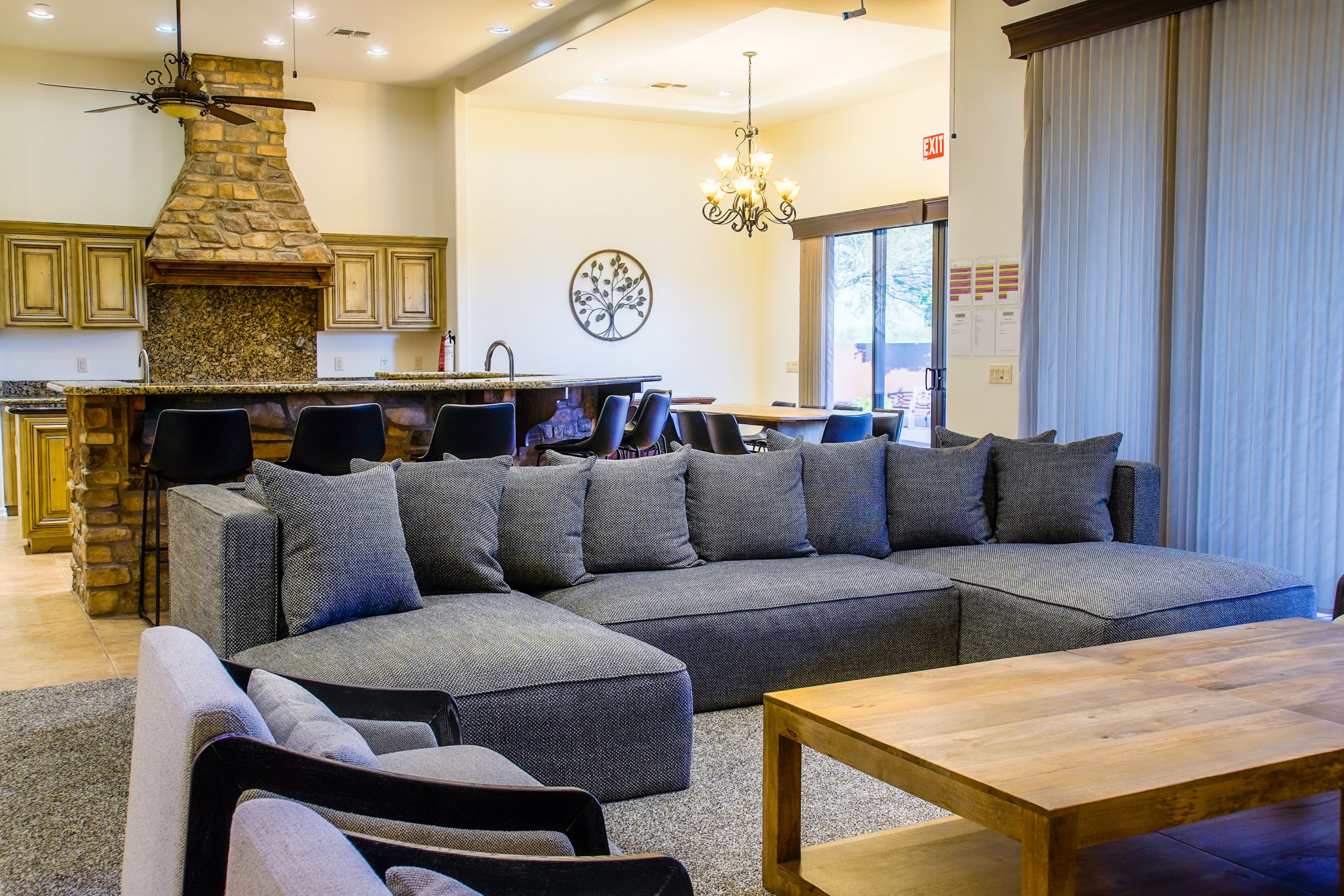
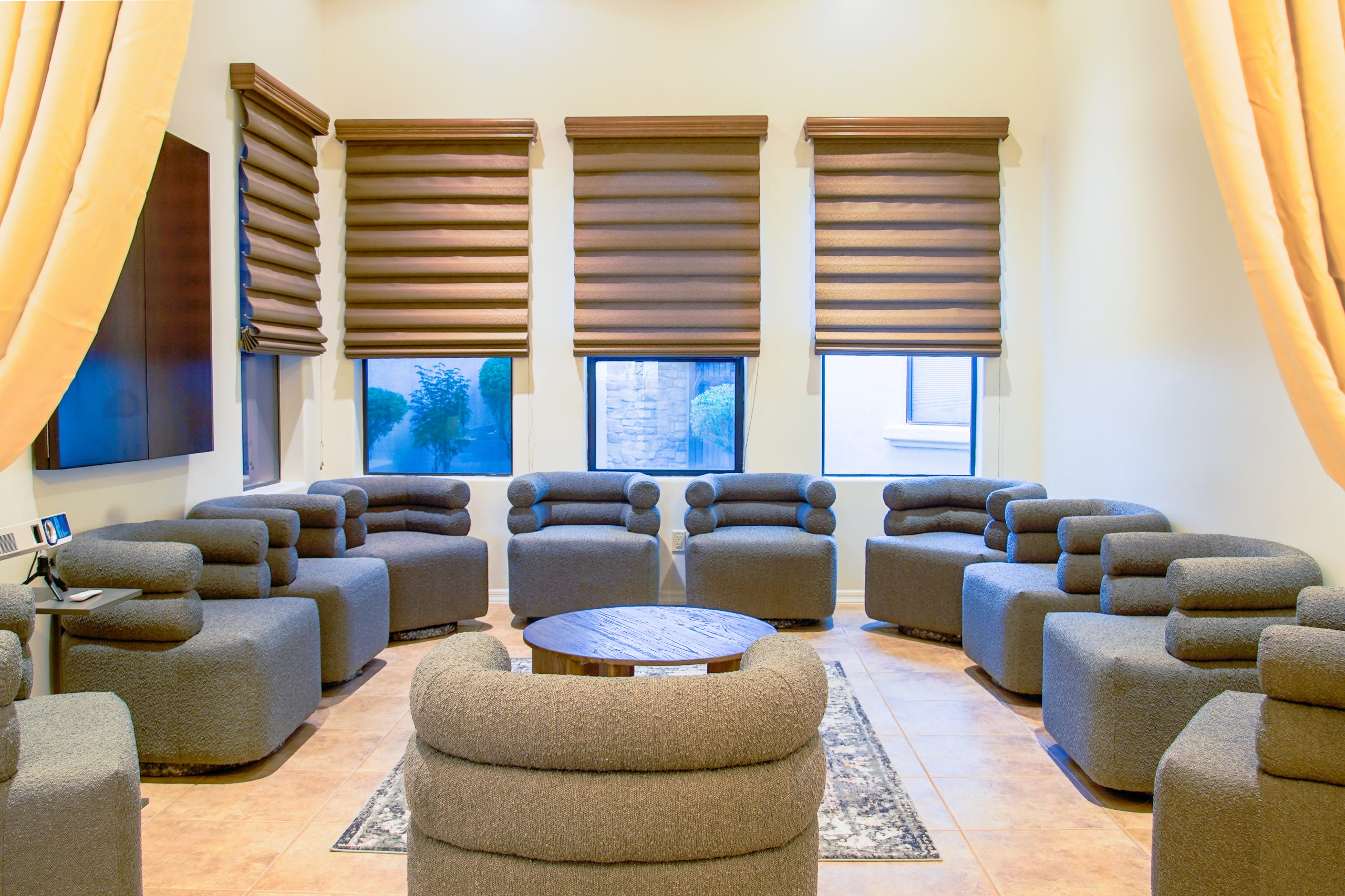
What a boys’ residential house looks like inside.
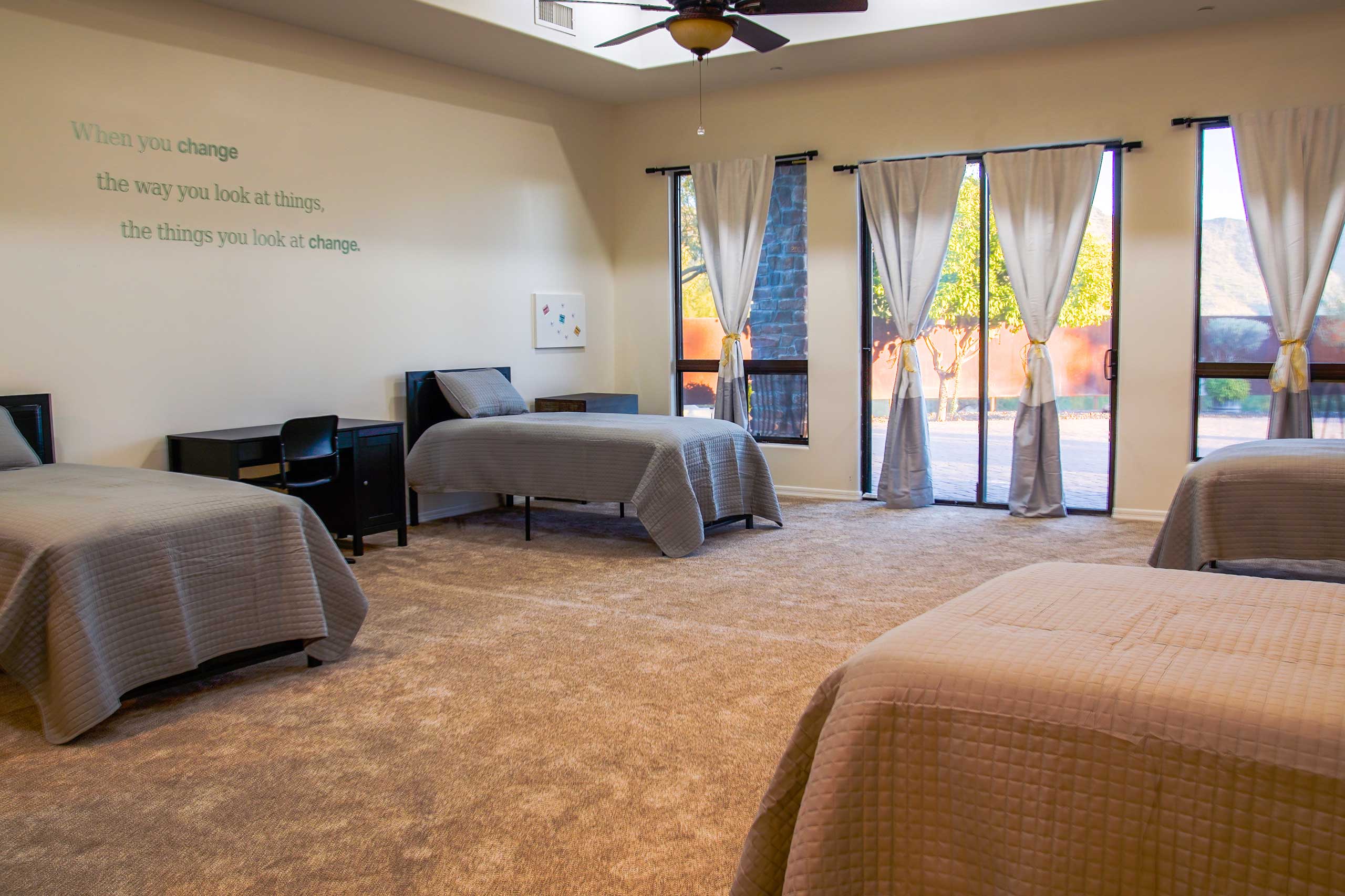
Boys disclose sideways, at a ping pong table or walking back from the yard, which makes the building part of the method rather than the backdrop.
- Oak, North Scottsdale, AZ
- Boys 12 to 17
- 3D walkthrough

3D walkthrough
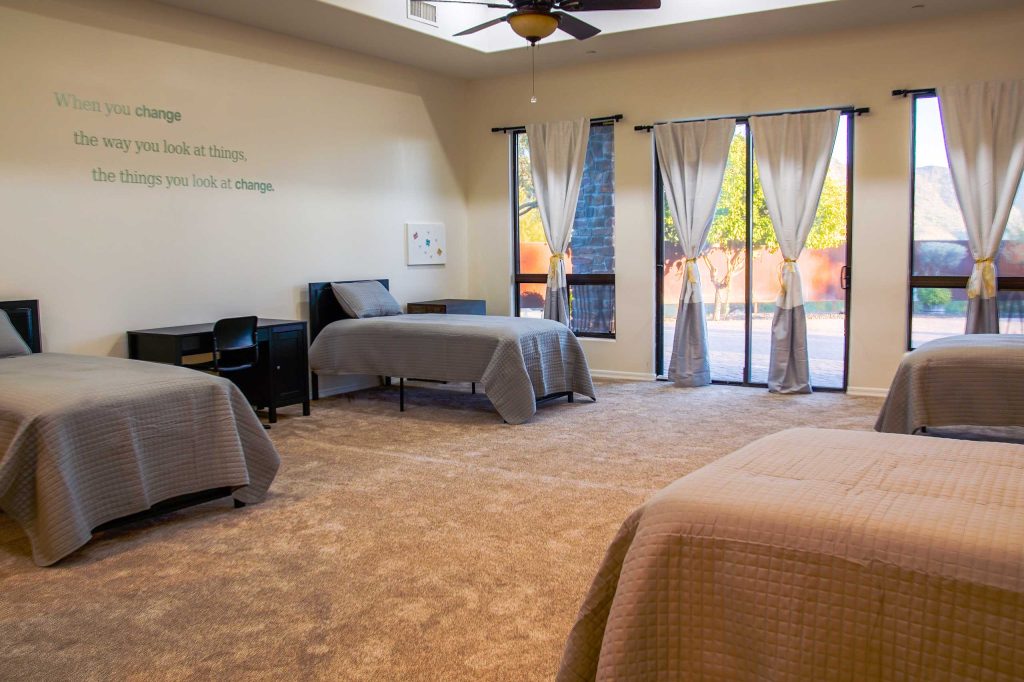
Bedrooms
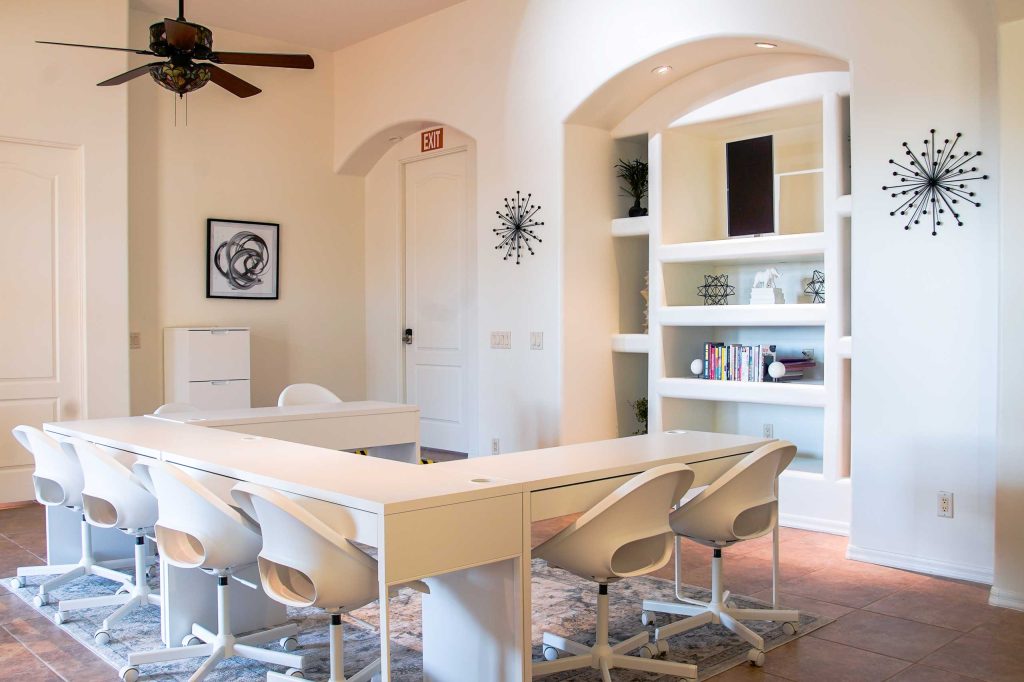
Classroom
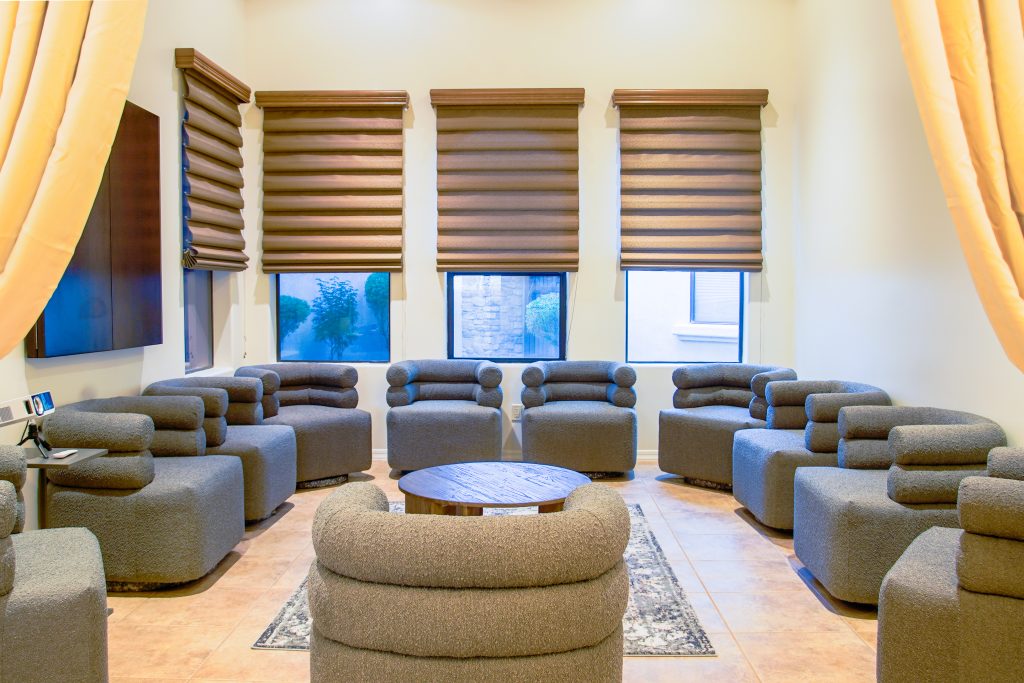
Group room
Bedrooms, classroom, group room and yard, at real scale, before you call.Open full screen ↗
Screens, gaming and the phone
Screen access is scheduled like sleep and medication rather than left open. Discharge settles the accounts, the console and the group chats waiting for him, written with you.
Sleep first, then everything elseProblem gaming drives the insomnia that blocks every other treatment, so lights out at 9:30 holds instead of being renegotiated nightly.
The supply route closesCannabis, vapes and counterfeit pills reach a teenager through the phone, so the device comes out of circulation while the substance treatment runs.

Meals
Meals, nutrition and kitchen duty
A kitchen team under Chef Melissa Stockmar cooks every meal, handling nutrition and dietary needs, and each boy works a daily life-skills rotation.
Dietary needs handledCooking groupLife-skills rotation

Downtime
Equine, outings and the game room
Friday equine therapy off-site with Ignite Equine, regular outings, and evenings across art, music and the game room.
Friday equineGame room

Location
Why the address matters clinically
Distance decides whether the weekly family hour happens in a room or on a screen. Oak sits on a residential street in 85260 under the McDowell Sonoran Preserve, so a Valley family can sit in the session and still make the next one.
McDowell Sonoran PreserveOff Loop 101
A weekday inside
A weekday inside the house, from wake-up to lights out.
The rhythm is posted where he can read it, so therapy, school, meals, movement and sleep arrive in an order he stops arguing with.
 6:30 - 8:00 am
Hygiene, meds & breakfast
Hygiene and meds from 6:30 to 7:30, then breakfast from 7:30 to 8:00.
 8:00 - 8:20 am
Gratitude journal
The day opens with a gratitude journal from 8:00 to 8:20.
8:30 - 10:45 amEducation
Education from 8:30 to 10:45, then a snack at 10:45.
11:00 am - 12:00 pmGroup therapy
Clinician-led group therapy from 11:00 to 12:00.
 12:00 - 1:00 pm
Lunch & mindfulness
Lunch together from 12:00 to 1:00, run with a short mindfulness practice.
 2:00 - 4:00 pm
Group therapy
Group therapy from 2:00 to 3:00, a snack at 3:00, then group therapy again from 3:15 to 4:00.
4:15 - 7:00 pmMovement, dinner & evening activity
Movement with nursing from 4:15 to 5:00, dinner at 5:00, then evening activity and meds from 6:00 to 7:00.
 7:00 - 9:30 pm
Free time & lights out
Free time from 7:00 to 8:30, evening hygiene from 8:30 to 9:00, gratitude journal at 9:00 and lights out at 9:30.
Weekends run their own shape
Weekends run lighter than the timetable above, with the Saturday Family Empowerment Group meeting for parents.
Book the no-cost consultation Or call (480) 485-3424 and admissions will describe a full Saturday in the house, answered at any hour.Clinical staff are awake in the house every hour, overnight included, at both Nexus residences.
After the stay
What happens when he steps down from residential.
Discharge planning starts weeks before the date, with you in the room. He leaves with the next level settled, an adolescent PHP or IOP where the picture calls for one, appointments already held near home, and a school return date agreed. His transcript travels with him, any 504 plan or IEP is redrawn before he sits in a classroom again, and telehealth carries the first weeks at home.

Straight answers
Boys residential treatment FAQs: cost, stay, school, safety.
Answers
Boys residential treatment FAQs
What Scottsdale and Arizona parents ask before placing a son: cost, length of stay, school, contact and safety.
A licensed admissions counselor will answer it on the phone now, with no script and nothing to sign.
Call nowAnswered any hour at (480) 485-3424The house & contact
Oak stands at 8611 E Cholla St, North Scottsdale, AZ 85260, on a residential street off Loop 101 in Maricopa County. Admissions answers on (480) 485-3424 at any hour, and the 3D walkthrough on this page opens every room without a phone call.
Yes. Boys aged 12 to 17 are the only residents, and there are no mixed-gender groups. The girls’ program runs separately at Cave Creek, twenty minutes north, under the same license and clinical model, so a family with a daughter is pointed there.
The phone window runs daily from 4:00 to 6:00 PM. Weekly family therapy is in person for Scottsdale and Valley families and by secure video elsewhere in Arizona, the Saturday Family Empowerment Group meets parents, and visits are booked with his clinical team.
Yes, and touring anywhere you are considering is the right instinct. Start with the 3D walkthrough higher on this page, then call to arrange an in-person visit, which Valley families usually get inside the same week.
Most often Scottsdale Unified, covering Chaparral, Desert Mountain, Saguaro, Coronado and Arcadia, and Paradise Valley Unified next door. The credits travel on an official transcript, and his own district agrees the return date in advance rather than on the day.
Yes. Paradise Valley, Fountain Hills, Carefree, Cave Creek, Tempe and the east valley are all a 15 to 30 minute drive, which keeps the weekly family hour an in-person appointment. Families from Tucson, Flagstaff, Prescott and Yuma place sons here as well.
Every meal is cooked in the house by an executive chef, so nutrition, allergies and dietary needs are handled rather than worked around. A written packing list arrives from your coordinator before move-in, and boys join a daily kitchen and life-skills rotation.
Care, school & cost
Residential treatment is licensed clinical care delivered where the boy lives. Under an AZDHS behavioral health residential license, therapy, psychiatry and an accredited classroom run inside one building, so the team sees the night and the argument rather than hearing about them.
Boys aged 12 to 17 whose depression, anger, trauma, anxiety, ADHD or substance use has outgrown weekly therapy, an IOP or a PHP, and boys stepping down from a psychiatric hospital with the transfer timed to that discharge.
Stays open at 30 days or more, then run to the written discharge criteria you are handed in week one, so measured progress sets the date rather than a calendar.
Usually in part, because the stay bills as licensed residential behavioral health treatment. A verification returns your network position, what the deductible has absorbed and the likely out-of-pocket, generally the same business day.
A licensed clinician evaluates him inside 24 to 48 hours of that first call, and where residential is supported, move-in follows within days under one named coordinator.
When symptoms keep climbing between appointments and the week at home can no longer be supervised. A collapsing school year, shifting sleep, or substance use and aggression surfacing point at the level of care rather than at effort.
Major depressive and persistent depressive disorder, generalized and social anxiety, PTSD and complex trauma, ADHD, oppositional and conduct patterns, bipolar spectrum, disruptive mood dysregulation, self-harm, suicidal ideation and substance use. The DSM-5 evaluation confirms each one before the plan is written.
No. Accredited classes run on site every weekday afternoon in small groups, and the credits he earns leave on an official transcript. Discharge planning sets the return date with his own district, and any 504 plan or IEP is redrawn before he sits in a classroom again.
Yes. Experiential therapy runs alongside the clinical hours, with Friday equine therapy delivered by Ignite Equine, plus art, music, psychodrama, sound therapy and daily mindfulness. Boys who will not sit still for talk therapy often engage through the horse first.
A therapeutic boarding school is education led with a lighter clinical layer, and suits a boy who is already stable. Residential is the clinical option, with a licensed team, daily therapy and awake overnight staff. Boys often use residential first and a boarding school afterwards rather than choosing between them.
Licensing & safety
Staff are awake on every night shift rather than on call, a registered nurse administers and records each dose, and substances and means of self-harm stay out of unsupervised reach.
Search the AZDHS provider registry for Nexus Teen Academy, confirm the Joint Commission accreditation at qualitycheck.org, and check the LegitScript certificate through its seal. Every clinician named on this page is searchable by license number in the AZ Board of Behavioral Health Examiners registry.
Yes, and substance use is screened on every admission rather than only where it is the referral reason. Motivational interviewing opens the work, and cannabis, nicotine and opioid use are treated inside the same plan as the mood disorder underneath them.
Anger is treated as the presenting symptom, so the evaluation looks underneath it for depression, trauma, ADHD or substance use. Clinicians set the limits, awake staff hold them, and the exit from a rising conflict is rehearsed in daily groups instead of punished afterwards.
Progress here is measured rather than asserted. Every element of the plan goes to a weekly review against movement on the admitting diagnosis, and the discharge criteria handed to you in week one are the same ones used to decide he is ready.
Most boys arrive unconvinced, and the first call covers how to raise it. The counselor talks through what to say, what not to promise, and who in the family should do the asking. A boy in acute danger is a different question, where 988 comes first.
Safety comes before placement. Ring or text 988, or drive to the nearest emergency department, because an acute crisis is settled in hospital first. Admissions then times the residential transfer to that hospital discharge so treatment continues without a gap.
The data behind it
Teen boys and mental health: Arizona and national.
Boys report less distress than girls and die more often, and that gap is the clinical argument for treating one population. In Arizona, state health data put lifetime depression diagnosis at 12% of adolescents, roughly double the share five years earlier.
6Figures5Named sourcesAZ+ national data
Boys compared with girlsWhere a source reports both, the bars show both.BoysGirls
Persistent sadness
27.7%high school boys
Persistent sadness or hopelessness
27.7% of high school boys reported persistent sadness, against 52.6% of girls, so what a boy reports is weak evidence on its own.
Boys27.7%Girls52.6%
Source: CDC YRBS 2023
Suicide risk
14.1%high school boys
Seriously considered suicide
14.1% of high school boys seriously considered suicide in the year, against 27.1% of girls.
Boys14.1%Girls27.1%
Source: CDC YRBS 2023
Suicide deaths
21.2per 100,000 males aged 15 to 24
Suicide death rate, ages 15 to 24
Among 15 to 24 year olds the suicide rate runs 21.2 per 100,000 for males against 5.5 for females, close to four times higher.
Source: NIMH suicide statistics
Overdose
69%of overdose deaths, ages 10 to 19
Adolescent overdose deaths that were male
69% of overdose deaths in 10 to 19 year olds were male. 91.3% involved opioids and 83.9% involved illicitly manufactured fentanyls.
Opioids91.3%Fentanyls83.9%
Source: CDC MMWR 71(50)
Counterfeit pills
24.5%of those deaths
Evidence of counterfeit pills
24.5% of those deaths showed evidence of counterfeit pills and about 41% had a documented mental health condition or treatment history. A bystander was present in 66.9%, and in two thirds of those cases nobody intervened.
Pills24.5%Bystander66.9%
Source: CDC MMWR 71(50)
ADHD
13%of boys, current ADHD
Current ADHD diagnosis
Current ADHD runs at 13% of boys against 7% of girls. 78% of diagnosed children carry at least one more condition, and around 30% receive neither medication nor behavioral treatment.
Boys13%Girls7%
Source: CDC ADHD data, NSCH 2024
Sources1CDC Youth Risk Behavior Survey, 2023 Data Summary and Trends Report2NIMH, suicide statistics, 20233CDC MMWR 71(50), overdose deaths ages 10 to 194CDC ADHD data, NSCH 20245Arizona Department of Health Services, 2024 Adolescent Mental Health Report
From across Arizona
Placing a son here from anywhere in Arizona.
North Scottsdale sits within a day’s drive of almost every Arizona town, and admissions answers at any hour wherever you are calling from.
Driving in from across the state
Reckon two hours up I-10 from Tucson, two and a half from Flagstaff down I-17, 90 minutes from Prescott and three hours from Yuma across I-8, which puts Sierra Vista and Lake Havasu City in the same band.
When the drive is too long
A long drive moves the weekly family hour onto secure video, and boys arriving from out of state land at Phoenix Sky Harbor, 35 minutes out. Closer in, families come from Paradise Valley, Fountain Hills, Carefree, Cave Creek, Tempe and the east valley.
Handover to clinicians near home
The team books a prescriber and therapist he can actually reach, and settles the return date with his own district, whether that is Scottsdale Unified, Paradise Valley Unified, Tucson Unified or Flagstaff Unified.
Oak, the boys’ house · Scottsdale
8611 E Cholla St, Scottsdale, AZ 85260
Answered 24/7 · Route it: Google Maps · Apple Maps
What distance changes here
Distance changes how the family hour is delivered and how he travels. It changes nothing about the clinical week, the classroom hours or the discharge plan written with his district.
Open the map
Select Scottsdale to load the live map of the boys’ house.
Google sees nothing until you select, so browsing stays private.