

Trauma and adverse childhood experiences can affect a child’s attachment, emotional regulation, and behavior toward caregivers. Many parents notice the same painful pattern: the more they try to help, the more their teen pushes back. That reaction may look personal, but it is not. For many teen boys, it is a trauma response shaped by …
More-
The Guilt Parents Carry When They Didn’t See Their Teen Son’s Trauma Sooner
According to research, more than two-thirds of children report experiencing at least one traumatic event by age 16. Yet, many parents do not realize what is happening until the warning signs become more painful for their teen sons. Teen boys may hide distress behind anger, shutting down, risk-taking, or acting like they are fine. When …
More -
How to Support Your Teen Son’s Trauma Recovery Without Burning Out
When your teen son is trying to heal from trauma, most of the pressure is on you as a parent. Studies found that post-traumatic stress affected 24.5% of parents months after a child’s traumatic medical crisis. Supporting a teen through trauma recovery is emotional work, practical work, and long-haul work. You may be juggling school …
More -
When Your Teen Son’s Trauma Affects Your Whole Family’s Mental Health
A teen’s trauma rarely stays contained to just one person. One study found that 1 in 6 parents developed PTSD after a child’s single-event trauma. This is a reminder that the emotional fallout can spread through the whole home. When your teen son is struggling, you may feel constantly on edge, and siblings can feel …
More -
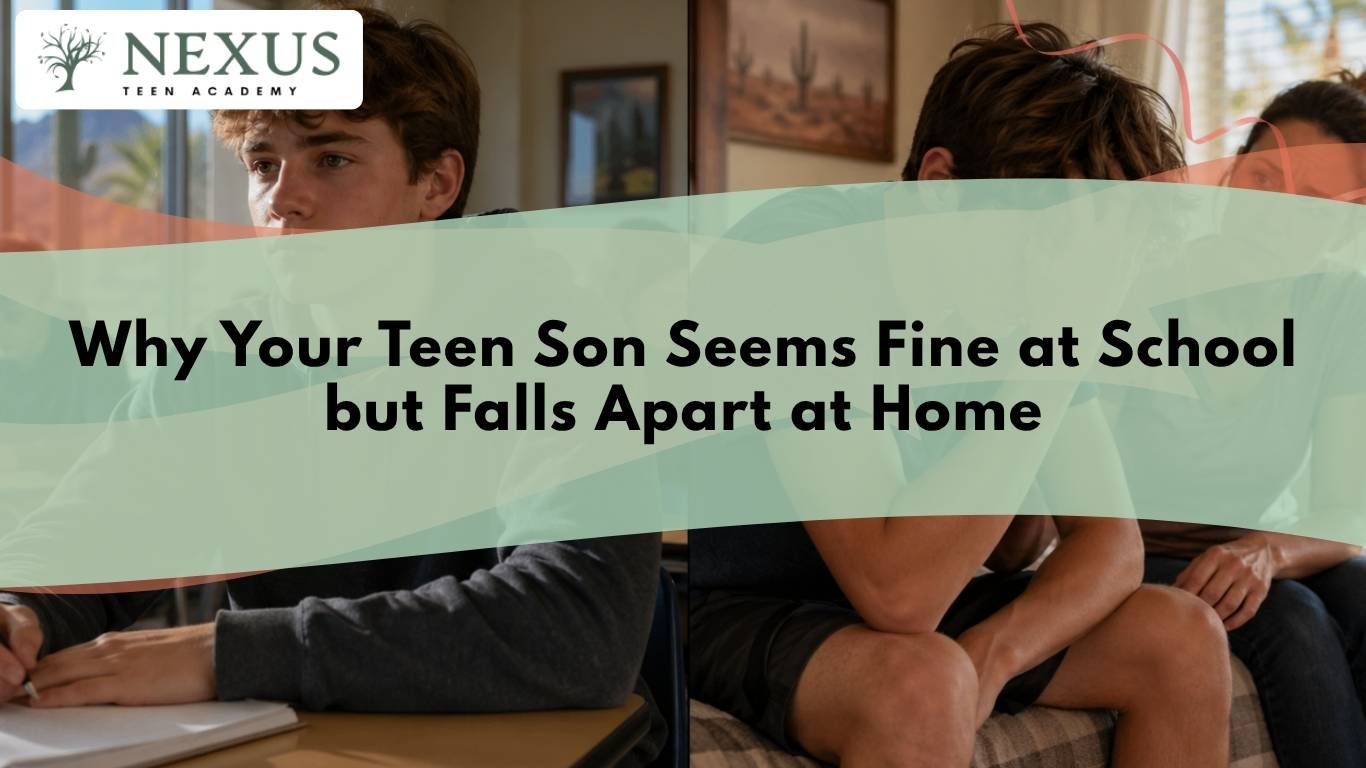
Why Your Teen Son Seems Fine at School but Falls Apart at Home
If your teen son seems fine at school but falls apart at home, you are not imagining it. In a large study of 6,947 parent-teen pairs, adolescents reported more emotional and peer struggles than their parents reported. A separate study also found that teens hide negative emotions more around peers than around parents. That helps …
More