


Most adolescents diagnosed with teen PTSD exhibit intense anger and persistent irritability. Parents are usually left exhausted and confused when a previously gentle son becomes explosive. It is easy to mistake such symptoms for rebellion or a lack of discipline. However, it is important to realize that most boys with teen PTSD use anger to …
More-

My Teen Son Was Bullied For Years: Why Is He Getting Worse, Not Better
Teen bullying in the US has troubling statistics. According to the National Center for Education Statistics, 1 out of every 5 students is a bullying victim. While most people believe that the end of the school year or a change in environment can bring immediate relief for such teenagers, nothing could be further from the …
More -
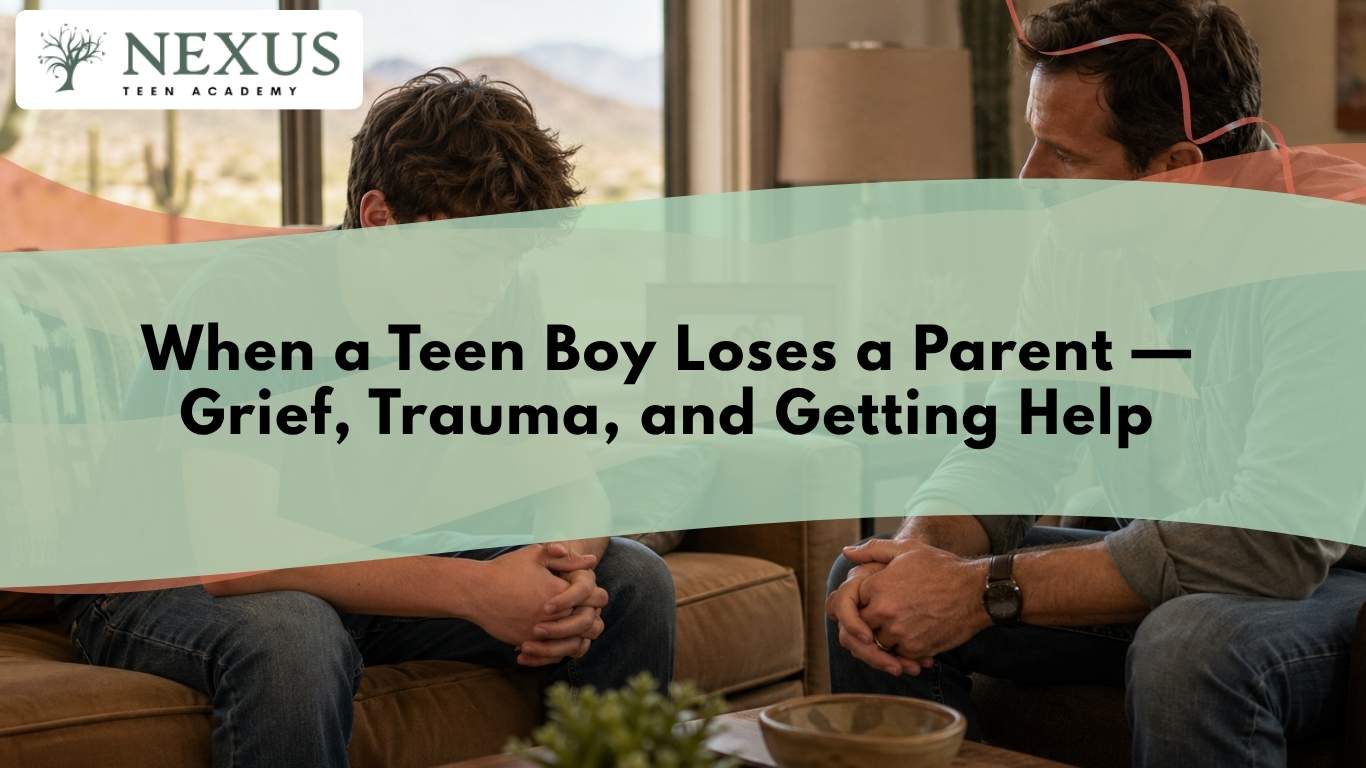
When a Teen Boy Loses a Parent: Grief, Trauma, and Getting Help
Parental loss is one of the most stressful and life-changing events an individual can experience. An estimated 6.6% of children experience parental death before their 18th birthday. The number increases during pandemics, natural disasters, or wars. For most teenagers, the loss of a mother or a father easily reshapes their identity and sense of security. It …
More -
Teen Boys and Trauma After a Parent’s Incarceration: What to Expect
Several teenagers in the United States have witnessed parental incarceration at some point in their lives. For teen boys, a father or mother going to prison is more than a simple family transition. It qualifies as an Adverse Childhood Experience (ACE), which is an indicator of future behavioral health conditions. Parents being behind bars usually …
More -

Hypervigilance in Teen Boys: What It Looks Like at Home and School
Traumatized teenagers may end up developing post-traumatic stress disorder symptoms. One of the signs of teen PTSD is hypervigilance. This causes a teenager’s brain to be stuck in threat mode. A hypervigilant teenager constantly scans for danger even where there is none. This state can be confusing for parents, but it helps to understand that …
More