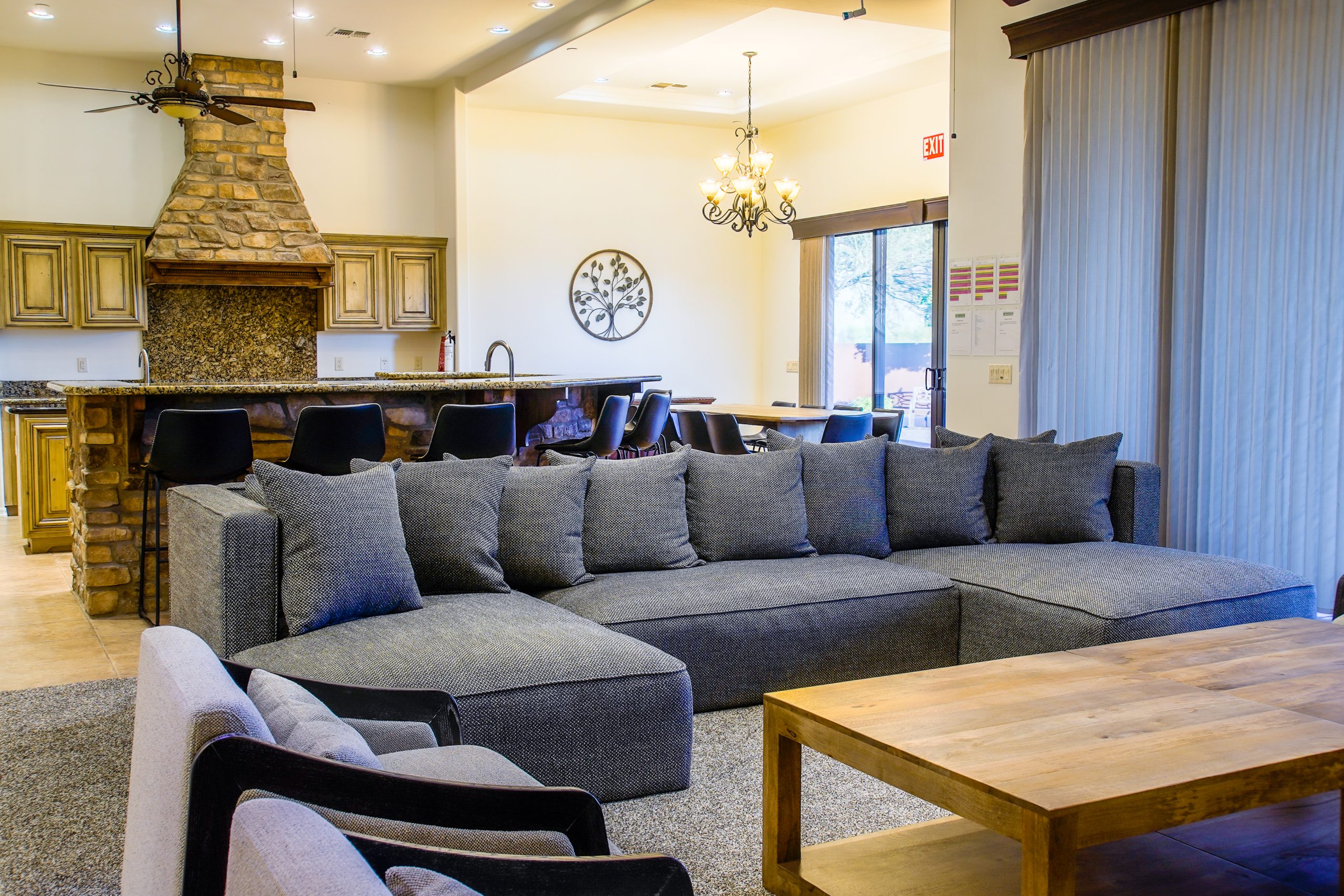

Teen Mental Health Treatment in Arizona

Teen group home in Scottsdale, AZ: therapeutic care.

Nexus Teen Academy runs two licensed residences for Scottsdale families, Oak for boys on E Cholla St and Mesquite for girls in Cave Creek, houses, not wards, carrying daily therapy, psychiatric care and an accredited classroom, ages 12 to 17.

Talk privately with admissions

Leave a number and a licensed admissions adviser rings back, usually inside a few minutes, to talk through fit, the short drive across town, and exactly what your plan covers.

Credentials you can audit yourself: AZDHS license, Joint Commission, LegitScript.

Go straight to the issuing bodies: Joint Commission · AZDHS registry · LegitScript.

One house in Scottsdale, one to the north

Group homes nearest Scottsdale: Oak in Scottsdale, Mesquite in Cave Creek.

Both residences are AZDHS-licensed behavioral health facilities in Maricopa County, accredited by the Joint Commission. Take the 3D walkthrough first, then come and stand in the rooms before you decide.

Oak · the boys’ residence

8611 E Cholla St, Scottsdale, AZ 85260, about 16 minutes from central Scottsdale, 8.3 miles across town.

Boys · ages 12 to 17North Scottsdale
View this facility

Mesquite · the girls’ residence

2695 E Saddle Mountain Rd, Cave Creek, AZ 85331, about 47 minutes from Scottsdale, 34.5 miles north via I-17 and Carefree Highway.

Girls · ages 12 to 17Cave Creek
View this facility

Separate houses by gender keep group living low-pressure, and a single admissions line covers both, (480) 485-3424, answered day and night.

The label versus the license

Group home vs residential treatment: how the two differ.

“Group home” describes a building with staff in it. Whether your teen receives supervision or clinical treatment is set by the license class that building holds, and by who is employed to deliver the therapy.

Same setting, two very different licenses

What the label hides, and what the license makes plain.

The settingA group home

A licensed house, trained staff, shared routines, and round-the-clock supervision. Clinical depth varies widely from house to house; some run therapy on-site, many arrange it outside.

The Nexus modelA therapeutic home

The same home-like setting carrying a full treatment program inside it, AZDHS behavioral-health licensure, daily therapy, psychiatric care and accredited school under one roof. Group home in shape, treatment center in substance.

What you get here

Ask any Scottsdale facility two questions, which license it holds and who delivers the therapy. Both answers for Nexus Teen Academy sit on this page, sourced.

Call (480) 485-3424 and ask both

Why placements start

Conditions treated: twelve conditions, one clinical team.

Placement starts with a diagnosis, and the treatment plan aims at it. Intake confirms the whole picture, because depression rarely arrives alone and ADHD rarely arrives without substance use.

Intake confirms the whole picture, and one plan covers all of it, because treating one condition while the others run untouched is why teens cycle through program after program.

Every condition below is treated inside the same home, by the same clinical team.

Before anyone signs

Who qualifies for placement: age range and admission checks.

Admission is clinical and parent-led, ages 12 to 17, when anxiety, ADHD, substance use, depression or trauma that weekly therapy is no longer holding. Decide the level of care first, then audit the facility, including this one.

Teens are placed by parents or treating clinicians after outpatient care, PHP, or IOP stopped holding, or step down straight from psychiatric hospitalization. A teen in acute crisis stabilizes at a hospital first, and admissions times the transfer so treatment starts at discharge.

Foster and state placements run through DCS and its contracted providers, a separate system with its own group homes. When ours is not the right door, admissions points families and caseworkers to the one that is.

In a mental health crisis tonight, place the checks second, call or text 988 or go to the nearest emergency room first.

Then run four checks on any Scottsdale facility before you place your teen.

Read the license, not the brochure

Two houses on the same Scottsdale street can hold completely different licenses. The AZDHS registry tells you which one you are looking at, and it takes about a minute to search.

Find out who employs the clinician

A therapist on staff and a therapist who visits on contract produce very different weeks for a teen. Ask for license numbers and check them against the state registry yourself.

Get the school answer before the deposit

Accredited classroom or study hall? Certified teachers or supervision? How do credits move back to the sending district? Vague answers here become a repeated year later.

Demand a verifiable paper trail

License, accreditation, certification, each should lead to an issuer you can query independently. A claim you can only confirm by phoning the facility back is not a claim.

The money question

Cost and insurance for Scottsdale families: what coverage includes.

Almost nobody pays a list price. Residential treatment is billed through behavioral health benefits, and the only figure worth planning around is the one your own insurer confirms in writing.

  1. 1You send your plan detailsTwo required fields, member ID optional. About a minute.
  2. 2We verify with your insurer directlyIn-network or out-of-network, free and confidential, usually the same day.
  3. 3You get the number in plain EnglishDeductible, out-of-pocket maximum and any prior authorisation, before you commit to anything.

Out-of-network, or unsure what the plan says? Call anyway. Single case agreements and out-of-network benefits often cover a licensed group home placement.

Coverage numbers in about two minutes

See what your plan pays toward the group home program, in-network or out. Free, private, decides nothing.

HIPAA-protectedNo obligationNever sold or shared

Group home admissions

Admissions process: assessment, approval, arrival.

Our promise while you decide

1

The first call

A licensed counselor hears what has been happening, what has been tried, and where your teen stands on safety, then gives a plain read on whether a therapeutic group home is the indicated level.

2

Coverage, in writing

With your authorization we query the insurer directly and hand back the numbers, residential benefits, network status, and the realistic out-of-pocket.

3

Clinical evaluation

A licensed clinician assesses the condition behind the placement, screens safety, reviews prior treatment, and recommends the level of care the findings support.

4

Preparing move-in

One named coordinator handles school records, current prescriptions, what to pack, and the arrival time, discreetly and in writing.

5

Move-in day, kept calm

A fixed arrival sequence, orientation, introductions, medications checked in with the prescriber, and your first family update on the calendar before you head home.

Inside the group home program

What the program includes: therapy, psychiatry, school, aftercare.

Every admission carries a treatment center’s clinical program inside a home’s setting. Each element below is reviewed weekly against measurable progress on the admitting condition.

Evaluation & individualized plan

A DSM-5 evaluation opens every stay, and an individualized treatment plan follows from the actual diagnoses rather than the loudest symptom.

Daily individual & group therapy

Licensed clinicians run CBT-based individual sessions and twice-daily groups, on the posted weekly schedule.

Psychiatric & medication care

A prescriber manages any medication with parents consulted at every change, and medication administration is supervised daily.

Weekly family therapy & Saturday group

Family involvement is built in as a requirement, weekly family therapy in person or by secure video, plus the Saturday Family Empowerment Group with other parents.

Accredited on-site school

Small classes with transferable credit keep the semester alive, coordinated with your district for the return.

Structured group living & life skills

Chef-prepared shared meals, chores, and life-skills practice, cooking, gardening, and time management, run as daily social training.

Equine, arts & outings

Friday equine therapy, art and music interventions, regular outings, and daily movement in the desert air.

Discharge & return plan

An outpatient team is booked near home, school re-entry is staged with your district, and the family plan is rehearsed before the drive back home, ensuring continuity.

The treatment layer

Therapies used in the homes: CBT, EMDR and family work.

Evidence reviews rate family-based therapy and cognitive behavioral therapy as the best-supported treatments for the conditions these homes admit. Residential living turns both from a weekly hour into daily practice, with TF-CBT and EMDR added where trauma drives the case.

Teen in a one-on-one therapy session1

Individual CBT

Daily one-to-one work on the thoughts and triggers driving the admitting condition.

daily sessions
Teens in a clinician-led group session2

Group therapy, twice daily

Clinician-led groups at 9:00 and 11:00, where the house itself becomes the practice ground.

9:00 & 11:00
Family therapy session with parents3

Weekly family therapy

In person for metro families, secure video beyond, rebuilding the system your teen returns to.

in person, metro
Prescriber reviewing a treatment plan4

Psychiatric & medication care

Prescriber-led medication management, supervised daily, inside the home rather than across town.

on-site
The on-site academic room5

Accredited academics

Credit-bearing classes on-site every weekday, coordinated with your district for re-entry.

credits transfer
Teens in an outdoor experiential activity6

Equine & experiential

Friday equine sessions, art and music work, and regular outings, the structured outlets a house full of teenagers needs.
equine Fridaysart & music

Daily schedule in the homes

Daily schedule: a weekday, hour by hour.

Both homes run the same posted rhythm, school, therapy, meals, movement and sleep, so a teen always knows what comes next.

MorningAfternoonEvening
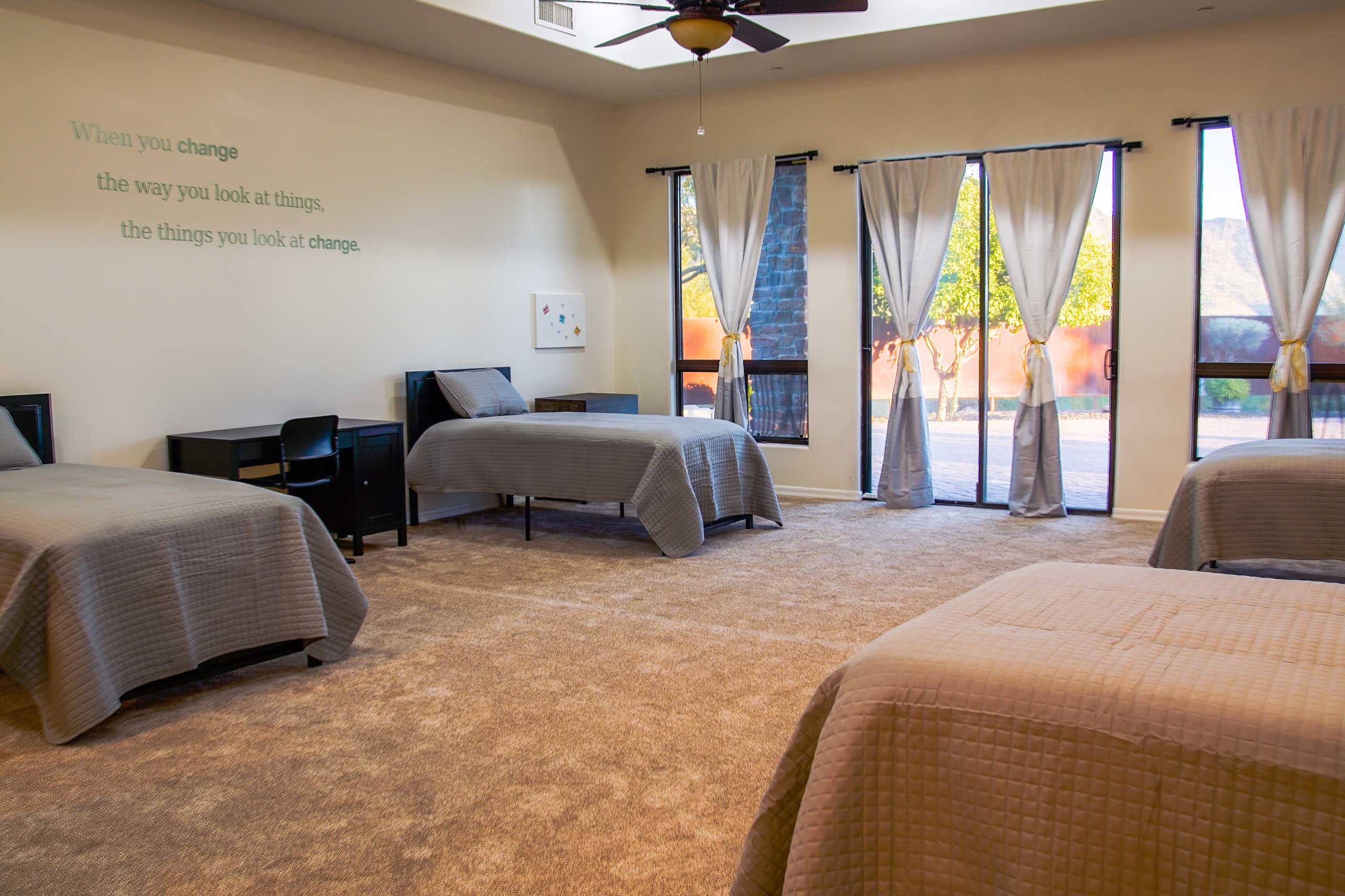
A teen bedroom filled with natural morning light inside a Phoenix-metro group home7:00 - 8:00 am
Morning

Wake, hygiene & breakfast

Wake-up and hygiene at 7:00, then breakfast and medications from 7:30 to 8:00.

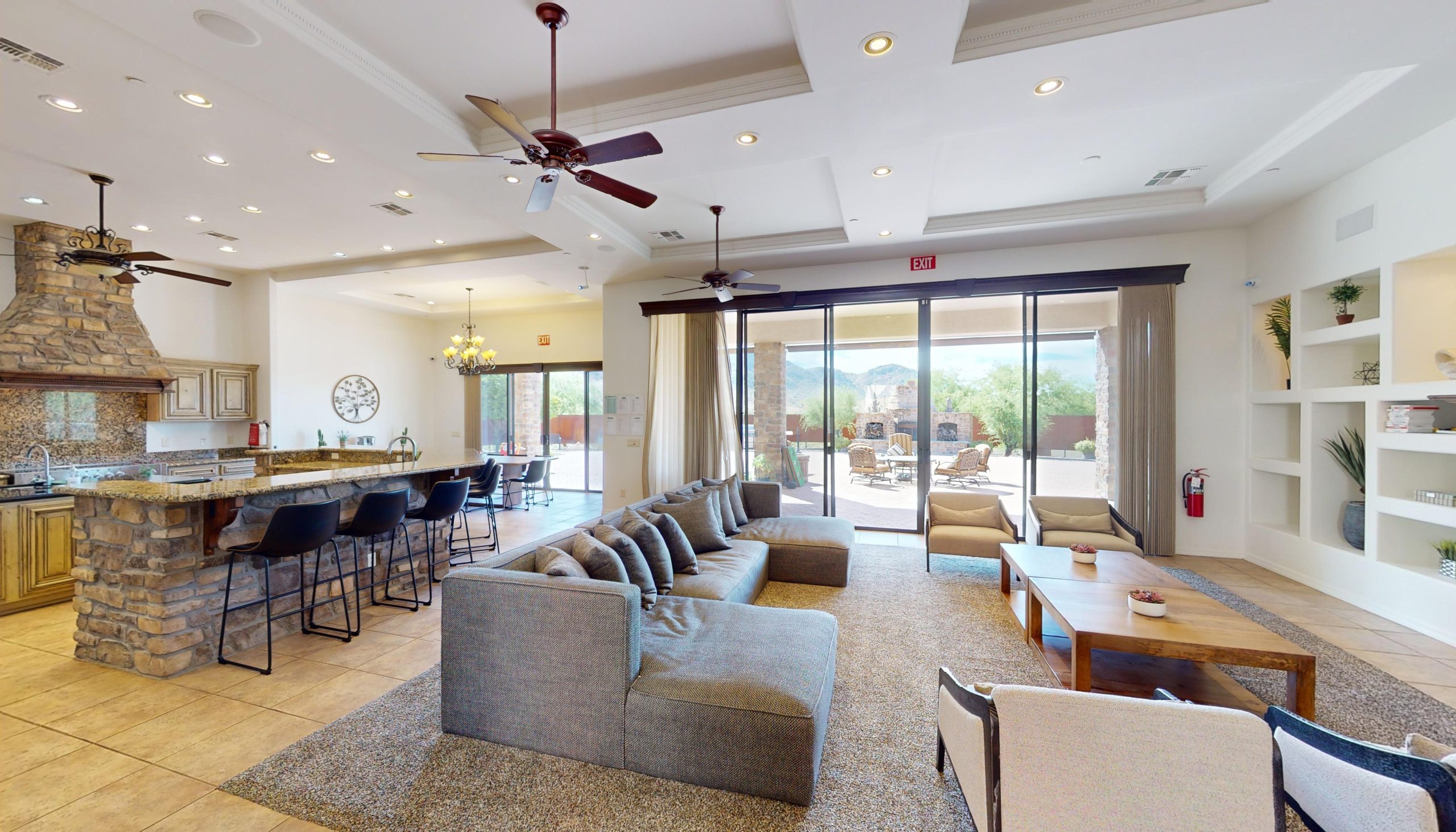
The common living area where the day opens with a gratitude journal8:30 am
Morning

Gratitude journal

The day opens with a gratitude journal at 8:30, before the first group.

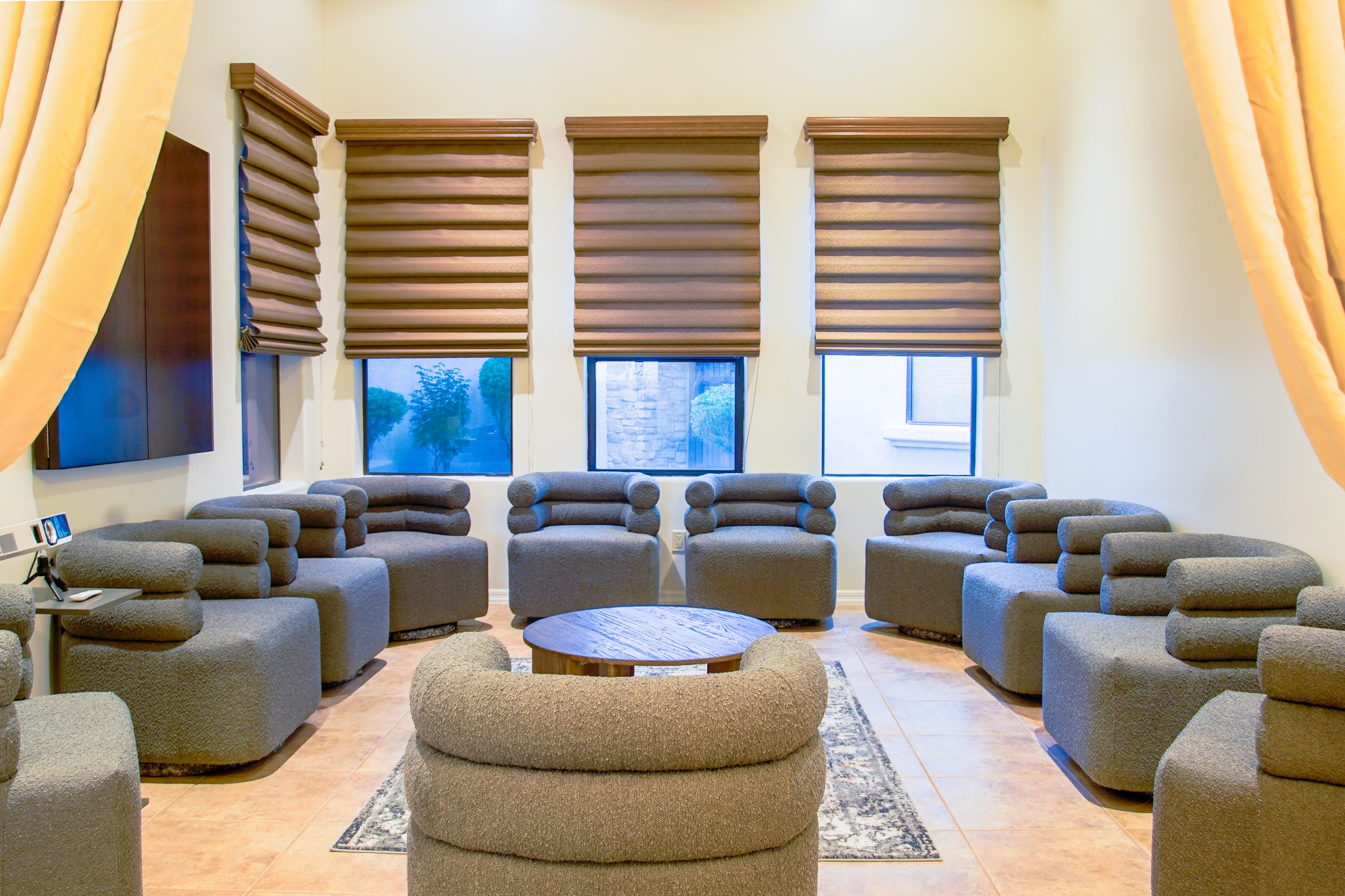
Teens in a clinician-led group session inside the home9:00 - 11:00 am
Morning

Clinical groups

Clinician-led group at 9:00, a snack at 10:45, then a second group at 11:00.

The shared kitchen and dining room where residents cook and eat together12:30 pm
Afternoon

Lunch & mindfulness

Lunch together at 12:30, run with a short mindfulness practice.
The on-site accredited classroom inside a Nexus Teen Academy group home1:00 - 3:45 pm
Afternoon

Accredited school

Education from 1:00, a snack at 2:15, then the second block through to 3:45.

The group room used for the afternoon nursing group4:00 - 5:00 pm
Afternoon

Nursing group & family calls

Nursing group runs 4:00 to 5:00, and the family phone window holds from 4:00 to 6:00.

The backyard and mountain view at a Nexus Teen Academy group home5:00 - 7:00 pm
Evening

Dinner & evening activity

Dinner together at 5:00, then evening activity and medications from 6:00 to 7:00.

The game room with a ping-pong table used for evening free time7:00 - 9:30 pm
Evening

Free time & lights out

Free time to 8:30, evening routine, journal and electronics off at 9:00, lights out at 9:30.

Weekends run differently

Family phone calls 4:00 - 6:00 pm, every day

Saturday and Sunday follow a lighter routine than the weekday schedule above, with the Saturday Family Empowerment Group for parents.

Schedule the free consultation Or call (480) 485-3424 and admissions walks you through a full weekend in the homes, answered 24/7.

Awake clinical staff are on-site every hour, including overnight, in both Phoenix-metro homes.
How the days run

Daily life and house rules: routines, meals and screen time.

Chores, screen limits and bedtime are set by house rule and the rhythm holds every day, meals together, school, downtime, a wind-down before lights out. Staff are awake through the night.

Chef-prepared meals & life skills

A dedicated kitchen team led by Chef Melissa Stockmar cooks the shared meals, and residents build life skills daily, cooking, gardening, cleaning, and time management.

Family contact, every day

The 4:00 to 6:00 PM phone window runs daily, weekly family therapy happens in person for metro families, and visits are scheduled with the clinical team.

Outings, equine & activities

Friday equine therapy, regular outings, and in-house activities from art and music work to game-room evenings, structure that feels like living, not confinement.

Families stay close

Family therapy for Scottsdale parents: how parents stay involved.

Living in the same city as the boys’ residence changes what family work can look like. Weekly sessions happen in person rather than over a screen, the 4:00 to 6:00 PM call window runs daily, and a parent can be in the room on a weeknight without taking a day off.

Licensed clinical team

Clinical staff: the team behind the care.

Licensed clinicians and a psychiatric prescriber run the program. Every Arizona license below is verifiable in the AZBBHE registry, and the house team running education, family services and meals follows in the same row.

Hannah Carr-Unquera, Executive Director at Nexus Teen AcademyLPC, BC-TMH

Hannah Carr-Unquera

Executive Director

Leads the clinical program across both homes, licensed in Arizona and board certified in telemental health.

Dr. Tyler White, Director of Adolescent Clinical Services at Nexus Teen AcademyLCSW, DSW

Dr. Tyler White

Director of Adolescent Clinical Services

Sets the treatment plan each resident’s team works to, and supervises the clinicians who deliver it.

Alexandria Penner, Psychiatric Nurse Practitioner at Nexus Teen AcademyDNP, PMHNP-BC

Alexandria Penner

Psychiatric Nurse Practitioner

Runs psychiatric evaluation and medication management on-site, so prescribing stays inside the house.

Ashley Daniels, Director of Family Services & Education at Nexus Teen AcademyHouse team

Ashley Daniels

Director of Family Services & Education

Runs family services and education across both homes, after directing theatre and teen programs and building liberal-arts residential summer camps for Mount Holyoke College and Bryn Mawr College.

Jennifer Inderberg, Education Supervisor at Nexus Teen AcademyHouse team

Jennifer Inderberg

Education Supervisor

Twenty-five years in education, supervising the accredited school that runs inside each house and the credit transfers back to your district.

Melissa Stockmar, Director of Food Operations at Nexus Teen AcademyHouse team

Melissa Stockmar

Director of Food Operations

Leads the kitchen team behind the chef-prepared meals, and runs the cooking group where residents learn to feed themselves.

Arizona-licensed clinical team. Every clinician running the homes is licensed in Arizona. Verify any license in the AZBBHE public registry.

Verified parent reviews

Google reviews: what parents wrote publicly.

4.7/ 5

★★★★★34 verified Google reviews · Oak & Mesquite homes
Read them all on Google

★★★★★

“Nexus Teen Academy was a wonderful place for my daughter. The staff were amazing and so supportive. They worked with our entire family. Highly recommend.”
CCarol T.Verified Google review

★★★★★

“I highly recommend Nexus Teen Academy. The structure, support, and care they provided made a significant impact on my child, and it was also maintainable post-residency. During the residency, I attended a parent group led by the therapists who worked with the kids; where we learned critical skills and distinctions which helped with life afterward. It was also great to be in contact with other parents during this time, and the parenting group was great for this.”
SSean H.Verified Google review

★★★★★

“My daughter was referred here after her various visits to psychiatric hospitals.I was so scared to be apart from my child but Nexus made me feel better about my decision because of their loving and welcoming environment. I love everything about this place, they really love the kids and support parents along the way. I appreciate everyone that loved and supported my child while she was at her lowest. I recommend this place to anyone that may feel like they have tried all they can and they do not know what to do next because Nexus will help you with the next steps in your journey.”
JJasmine C.Verified Google review

★★★★★

“I would like to share that we had a great experience at Nexus Teen Academy. All of the staff is great with communication and assisted us through the process. I am very grateful for all of the resources, help and treatment for my teen throughout their stay. The have an amazing team and would recommend to anyone who needs the help.”
VVanessa A.Verified Google review
31 more reviews on GoogleUnedited, public, and open for any family to add their own.Read every review →

These come straight from our public Google Business Profile, anyone can read all 34 and add their own.

Planning the exit

Discharge and aftercare for Scottsdale teens: step-down care and follow-through.

The discharge plan is drafted in the opening fortnight. It names the step-down level of care, the outpatient clinician who takes over locally, the prescriber who continues medication, and the date the school expects your teen back at their desk.

Related reading

Teen mental health guides: reading for families weighing placement.

These guides cover the conditions that bring most Scottsdale families to a therapeutic group home, written by the clinicians who run the houses. Every guide names the treatment the condition responds to, and each links through to the residential program that delivers it.

Every guide names the treatment the condition responds to, and each links through to the residential program that delivers it.

The statewide picture

Arizona teen mental health, the statewide picture

Adolescent depression and anxiety have risen sharply across Arizona, and for a growing number of families weekly outpatient therapy is no longer enough. The state’s own data shows why a middle level of care, residential treatment, exists.

Aerial view of a Nexus Teen Academy residential center in Arizona

4 in 10

Arizona high-schoolers reported their mental health was not good most or all of the time.

3 in 10

Seriously considered suicide, and about 1 in 10 attempted.

97%

Rise in adolescent depression diagnoses in Arizona, 2016 to 17 to 2020 to 21.

55%

Rise in anxiety diagnoses over the same period.

Arizona’s 988 and Teen Lifeline lines meet the emergency, but a crisis call is stabilization, not ongoing treatment.

Residential care is the step between outpatient therapy and the hospital, the middle is what has been missing.

Sources: Arizona Department of Health Services, Adolescent Mental Health Report; Arizona Youth Risk Behavior Survey (2021); National Survey of Children’s Health.

Talk to an Arizona counselor, 24/7

Scottsdale questions

Scottsdale parent FAQ: the questions parents ask first.

Scottsdale answers

What local parents want pinned down

When the house is eight miles away, the questions change. These are the ones Scottsdale families press hardest on.

Still holding a question?

Ring the admissions desk and ask it out loud. No script is read to you and no file is opened without your say-so.

Call admissions nowAnswered 24/7 at (480) 485-3424

Proximity & privacy

Oak sits at 8611 E Cholla St in the 85260 ZIP, inside Scottsdale city limits, Google Maps measures 8.3 miles and about 16 minutes from central Scottsdale. The girls’ house, Mesquite, is in Cave Creek, 34.5 miles and roughly 47 minutes north on the Loop 101 and Scottsdale Road.

Nothing about the house advertises itself. There is no signage, no uniform, and staff do not discuss residents outside the clinical team. Enrolment records move under the same confidentiality rules any Arizona behavioral health provider works to.

Visits are scheduled with the clinical team rather than unannounced, and that is on purpose: a teen in the early weeks needs a predictable week more than a surprise. Being sixteen minutes away simply means the scheduled visit is easy to keep.

Never. Oak in Scottsdale takes boys 12 to 17; Mesquite in Cave Creek takes girls 12 to 17. Two buildings, two staff teams, one admissions number.

Yes. The 3D tour on this page opens both residences immediately, and an in-person walkthrough is arranged with the clinical team, a short trip when you already live in the same city.

No. Admission here is clinical and comes from a parent or guardian. Arizona’s child-welfare system runs its own licensed group homes through contracted providers, and admissions will say so plainly rather than take a placement that belongs elsewhere.

Treatment, school & billing

It continues. Classes run on-site in an accredited school with certified teachers, and the academic coordinator works to the sending school’s credit requirements so the return is a transfer rather than a lost semester.

Good coverage helps, but only a benefits check tells you the real number. Send the plan details and the insurer is queried directly, network status, deductible, out-of-pocket maximum and any prior authorisation, handed back in writing before you sign anything.

Depression, anxiety disorders, trauma and PTSD, self-harm and suicidal thinking, mood instability, and substance use that sits alongside any of them. Co-occurring conditions are treated as one clinical picture, not handed to two separate programmes.

Thirty to ninety days is the usual band, decided clinically and revisited as the picture changes. The step-down plan is written early, so you are never guessing what week ten looks like.

Often within days once the evaluation and coverage clear. The evaluation is never shortened to make that happen; a wrong placement costs a teen more than a wait does.

Proof & oversight

Look up Nexus Teen Academy in the AZDHS provider registry, check the Joint Commission accreditation at qualitycheck.org and verify the LegitScript seal. Every credential on this page traces to the body that issued it.

Placement waits for safety. Call or text 988 or go to the nearest emergency department, HonorHealth Scottsdale Osborn and Shea are both minutes away. Hospital stabilisation comes first, and admissions times the move so treatment starts the day your teen leaves.

Families from further out

Placement across Arizona: Tucson, Flagstaff, Prescott, Yuma.

A central Maricopa County address keeps both residences inside a single day’s drive for practically any family in the state. Someone answers at any hour.

From beyond the Valley

Count roughly two hours from Tucson via I-10, 2½ hours from Flagstaff down I-17, 90 minutes from Prescott, and three hours from Yuma on I-8, with Sierra Vista and Lake Havasu City close behind.

Family sessions by secure video

When the drive is long, the weekly family session runs over secure video, and arrivals route through Phoenix Sky Harbor for out-of-metro and out-of-state families.

The return, arranged locally

Before discharge we book an outpatient team near your home and stage school re-entry with your district, whether that is a Valley district, Tucson Unified, or Flagstaff Unified.

Oak · boys’ group home, North Scottsdale

8611 E Cholla St, Scottsdale, AZ 85260

Admissions 24/7

Mesquite · girls’ group home, Cave Creek

2695 E Saddle Mountain Rd, Cave Creek, AZ 85331

Admissions 24/7

See a center on the map

Tap Cave Creek or Scottsdale below to load its interactive map right here.

Google Maps loads only when you choose, so nothing is shared with Google before you opt in.

Explore each Nexus Teen Academy home

Scottsdale (boys)

North Scottsdale, 85260 · off Loop 101

Cave Creek (girls)

Saddle Mountain Rd, 85331 · 20 min north

Phoenix metro

Served from both centers

Yuma & SW Arizona

Travel, telehealth & aftercare