

- Joint Commission accredited
- Two AZ centers
- Ages 12 to 17
- Admissions 24/7
Residential treatment for teen depression near Glendale, Arizona.
When outpatient care around Glendale is no longer enough to steady your teen, full-time residential treatment is available across the Valley at our accredited centers. Joint Commission accredited, for ages 12 to 17.
- Free & confidential · No obligation · (480) 485-3424
- 4.7 Google · 37 reviews
- AZDHS-licensed residential facility
- Most major private insurance accepted
- Free consultation
- Counselor online now
Calling from Glendale, Arrowhead, the Peoria side or anywhere in the West Valley? Leave a number and a licensed admissions counselor will call you back, usually within minutes, to talk through whether residential care fits, what your insurance covers, and how the first step works. No pressure.
- It's now where you are · typical callback under 10 minutes.
- Secure, private, and HIPAA-protected. By submitting you agree to be contacted about care; message/data rates may apply.
- 4.7 Google · 37 reviews
- Joint Commission accredited





Every credential is independently verifiable. Joint Commission · AZDHS registry · LegitScript.
 Joint Commission accreditedAZDHS-licensed · LegitScript certified
About Nexus Teen Academy
Accredited teen depression treatment, an easy reach for West Valley families.
Many Glendale families arrive here worn down: the counseling, the school meetings and the constant worry have not turned things around, and a teen’s depression keeps deepening. When daily life is ruled by it, residential care brings a level of structure and clinical support that outpatient visits cannot match. Our centers sit across the Valley, close enough that West Valley parents can stay closely involved throughout.
Two separate homes on the northeast side of the metro, one for boys in North Scottsdale and one for girls in Cave Creek, both licensed and reachable across the Valley from Glendale, and both designed to feel like a home rather than a facility.
Nexus Teen Academy provides residential treatment for teen depression for families from Glendale, Arizona, for ages 12 to 17. Teens live in a licensed home in North Scottsdale (boys) or Cave Creek (girls) with daily therapy, accredited school on site, and weekly family therapy. Most stay 30 to 60 days, and the team works with AHCCCS and most private insurance.
North Scottsdale
Boys, 12 to 17 · Phoenix metro
Cave Creek
Girls, 12 to 17 · Phoenix metro
Accredited Phoenix-area centers
Ages we treat, gender-separate
Awake clinical staff, every hour
A primary therapist, by name
Secure form · About 2 minutes · Free, no obligation
Our admissions team will reach out to you soon. Here’s what happens next:
- An admissions counselor contacts you, free and confidential
- If you asked about coverage, we check your benefits with your insurer
- You get honest answers and clear next steps, with no obligation
Where residential care fits: IOP, PHP or residential
The subacute level between weekly therapy and a hospital bed.
Therapy once or a few times a week. Your teen stays home and at school.
Live-in clinical care with 24/7 awake staff, daily therapy, and accredited school, in a real home.
You are hereShort-term acute stabilization for immediate medical or safety crisis.
| Question | Intensive outpatient (IOP) | Partial hospitalization (PHP) | Residential (RTC) |
|---|---|---|---|
| Best for | A step down from PHP, or a starting point for teens who need more than weekly therapy | A step down from residential care, or a starting point for teens who need structure without 24/7 care | Teens who need 24/7 care in a safe, immersive setting |
| Where your teen sleeps | At home | At home each evening | A licensed, home-like residence with 24/7 awake staff |
| Weekly schedule | About 4 hours a day (10:30 to 2:30 or 1:00 to 5:00), 3 to 4 days a week | Several days a week, multiple hours a day | Daily therapy, with care around the clock |
| Typical length | 30 to 90+ days | 30 to 90 days | 30 to 60 days |
| School | Stays in school; IOP is therapy-focused, with no academic support | Daily schoolwork time in a classroom, with educators on staff | Accredited, credit-bearing classes on site |
| Family | Weekly individual therapy and family counseling every other week | Family therapy sessions included | Weekly family therapy, in person or by secure video |
IOP and PHP run at NexStep Teen Academy, the Nexus outpatient program in Scottsdale for teens ages 12 to 17.
Not sure which level your teen needs? A licensed counselor will walk through it with you on the phone, free, and tell you honestly if a lower level of care is the better fit.
Speak with our admissions teamThe program
What our teen depression treatment program includes.
Every teen admitted follows the same complete program at our centers, wherever in the Valley they come from: a full psychiatric assessment, individual CBT, skills groups, weekly family therapy, prescriber-led medication review when warranted, accredited daily academics, and a written discharge plan. Coming from the West Valley never means a lighter version of care.
Comprehensive psychiatric assessment
A psychiatrist evaluates your teen’s depression, and anything alongside it, against DSM criteria before goals are set.
Individualized treatment plan
The plan is written around your specific teen by licensed clinicians, reviewed with you, and updated as progress shows what helps.
Individual therapy. CBT & TF-CBT
Individual CBT, and trauma-focused CBT where trauma is present, aimed at the thought patterns that keep depression going.
Group therapy & coping skills
Small skills groups where teens practice emotion regulation, distress tolerance and mindfulness with peers who understand.
Weekly family therapy
In person or over secure video, so a Glendale parent can join weekly even from across the Valley.
Psychiatric & medication management
Any medication is prescriber-led, weighed case by case, and explained plainly to you before it begins.
Accredited academics
Accredited coursework continues every weekday with transferable credits, so school stays on track.
Discharge & relapse-prevention plan
Your teen leaves with a written aftercare plan: warning signs, step-down providers near Glendale, and crisis contacts.
- Dual-diagnosis care, depression, anxiety, trauma, self-harm & substance use, together
Dual-diagnosis care
Conditions we treat: depression, anxiety, trauma, and substance use.
Teen depression rarely travels alone. By the time a Glendale family considers residential care, it has usually pulled in anxiety, self-harm, trauma or substance use, and treating one part in isolation leaves the rest unaddressed.
Splitting that care across clinics is why so many teens cycle through program after program.Here one clinical team follows one plan that treats the depression and everything attached to it at the same time.
Primary conditionDepression & mood disorders
Everything below is treated in the same plan, by the same team.
Teen anxiety treatment
The alarm that never switches off.
Teen substance abuse treatment
Self-medication that took over.
Teen self-harm treatment
Safety-planned and monitored.
Safety firstTeen ADHD treatment
Focus, impulse control, school.
Teen suicidal ideation treatment
Assessed daily, never left alone.
Safety firstTeen bipolar disorder treatment
Mood swings that need a diagnosis.
Teen behavioral issues treatment
Defiance, aggression, running.
Teen trauma & PTSD treatment
Flashbacks, nightmares, hypervigilance.
Teen ODD treatment
Arguing, defiance, constant conflict.
Teen anger issues treatment
Blow-ups that frighten the family.
- Whatever your teen is facing, care stays coordinated in one integrated plan, one clinical team, and one residential setting.
The setting
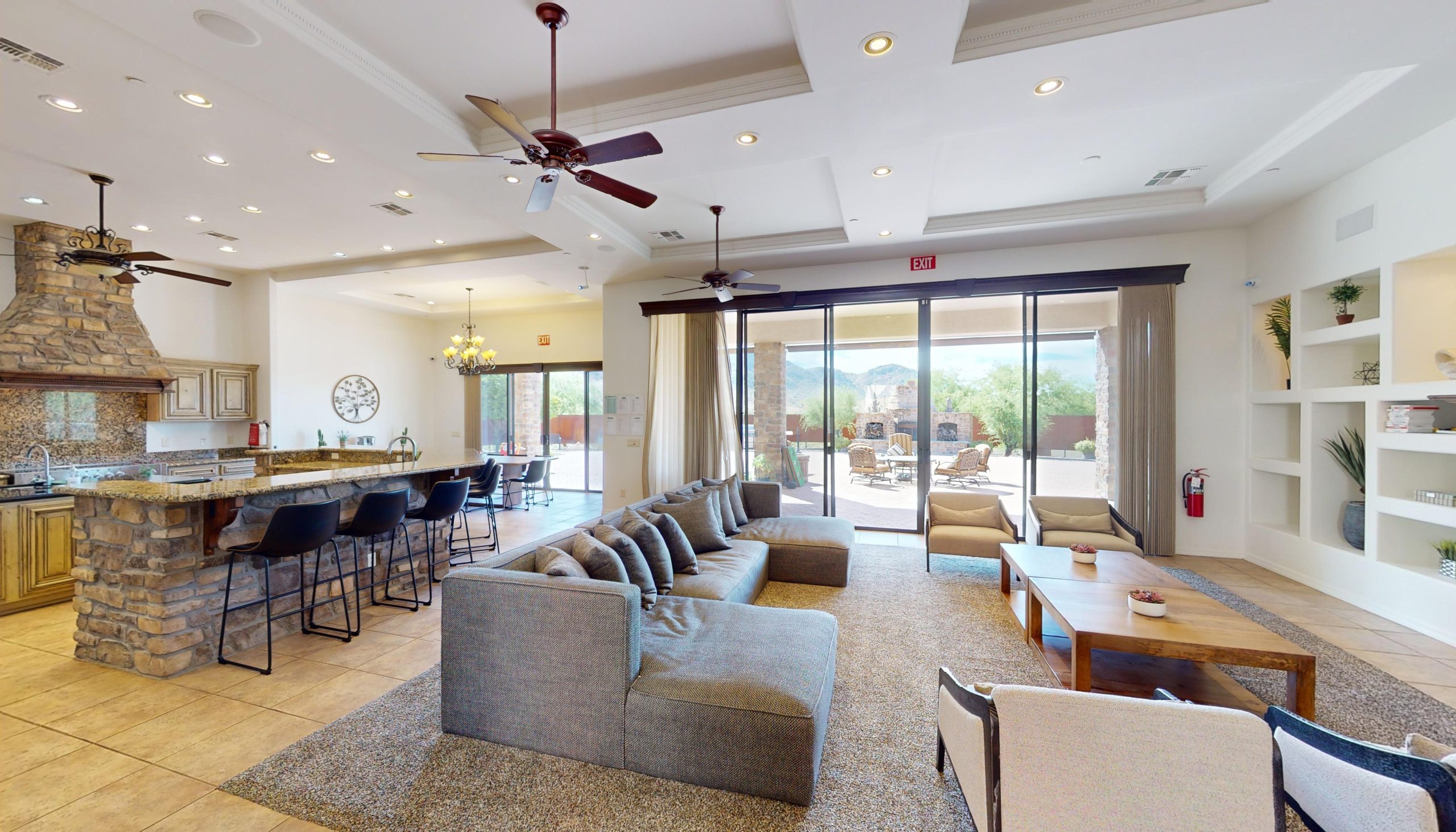
Look inside the homes your teen would live in
The boys’ home is in North Scottsdale and the girls’ home a little further north in Cave Creek, both licensed residential homes reachable across the Valley from Glendale. Each is set up to feel calm and homelike rather than institutional.
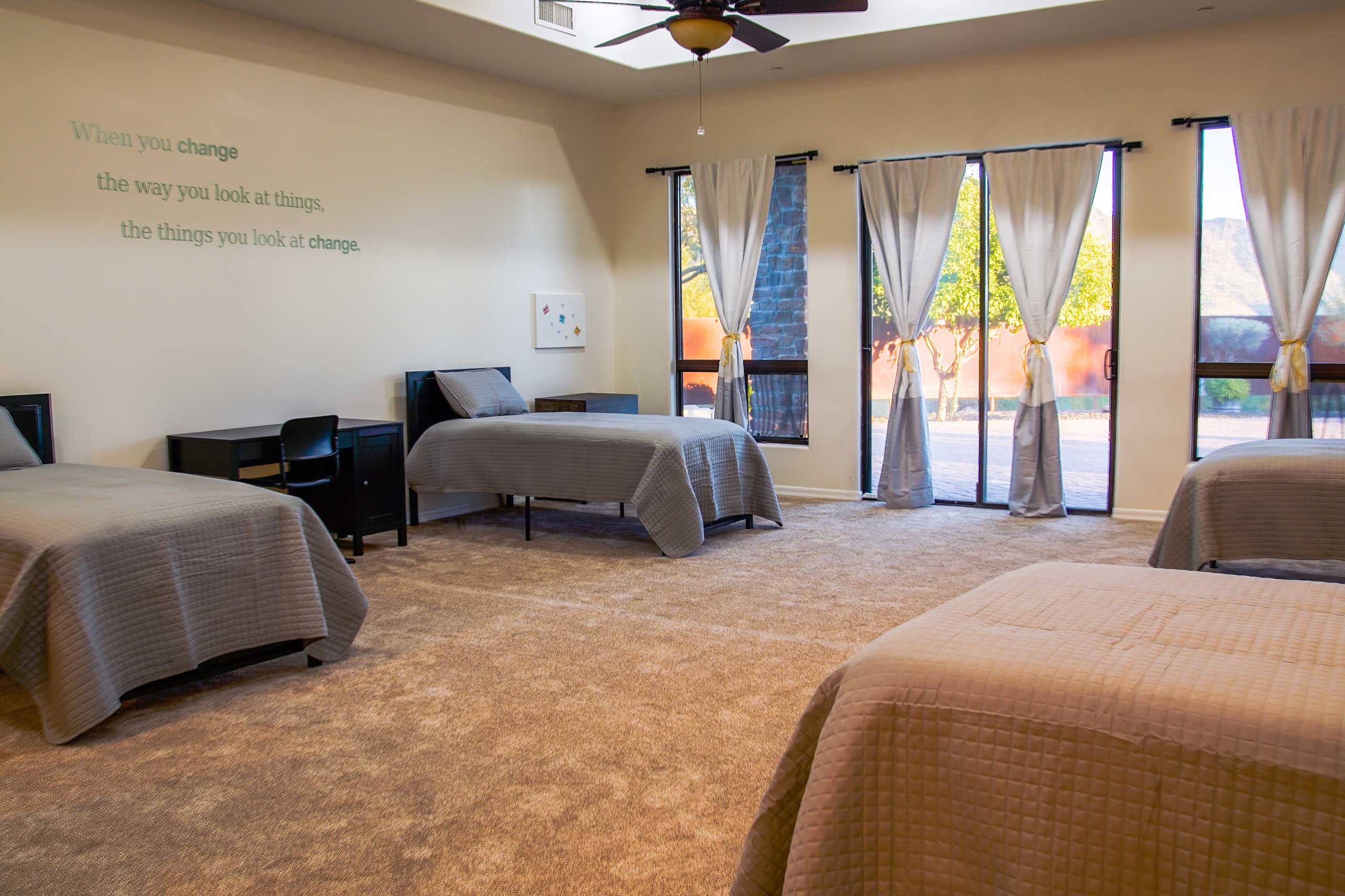


Take a self-guided 3D walkthrough of the home
Life inside
A typical day in teen residential treatment.
Daily structure is part of the treatment. Both centers run on the same steady rhythm each day, school, therapy, movement, meals and rest, so a teen who arrived from Glendale feeling overwhelmed always knows what comes next.
 - Morning
Hygiene, meds & breakfast
Hygiene and meds from 6:30 to 7:30, then breakfast from 7:30 to 8:00.
- - Morning
Gratitude journal & education
A gratitude journal from 8:00 to 8:20, then education from 8:30 to 10:45 and a snack at 10:45.
 - Morning
Group therapy & lunch
Group therapy from 11:00 to 12:00, then lunch and mindfulness from 12:00 to 1:00.
- - Afternoon
Group therapy
Group therapy from 2:00 to 3:00, a snack at 3:00, then group therapy again from 3:15 to 4:00.
- - Afternoon
Movement, dinner & evening activity
Movement with nursing from 4:15 to 5:00, dinner at 5:00, then evening activity and meds from 6:00 to 7:00.
- - Evening
Free time & lights out
Free time from 7:00 to 8:30, evening hygiene from 8:30 to 9:00, gratitude journal at 9:00 and lights out at 9:30.


Weekends run differently
Saturday and Sunday follow a lighter routine than the weekday schedule above.
Click here for a free consultationTap to call (480) 485-3424 and our admissions team will walk you through a full weekend. Someone answers any time.Awake clinical staff are on-site every hour, including overnight, at both Arizona centers.
How healing happens
Evidence-based therapies: CBT, and family therapy.
Every evidence-based therapy in the plan, CBT and weekly family work, is delivered by one coordinated team, reviewed weekly and tracked with the PHQ-9, so progress is measured, not assumed.
Core therapies
- 1
Individual therapy. CBT & TF-CBT
Individual CBT and TF-CBT targeting negative thought patterns, low energy, and any underlying trauma.
Helps withthought spiralstrauma - 2
Group therapy & coping skills
Distress tolerance, emotion regulation, and mindfulness, practiced in peer groups.
Helps withself-harm urgesmood swings - 3
Family therapy, every week
Weekly family therapy that repairs communication and prepares the home your teen returns to.
Helps withthe home they return to

Supporting care, running alongside
Holistic & experiential
Art, movement, and mindfulness that rebuild motivation and self-worth.
energy & sleepself-worthPsychiatric & medication support
Prescriber-led evaluation; medication weighed case-by-case, explained in full, monitored closely.
treatment-resistant depressionAccredited academics
Accredited classes each weekday with credit coordination, so recovery and graduation progress together.
staying on track to graduate
Your teen's clinical team
Meet our licensed clinical team.
Your teen works with a named, licensed clinician and a nursing team, and you meet them, their roles and their credentials before admission, not afterward.
 LPC, BC-TMH
Hannah Carr-Unquera
Executive Director
Leads the clinical program across both homes, licensed in Arizona and board certified in telemental health.
 LCSW, DSW
Dr. Tyler White
Director of Adolescent Clinical Services
Sets the treatment plan each resident’s team works to, and supervises the clinicians who deliver it.
 DNP, PMHNP-BC
Alexandria Penner
Psychiatric Nurse Practitioner
Runs psychiatric evaluation and medication management on-site, so prescribing stays inside the house.
 House team
Ashley Daniels
Director of Family Services & Education
Runs family services and education across both homes, after directing theatre and teen programs and building liberal-arts residential summer camps for Mount Holyoke College and Bryn Mawr College.
 House team
Jennifer Inderberg
Education Supervisor
Twenty-five years in education, supervising the accredited school that runs inside each house and the credit transfers back to your district.
 House team
Melissa Stockmar
Director of Food Operations
Leads the kitchen team behind the chef-prepared meals, and runs the cooking group where residents learn to feed themselves.
Arizona-licensed clinical team.Every Nexus Teen Academy clinician is licensed in Arizona. Verify any license on the AZ Board of Behavioral Health Examiners directory.
What families say
What Arizona families say about their experience with Nexus Teen Academy

 Carol Trombino
Trustindex verifies that the original source of the review is Google.
Nexus Academy was a wonderful place for my daughter. The staff were amazing and so supportive. They worked with our entire family. Highly recommend Nexus. Hemella SweattSending your child or teen to a residential treatment facility is a difficult and heart-wrenching decision. The team at Nexus Teen Academy was exceptional. Our daughter's therapist was a great fit for her and played a significant role in helping us grow as a family. Family therapy is a crucial part of your child's recovery, and Nexus does an excellent job of involving the family in the healing process. We are grateful for their support in guiding our daughter toward a path of recovery.
 S HThe program at Nexus was a lifesaver for my 15-year-old daughter. After a tough year in and out of different levels of care, my husband and I had truly hit a breaking point and knew a residential facility was needed, but we were adamant about finding a place that was safe, respectful, and loving for our daughter. The entire team at Nexus was caring and engaged from day one, despite my daughter NOT making that easy for the first couple of weeks. There were definitely days in the beginning where we wondered if this was even working, but the team encouraged my husband and me to stay the course, and thank goodness we did. After completing Nexus residential and PHP programs, our daughter has done a complete 180. Her mental health struggles aren't 'magically gone' - but she has learned not to let them control her and our family dynamic is leagues better than where we started. Maybe the craziest part of this whole experience was when she recently acknowledged that she was really struggling before and thanked me for sending her to the program - I almost fainted. All this to say, I can't recommend the team at Nexus enough to any family with a teen who is going through a hard time.
 Amanda HayesOur 12 year old attended Nexus in summer of 2025. I opted for this location due to the reviews from other parents regarding similarly aged children. It's a whole different ballgame when a parent is trying to figure out what is best for their tween, knowing they will have exposure to older teenagers and older problems. That sad, Nexus is such a cohesive program. Our experience has been nothing short of wonderful, given the impossible circumstanes. All staff seems to be personally invested in each child's recovery and wellbeing. Our child left Nexus in a much more healed state than when they went in. I was so nervous about taking this huge step after poor hospital experiences and previous PHP's not being as helpful as we hoped. The staff is on top of relational dynamics in the house, and there is some separation between the younger residents and older ones, while still promoting overall cohesiveness. I feel they did a tremendous job supporting our 12 year old developmentally, bringing out a sense of childhood again. They also masterfully navigated our complicated family dynamic, going above and beyond to ensure our child's needs were met, the program requirements were met, in alignment with our family's needs. In a way, our child's time away at Nexus brought them back to us in a way we hadn't seen in a long time. I am so grateful. The PHP program, as well, is top notch and operates from heart. I would recommend both Nexus RTC and their PHP program to any parent in a similar situation. I have offered to connect with any parent in a similar place, so feel free to inquire about connecting with the staff. I know how terrifying this all is, and while we're not totally out of the woods, our child is currently attending school full time again with 2 evening therapy sessions each week. I attribute this assimilation into developmentally typical structure entirely to the care and support we all received from Nexus staff, from intake to therapy to medical and everyone else involved. Thank you, nexus, for helping our child- and our family- in our healing. I am forever grateful.
 AlishaWhen we realized we needed a place for our teen to go longer term it was one of the hardest, scariest things I have been through as a mother. Nexus really made it easier and not quite so scary. They have a really caring staff, the kids love the staff. They truly care about your child, it’s not just another kid in and out of their house. I felt like our family was important and they were focused on what my child needed to help her through this difficult time. There was a lot of ups and downs with this process and we had some really hard times and conversations but the staff was always there to help guide us. I would truly say if you are struggling and your teen needs residential Nexus is an amazing place for treatment. The house is beautiful and it is truly comfortable for the kids. I would definitely recommend Nexus.
 Vanessa AnayaI would like to share that we had a great experience at Nexus Teen Academy. All of the staff is great with communication and assisted us through the process. I am very grateful for all of the resources, help and treatment for my teen throughout their stay. The have an amazing team and would recommend to anyone who needs the help.
 Sean HayesI highly recommend Nexus Teen Academy. The structure, support, and care they provided made a significant impact on my child, and it was also maintainable post-residency. During the residency, I attended a parent group led by the therapists who worked with the kids; where we learned critical skills and distinctions which helped with life afterward. It was also great to be in contact with other parents during this time, and the parenting group was great for this.
 Zane BedfordFour years ago at the age of 13 my daughter completely stopped participating in school and started to display symptoms of major depression anxiety and an unknown mood disorder.Her attendance at school was greatly impacted in such a way that attending once or twice a week became standard until the age of 16.Alcohol addiction and juvenile legal troubles followed and became common issues up until the moment my daughter entered into Nexus Teen Academy.To be completely honest as a completely broken single parent,after trying many attempts at therapy/medications I had lost hope and had given up on expecting anything could fix the crisis we had been living in for the last for years. Nexus Academy changed my perspective, my daughter completed 33 days and for the first time in years I saw the spark and light come back to her eyes and soul.She left Nexus displaying insight and a desire to get back on track with her education. With all professions , one will find flaws and opportunities for improvement .I believe Nexus understands this and showed an openess to suggestions and constructive criticism.
 lily hendersonNexus was a life changing experience. I went in at 17 and experienced my 18th in there, to which the staff and residents all made sure I felt special. My goals were formed around gaining a better sense of self identity, self respect, and healing myself from the inside out. All of which happened in ways I never expected. I was shown how healthy communication, empathy in your home life, and phone-free relationships, all shape you as a person. Each and every one of the staff and administrators at Nexus are solely devoted to the children’s lives and well being. If there was ever an issue, i felt confident to go to them about it and it was swiftly handled. It was one of the most difficult goodbyes I have ever experienced in my life, as I grew family-life bonds with every person there. Thank you all!!!!! I appreciate every way you showed up for me and how you supported me in my stay. I will carry this experience with me forever.
 Jasmine CarterMy daughter was referred here after her various visits to psychiatric hospitals.I was so scared to be apart from my child but Nexus made me feel better about my decision because of their loving and welcoming environment. I love everything about this place, they really love the kids and support parents along the way. I appreciate everyone that loved and supported my child while she was at her lowest. I recommend this place to anyone that may feel like they have tried all they can and they do not know what to do next because Nexus will help you with the next steps in your journey.Google rating score: 5.0 of 5, based on 23 reviews
★★★★★
“Nexus Academy was a wonderful place for my daughter. The staff were amazing and so supportive. They worked with our entire family. Highly recommend Nexus.”
★★★★★
“Sending your child or teen to a residential treatment facility is a difficult and heart-wrenching decision. The team at Nexus Teen Academy was exceptional. Our daughter’s therapist was a great fit for her and played a significant role in helping us grow as a family.”Read the full review →
★★★★★
“The program at Nexus was a lifesaver for my 15-year-old daughter. After a tough year in and out of different levels of care, my husband and I had truly hit a breaking point and knew a residential facility was needed.”Read the full review →
These come straight from our public Google Business Profile, anyone can read all 34 and add their own.
Getting started
How admission works, from first call to first day.

- You set the pace, with no pressure to decide
- Clear answers to every clinical and financial question
- An honest recommendation, even if another program is the better fit
1
- Today · 24/7
- ~15 minutes
One calm call
A licensed admissions counselor listens to what is happening with your teen, the history, and what you have tried around Glendale, then tells you honestly whether residential care is right or whether something lighter fits.
- What to have ready: nothing. Just call, questions are welcome, and there is no obligation.
2
- Same day
- Free & confidential
Coverage check
With your go-ahead we verify your benefits directly with the insurer and give you the answer in plain numbers, covered and not, before you commit.
- What you get: your coverage answer, usually the same day, every option mapped, including in-network and out-of-network paths.
3
- Within 24 to 48 hrs
- Licensed clinicians
Clinical assessment
Licensed clinicians assess your teen’s history, needs, strengths and safety, then recommend the level of care that truly fits rather than an open bed.
- Your input matters: what you have seen at home is a key part of the clinical assessment.
4
- Within days
- Named coordinator
Plan the arrival
One coordinator handles the details with you: the packing list, the drive across the Valley, transferring school records so credits count, and how the first day will go.
- No surprises: you will have the packing list, schedule, and your coordinator's direct line in writing.
5
- Welcome day
- Never out of the loop
A gentle, planned arrival
Your teen meets the clinical team and settles in. Your first family update is scheduled before you leave, and you have direct contact with the team from day one.
- From here: predictable days, weekly updates, and a team your teen knows by name.
Coverage & cost
Does insurance cover teen residential treatment for Glendale families?
On most major private plans, residential mental-health care is a covered behavioral-health benefit, not an extra you have to argue for. Nexus Teen Academy checks your specific plan with the insurer and gives Glendale families the answer in real numbers before deciding.
- 1You send your plan detailsTwo required fields. Member ID optional. Takes about a minute.
- 2We verify with your insurer directlyIn-network or out-of-network, free and confidential, usually the same day.
- 3You get the number in plain EnglishYour exact out-of-pocket cost, explained before you commit to anything.


- Meritain
- UMR
- + more
Out of network, or unsure what your plan covers? Call anyway. Cost should never decide whether a struggling teen gets help.
- Free benefits check
See exactly what your plan covers for residential depression treatment, free, confidential, no obligation.
After discharge
Aftercare and relapse prevention that follows your teen home.
Before discharge, a case manager builds the aftercare plan with you: step-down or outpatient providers near Glendale, telehealth to keep therapy going, school re-entry set up with your district, and a written relapse-prevention plan.

Answers
Teen depression treatment FAQs
The questions families ask us most, answered plainly, centers, distance, insurance, licensing, and privacy.
A licensed admissions counselor can answer it on the phone right now, no script, no pressure, and no obligation to enroll.
Talk to a counselorAnswered 24/7 at (480) 485-3424Centers & getting there
Nexus Teen Academy has two licensed residential homes for depressed teens ages 12 to 17 in Maricopa County: a boys residence in North Scottsdale and a girls residence in Cave Creek, both in Maricopa County. From Glendale in the West Valley, the nearest center is roughly about 35 to 45 minutes via the Loop 101 (Agua Fria), so families rarely have to leave the West Valley to find residential depression care.
From Glendale the boys home in North Scottsdale and the girls home in Cave Creek are about 35 to 45 minutes via the Loop 101 (Agua Fria). Both sit on the north side of Maricopa County, an easy same-day trip for Glendale and nearby Peoria and Phoenix families.
Yes. Glendale families make up a large part of who we serve, along with the wider the West Valley and all of Maricopa County. Families outside the Valley are welcome too, and weekly family therapy runs by secure telehealth when the drive is too long.
Because Glendale is about 35 to 45 minutes from the centers, most families attend weekly family therapy in person and visit on schedule. Progress calls and secure video sessions fill in whenever a trip across the West Valley is not practical that week.
Care & cost
Residential mental-health care is a covered behavioral-health benefit on most major plans, including Blue Cross Blue Shield, Aetna, Cigna and UnitedHealthcare, and we also accept AHCCCS. Rather than quoting a flat price, we run a free, no-obligation benefits check so Glendale families see their real out-of-pocket cost before deciding. If you searched for teen depression treatment near me and worry about affording it, call us, cost should never be the reason a teen goes without care.
Both often do. We work with AHCCCS and with most commercial plans, handling the prior authorization and utilization review that residential care requires. Our team verifies your specific plan, explains in-network versus out-of-network options, and can pursue a single case agreement when that is the best path for your teen.
Residential care makes sense when weekly therapy and medication are not holding, when a teen is withdrawing, sleeping all day, failing school, or showing self-harm or suicidal thoughts, or when depression has taken over daily life at home. A 24/7 structured setting gives a depressed teen intensive therapy and constant safety that once-a-week appointments cannot.
Our depression program is built on evidence-based care: cognitive behavioral therapy (CBT) and behavioral activation to rebuild motivation, plus trauma-focused CBT when trauma sits underneath the depression. Teens also get individual therapy, group work, family therapy and psychiatric medication management (including SSRIs when appropriate), all delivered by licensed, master-level clinicians.
Most teens stay between 30 and 60 days, though the clinical team sets the length around each teen and family. Before discharge we build an aftercare plan, step-down to a lower level of care, a return to school, outpatient providers and relapse-prevention tools, so the progress made in residential care holds once your teen is home.
Licensing & privacy
Yes. Nexus Teen Academy is licensed by the Arizona Department of Health Services and holds Joint Commission accreditation, the same standard used by leading hospitals. Both homes, boys in North Scottsdale and girls in Cave Creek, are staffed around the clock by licensed clinicians and trained youth-care team members.
A psychiatric hospital handles short, acute crisis stabilization, usually only a few days. Outpatient therapy is an hour a week at home. Residential treatment sits between them: your teen lives in a licensed, home-like setting for weeks, receiving daily therapy, school and 24/7 support, which is what many depressed teens need to truly recover rather than just stabilize.
Completely. Every conversation, assessment and record is protected under HIPAA and Arizona confidentiality law. A benefits check or a call to our admissions line is private and carries no obligation, and we never share your information outside your teen care team without your written consent.
Admission & daily life
Often within a few days. Admissions calls are returned within 24 hours, usually within minutes. A counselor checks your insurance benefits and licensed clinicians complete an assessment, and if everything moves smoothly your teen can move in shortly after. A coordinator walks you through travel, paperwork, and the first day.
Yes. Nexus Teen Academy offers tours of the home by appointment, so you can see where your teen would live and ask the team your questions in person before you decide anything. Call admissions to schedule a tour at a time that suits your family.
Yes. Family therapy happens once a week and is typically followed by about an hour of visitation, and parents are expected to take part. After orientation, teens can call home during designated hours most days, and families can also join a weekly virtual Family Empowerment group with other parents.
No. Personal phones and other devices stay at home for the length of the stay. Teens use tablets for video calls with approved contacts and computers for schoolwork, so contact with family continues through approved channels while the focus stays on treatment.
School continues during treatment. Teens attend accredited, credit-bearing classes on site, and education supervisors help with coursework and stay in touch with families. Bring a copy of any 504 plan or IEP at admission, and before discharge the team plans a staged return to your teen's home school.
Pack about two weeks of clothes without laces or drawstrings, alcohol-free toiletries, and any prescribed medication in its original packaging with a current medication list. Bring a guardian ID, a copy of any 504 plan or IEP, and school books. Personal phones and school-issued tablets stay at home.
The statewide picture
Arizona teen mental health, by the numbers.
Adolescent depression and anxiety have risen sharply across Arizona, and for a growing number of families weekly outpatient therapy is no longer enough. The state’s own data shows why a middle level of care, residential treatment, exists.

4 in 10
Arizona high-schoolers reported their mental health was not good most or all of the time.
3 in 10
Seriously considered suicide, and about 1 in 10 attempted.
97%
Rise in adolescent depression diagnoses in Arizona, 2016–17 to 2020–21.
55%
Rise in anxiety diagnoses over the same period.
Arizona’s 988 and Teen Lifeline lines meet the emergency, but a crisis call is stabilization, not ongoing treatment.
Residential care is the step between outpatient therapy and the hospital, the middle is what has been missing.
Sources: Arizona Department of Health Services, Adolescent Mental Health Report; Arizona Youth Risk Behavior Survey (2021); National Survey of Children’s Health.
Talk to an Arizona counselor, 24/7Teen group home care for Arizona families
A teen group home in Arizona, with treatment inside the house.
Searching for a teen group home in Arizona? Teens from across the state live at one of our two gender-separate homes in North Scottsdale and Cave Creek, each licensed by AZDHS as a behavioral-health residential facility, so the treatment happens inside the house, not somewhere else.
A typical group home
- Licensed for shelter and supervision
- Daily living and structure
- Supervision, not clinical treatment
Nexus homes
- AZDHS behavioral-health residential licence
- Daily therapy and psychiatric care
- Accredited school on site
Families from the Phoenix metro 9 cities
Families from Greater Arizona 6 cities
Teens from each of these cities are treated at our two homes in North Scottsdale and Cave Creek. We help with the drive or flight, and families join weekly therapy in person or by secure video.
Across Arizona
Teen depression treatment across Arizona, from two Phoenix-metro centers.
Both residences sit on the northeast side of the metro, reachable across the Valley from Glendale. That access lets West Valley families get accredited residential care while parents stay involved in the daily work of recovery.
Within a half-day of most of the state
About two hours from Tucson on I-10, 2½ hours from Flagstaff on I-17, 1½ hours from Prescott, and three hours from Yuma on I-8, with Sierra Vista and Lake Havasu City a similar reach.
Telehealth & travel, handled
Weekly family sessions run in person or by secure video when the cross-Valley drive is hard, so a Glendale family stays involved without living on the freeway.
Aftercare mapped to your community
Before discharge we set up step-down and outpatient care near home and coordinate school re-entry, so progress made in treatment carries back into everyday life in Glendale.
Nexus Teen Academy, Scottsdale · boys’ residence
Admissions 24/7
Nexus Teen Academy, Cave Creek · girls’ residence
Admissions 24/7
See a center on the map
Tap Cave Creek or Scottsdale below to load its interactive map right here.
Google Maps loads only when you choose, so nothing is shared with Google before you opt in.
Explore each Nexus Teen Academy location
North Scottsdale, 85260 · off Loop 101
Saddle Mountain Rd, 85331 · 20 min north
Served from both centers
Travel, telehealth & aftercare
From the Nexus library
What parents read before they call us.
The newest articles from Nexus Teen Academy for parents weighing what comes next. This list updates itself every time a new article goes live.

Teen Xanax Addiction: Xanax Abuse in Teen Boys & Girls
The misuse of prescription drugs among teens continues to grow. According to recent statistics, 2.5% of 12- to 17-year-olds abuse prescriptions annually, while 7.1% of high
5 Best Self-Help Books for Teens
Adolescents often face significant academic, emotional, and social challenges. As you support them through the ups and downs
What to Do When Your Teen Refuses to Go to Treatment or Therapy
One of the most heartbreaking experiences a parent can undergo is watching their teenager struggle. It is even
Signs Your Teen Needs a Higher Level of Care Than Weekly Therapy
Teen mental health statistics can be worrying. The National Institute of Mental Health estimates that roughly 49.5% of

How Caffeine Impacts Brain Development
Teens need roughly 8-10 hours of sleep for healthy brain development, which doesn’t always happen. For

Why Teen Boys With Trauma Often Target the Parent Who’s Trying Hardest to Help
Trauma and adverse childhood experiences can affect a child’s attachment, emotional regulation, and behavior toward caregivers.
Reading because something changed at home? Call (480) 485-3424 and talk it through with an Arizona admissions counselor. It is free, confidential and there is no obligation.
Every Nexus program, statewide
Find your teen’s program, wherever you live in Arizona.
Eleven conditions, one clinical team, and families from fifteen Arizona cities. Choose what your teen is struggling with, then see how care works for families from your area.
Nexus Teen Academy provides licensed residential treatment for teens aged 12 to 17 across eleven conditions: anxiety, depression, trauma and PTSD, self-harm, suicidal ideation, bipolar disorder, substance use, ADHD, behavioral issues, oppositional defiant disorder and anger issues. Boys live at the North Scottsdale residence and girls at the Cave Creek residence. Teens from 15 Arizona cities and the rest of the state are treated at these two residences, with drive-time guidance, travel help and family therapy by secure video for families outside the metro.
Depression care, statewide
Teen depression treatment for families across Arizona
Teens from each city below are treated at our Scottsdale and Cave Creek residences. We walk families through the drive, school re-entry with your home district, and the questions parents from that area ask most.
Each condition leads to its Arizona guide, and the cities beside it show how care works for families from there.
Tell an admissions counselor what you are seeing at home, and they will say plainly which program fits.
Your city is not listed? We admit teens from anywhere in Arizona and from out of state. Call (480) 485-3424 and we will tell you which residence is closer and how the drive works.