

- Joint Commission accredited
- Girls-only home
- Ages 12 to 17
- Admissions 24/7
Mood swings treatment for teen girls near Glendale, AZ.
Depression, a bipolar pattern, PMDD and a sleep-starved brain can all produce the same slammed bedroom door. Nexus Teen Academy gives Glendale families a residential option for daughters 12 to 17 with mood swings that have turned severe, at a Cave Creek property, licensed by the state, that admits girls alone, where pinning down the true cause comes before anything else.
- Free & confidential · No obligation · (480) 485-3424
- 4.7 Google · 37 reviews
- AZDHS-licensed residential facility
- Most major private insurance accepted
- Free consultation
- Counselor online now
Type in a good callback number; someone licensed from our admissions team will phone, typically fast, to hear what her swings look like, check your coverage and outline the next steps.
- It's now where you are · typical callback under 10 minutes.
- Secure, private, and HIPAA-protected. By submitting you agree to be contacted about care; message/data rates may apply.
- 4.7 Google · 37 reviews
- Joint Commission accredited





Every credential is independently verifiable. Joint Commission · AZDHS registry · LegitScript.
 Joint Commission accreditedAZDHS-licensed · LegitScript certified
About Nexus Teen Academy
About Nexus Teen Academy's mood swings program for girls.
Nexus Teen Academy runs a Joint Commission-accredited residential home for adolescent girls, somewhere between 35 and 45 minutes from Glendale by Loop 101. Residents are 12 to 17 and share a modest home on a parcel of Cave Creek desert. Inside, the clinical question is precise: which condition is producing the swings? Across a short office visit, chronic sleep loss, PMDD, DMDD, depression and bipolar-spectrum illness can look nearly identical, so we answer that question before choosing treatment.
Day one brings a full DSM-5 psychiatric workup. From there, staff note her mood, vigor and sleep in a chart every single day, evidence that piles up far faster than appointments allow. AZDHS issues its license; accreditation and certification come from The Joint Commission and LegitScript.
Nexus Teen Academy provides residential treatment for teen mood swings for families from Glendale, Arizona, for ages 12 to 17. Girls live in a licensed home in Cave Creek with daily therapy, accredited school on site, and weekly family therapy. Most stay 30 to 60 days, and the team works with AHCCCS and most private insurance.
Cave Creek
Girls, 12 to 17 · Phoenix metro
Cave Creek
Girls, 12 to 17 · Phoenix metro
Accredited Arizona centers
Ages we treat, gender-separate
Awake clinical staff, every hour
A primary therapist, by name
Secure form · About 2 minutes · Free, no obligation
Our admissions team will reach out to you soon. Here’s what happens next:
- An admissions counselor contacts you, free and confidential
- If you asked about coverage, we check your benefits with your insurer
- You get honest answers and clear next steps, with no obligation
Where residential care fits: IOP, PHP or residential
The subacute level between weekly therapy and a hospital bed.
Therapy once or a few times a week. Your teen stays home and at school.
Live-in clinical care with 24/7 awake staff, daily therapy, and accredited school, in a real home.
You are hereShort-term acute stabilization for immediate medical or safety crisis.
| Question | Intensive outpatient (IOP) | Partial hospitalization (PHP) | Residential (RTC) |
|---|---|---|---|
| Best for | A step down from PHP, or a starting point for teens who need more than weekly therapy | A step down from residential care, or a starting point for teens who need structure without 24/7 care | Teens who need 24/7 care in a safe, immersive setting |
| Where your teen sleeps | At home | At home each evening | A licensed, home-like residence with 24/7 awake staff |
| Weekly schedule | About 4 hours a day (10:30 to 2:30 or 1:00 to 5:00), 3 to 4 days a week | Several days a week, multiple hours a day | Daily therapy, with care around the clock |
| Typical length | 30 to 90+ days | 30 to 90 days | 30 to 60 days |
| School | Stays in school; IOP is therapy-focused, with no academic support | Daily schoolwork time in a classroom, with educators on staff | Accredited, credit-bearing classes on site |
| Family | Weekly individual therapy and family counseling every other week | Family therapy sessions included | Weekly family therapy, in person or by secure video |
IOP and PHP run at NexStep Teen Academy, the Nexus outpatient program in Scottsdale for teens ages 12 to 17.
Not sure which level your teen needs? A licensed counselor will walk through it with you on the phone, free, and tell you honestly if a lower level of care is the better fit.
Speak with our admissions teamThe program
Inside our mood swings treatment program for teen girls.
Nothing here runs on a separate track. Therapy notes, the daily chart entries, prescriber reviews, classroom observations and family sessions all feed one written plan, and the team rewrites that plan each week as the evidence about her swings gets sharper.
Diagnosis comes first
PMDD versus DMDD, a bipolar course versus depression, plus anxiety, trauma, ADHD, substance use and sleep debt: each is weighed, and inherited labels get a second look.
Charted every single day
Daily entries cover mood, energy, sleep and, when she consents, where she is in her cycle, so a premenstrual pattern or a fortnight-long low shows up plainly.
Weekday sessions, one therapist
Monday-to-Friday sessions with one licensed therapist, grounded in CBT work on triggers and early cues, with EMDR layered in if trauma proves to be part of it.
Tools for the first minutes
Grounding, slow breathing and distress-tolerance exercises are rehearsed daily until she uses them unprompted the moment irritability spikes.
Parents in the loop
One family hour weekly, held in Cave Creek if the drive is manageable and by secure video otherwise, plus Saturday's parents' group.
Medication tied to the diagnosis
The on-site prescriber chooses any medication for the confirmed condition and adjusts it on what staff observe, never without your consent.
School keeps going
Certified teaching and credit-bearing coursework run every weekday, so a Deer Valley or Glendale Union student keeps her semester alive.
The same clock every day
Rising, meals, class and lights-out happen at identical times on weekdays and weekends, and that takes erratic sleep off the list of hidden causes.
- Name the cause first, then treat it, all under a single roof
Related care
Conditions we treat alongside mood swings.
Plenty of Glendale parents describe a daughter who is short-fused rather than tearful, and are surprised to learn that irritability is a classic face of depression in girls. By a 2023 CDC count, fifty-three percent of teenage girls in high school reported a sadness or hopelessness that refused to fade.
Girls often reach us carrying a label or two from earlier providers. Our Cave Creek clinicians reopen the question, weighing PMDD against DMDD, checking for a bipolar-spectrum course, and screening for anxiety, trauma, ADHD and substance use, and whatever the evidence confirms gets treated in one coordinated plan.
Untangling the source of her moods
Primary focus
Teenage girls with severe mood swings, and the specific conditions driving them
Depression
Can look like a hair-trigger temper instead.
Bipolar disorder
Episodes measured in days, with sleep changes.
Anxiety & panic
Worry that surfaces as snapping or shutting down.
PTSD & trauma
Reminders that switch her mood without warning.
ADHD
Restless impulsivity that tips into blowups.
Substance use
Swings that track vaping, alcohol or pills.
Self-harm
Part of every intake screen, then followed daily.
Safety firstSuicidal ideation
The first thing assessed, every time.
Safety first- Depression, bipolar spectrum, PMDD or DMDD: once the evidence names the cause, the same team handles every part of it.
The setting
A licensed residential setting for teen girls.
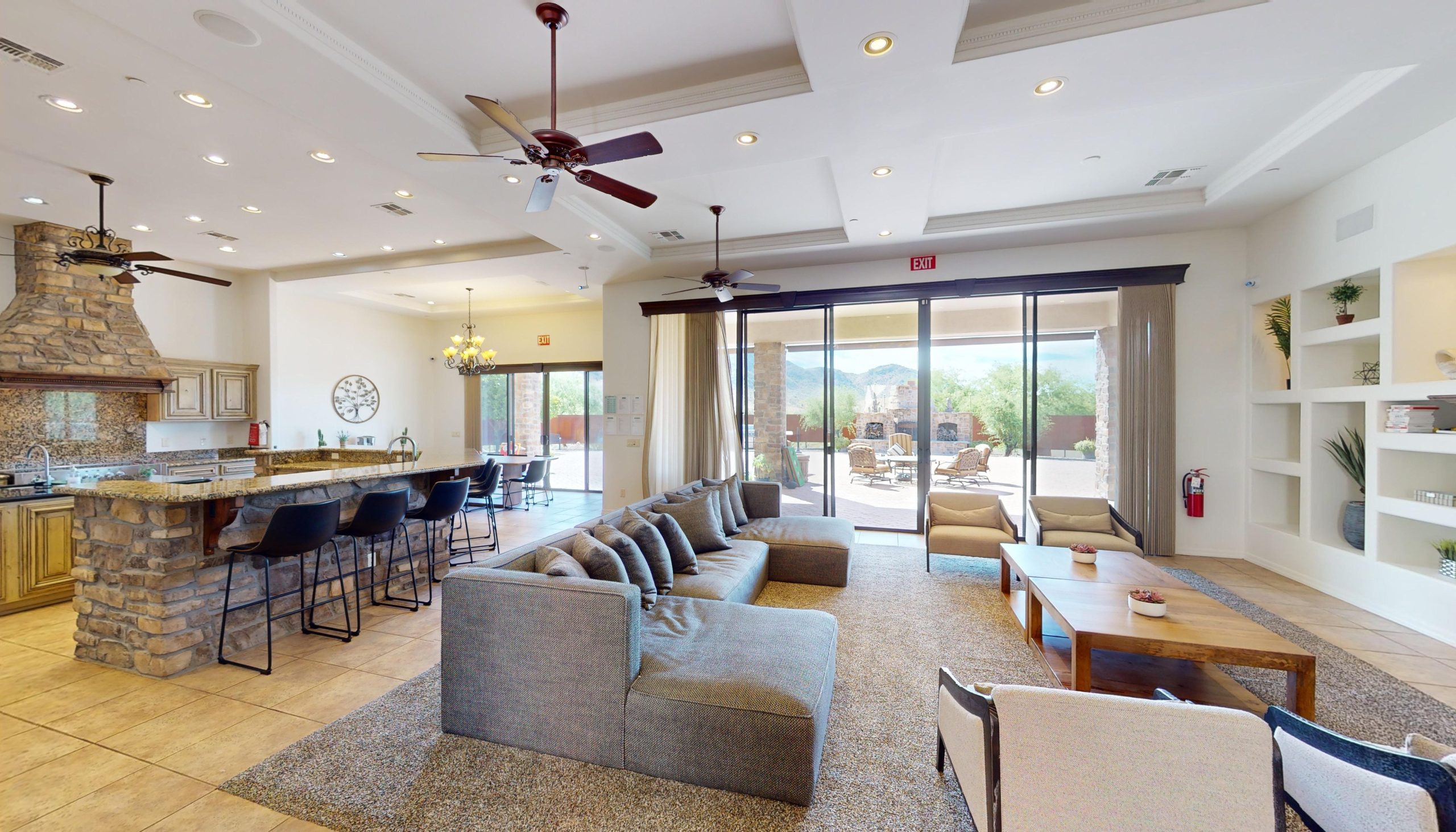
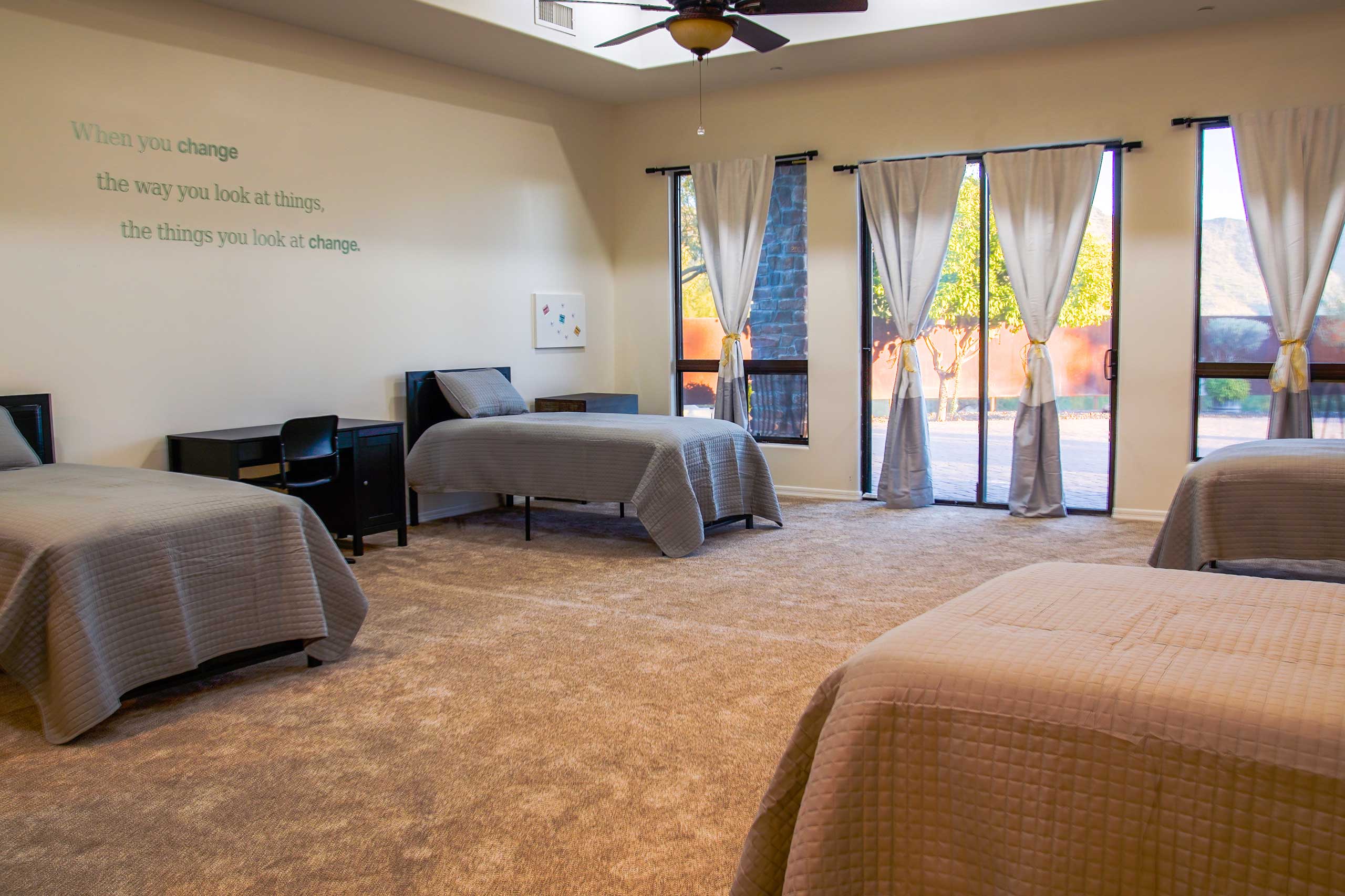
Picture a working family house set on undeveloped Cave Creek desert, around half an hour past central Phoenix and a freeway run from Glendale. Its residents are girls and girls only. The clock for rising, eating, studying and sleeping stays put, overnight staff keep watch wide awake, and Arizona has licensed it to provide live-in behavioral-health care.


Take a self-guided 3D walkthrough of the home
Life inside
A typical day in residential mood swings treatment.
Here the schedule doubles as a diagnostic tool. When bedtime, wake-up and meals hold steady for a couple of weeks, swings that were really exhaustion in disguise usually fade, and the swings that remain tell the clinicians where to dig.
 - Morning
Hygiene, meds & breakfast
Hygiene and meds from 6:30 to 7:30, then breakfast from 7:30 to 8:00.
- - Morning
Gratitude journal & education
A gratitude journal from 8:00 to 8:20, then education from 8:30 to 10:45 and a snack at 10:45.
 - Morning
Group therapy & lunch
Group therapy from 11:00 to 12:00, then lunch and mindfulness from 12:00 to 1:00.
- - Afternoon
Group therapy
Group therapy from 2:00 to 3:00, a snack at 3:00, then group therapy again from 3:15 to 4:00.
- - Afternoon
Movement, dinner & evening activity
Movement with nursing from 4:15 to 5:00, dinner at 5:00, then evening activity and meds from 6:00 to 7:00.
- - Evening
Free time & lights out
Free time from 7:00 to 8:30, evening hygiene from 8:30 to 9:00, gratitude journal at 9:00 and lights out at 9:30.


Weekends run differently
Saturday and Sunday follow a lighter routine than the weekday schedule above.
Click here for a free consultationTap to call (480) 485-3424 and our admissions team will walk you through a full weekend. Someone answers any time.Awake clinical staff are on-site every hour, including overnight, at both Arizona centers.
How healing happens
How we treat mood swings in teen girls.
Cognitive behavioral therapy forms the spine of her sessions: charting personal triggers, noticing the earliest hint of a slide, and challenging the beliefs that stretch a low out. Where the workup uncovers trauma, EMDR comes in, though only after her mood has leveled.
Core therapies
- 1
Cognitive behavioral therapy (CBT)
Maps her triggers and earliest warning signs, then works on the thoughts that stretch one bad afternoon into several bad days.
Helps withcore worktrigger mapping - 2
EMDR
If the evaluation links her swings to trauma, EMDR works through the memories fueling them, and it starts once she is settled.
Helps withwhen trauma is foundstability first - 3
Emotion-regulation and distress-tolerance skills
Grounding and breathing drills practiced daily, so the opening surge of a mood turn meets a tool instead of a fight.
Helps withevery dayin-the-moment tools

Supporting care, running alongside
Psychiatric evaluation and medication
Prescriptions follow the confirmed diagnosis and change only when the chart shows a reason, never on hazy recall of last month.
diagnosis-ledconsent each changeFamily therapy and parent group
A weekly family hour reachable by Loop 101 from Glendale or held on secure video, with Saturday's parent group on defusing a turn.
weekly sessionsSaturday groupEquine, art and a steady routine
Friday horses, art and music, set within unchanging sleep and mealtimes so her week has a predictable shape.
Friday horsessteady hours
Your teen's clinical team
Meet our licensed clinical team.
Her case belongs to a single named, licensed therapist from admission onward. A psychiatric prescriber studies the daily chart before deciding anything, and familiar house staff rotate through her week. Every clinician's Arizona credentials are searchable through the registry link below.
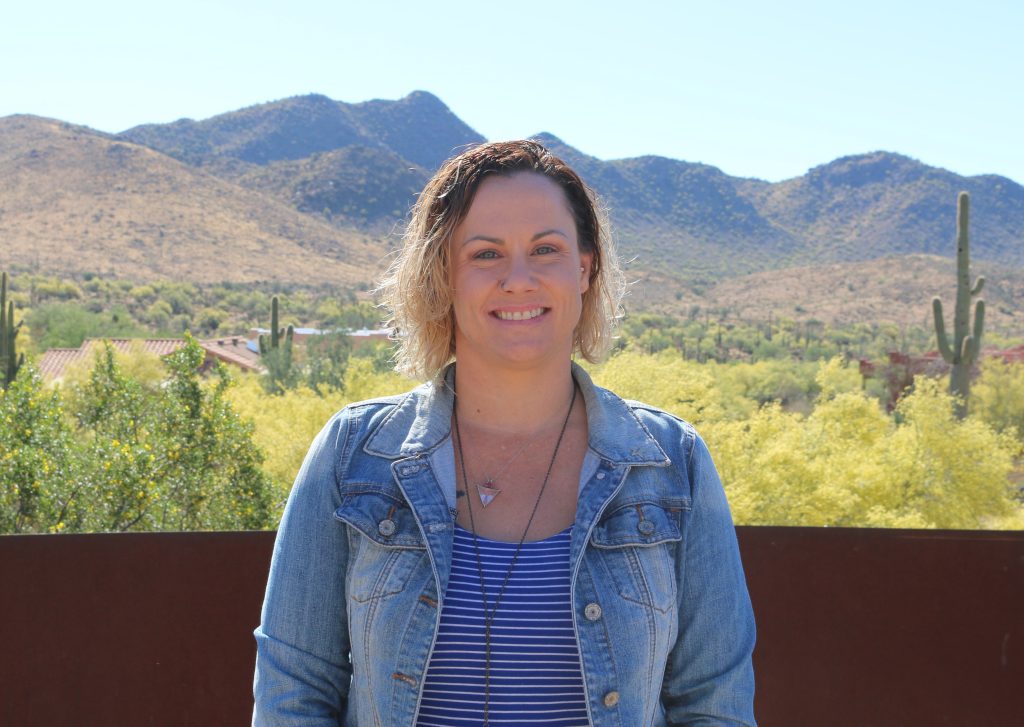
 LPC, BC-TMH
Hannah Carr-Unquera
Executive Director
Leads the clinical program, licensed in Arizona and board certified in telemental health.
 LCSW, DSW
Dr. Tyler White
Director of Adolescent Clinical Services
Sets the treatment plan each resident’s team works to, and supervises the clinicians who deliver it.
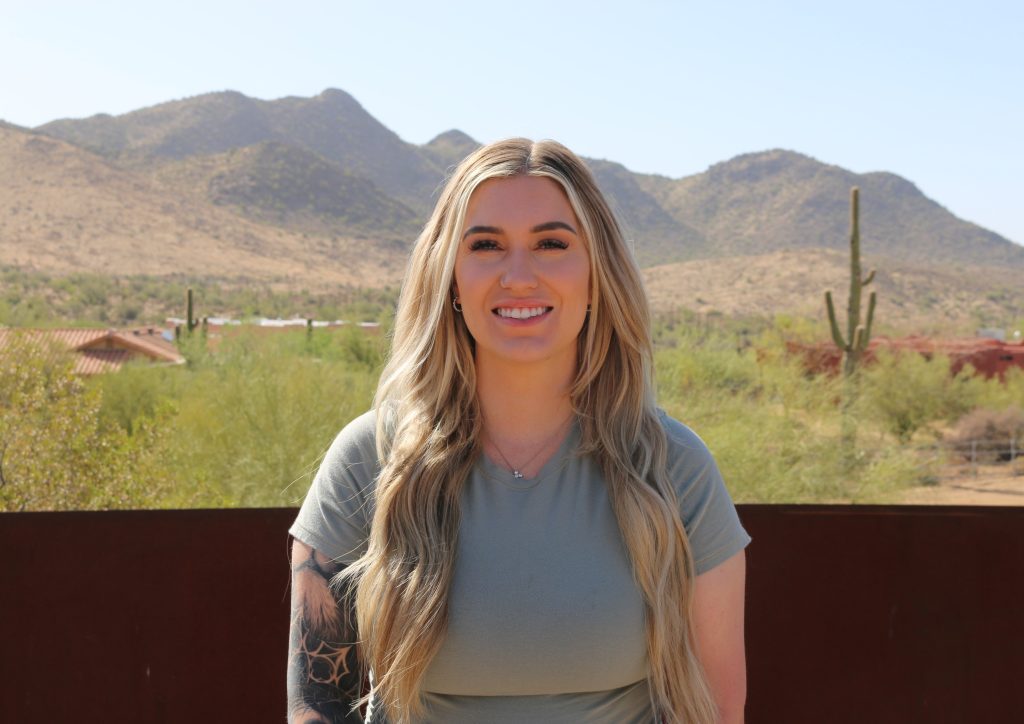 DNP, PMHNP-BC
Alexandria Penner
Psychiatric Nurse Practitioner
Runs psychiatric evaluation and medication management on-site, so prescribing stays inside the house.
 House team
Ashley Daniels
Director of Family Services & Education
Runs family services and education, after directing theatre and teen programs and building liberal-arts residential summer camps for Mount Holyoke College and Bryn Mawr College.
 House team
Jennifer Inderberg
Education Supervisor
Twenty-five years in education, supervising the accredited school that runs inside each house and the credit transfers back to your district.
 House team
Melissa Stockmar
Director of Food Operations
Leads the kitchen team behind the chef-prepared meals, and runs the cooking group where residents learn to feed themselves.
Arizona-licensed clinical team.Every Nexus Teen Academy clinician is licensed in Arizona. Verify any license on the AZ Board of Behavioral Health Examiners directory.
What families say
What Arizona families say about Nexus Teen Academy.

 Carol Trombino
Trustindex verifies that the original source of the review is Google.
Nexus Academy was a wonderful place for my daughter. The staff were amazing and so supportive. They worked with our entire family. Highly recommend Nexus. Hemella SweattSending your child or teen to a residential treatment facility is a difficult and heart-wrenching decision. The team at Nexus Teen Academy was exceptional. Our daughter's therapist was a great fit for her and played a significant role in helping us grow as a family. Family therapy is a crucial part of your child's recovery, and Nexus does an excellent job of involving the family in the healing process. We are grateful for their support in guiding our daughter toward a path of recovery.
 S HThe program at Nexus was a lifesaver for my 15-year-old daughter. After a tough year in and out of different levels of care, my husband and I had truly hit a breaking point and knew a residential facility was needed, but we were adamant about finding a place that was safe, respectful, and loving for our daughter. The entire team at Nexus was caring and engaged from day one, despite my daughter NOT making that easy for the first couple of weeks. There were definitely days in the beginning where we wondered if this was even working, but the team encouraged my husband and me to stay the course, and thank goodness we did. After completing Nexus residential and PHP programs, our daughter has done a complete 180. Her mental health struggles aren't 'magically gone' - but she has learned not to let them control her and our family dynamic is leagues better than where we started. Maybe the craziest part of this whole experience was when she recently acknowledged that she was really struggling before and thanked me for sending her to the program - I almost fainted. All this to say, I can't recommend the team at Nexus enough to any family with a teen who is going through a hard time.
 Amanda HayesOur 12 year old attended Nexus in summer of 2025. I opted for this location due to the reviews from other parents regarding similarly aged children. It's a whole different ballgame when a parent is trying to figure out what is best for their tween, knowing they will have exposure to older teenagers and older problems. That sad, Nexus is such a cohesive program. Our experience has been nothing short of wonderful, given the impossible circumstanes. All staff seems to be personally invested in each child's recovery and wellbeing. Our child left Nexus in a much more healed state than when they went in. I was so nervous about taking this huge step after poor hospital experiences and previous PHP's not being as helpful as we hoped. The staff is on top of relational dynamics in the house, and there is some separation between the younger residents and older ones, while still promoting overall cohesiveness. I feel they did a tremendous job supporting our 12 year old developmentally, bringing out a sense of childhood again. They also masterfully navigated our complicated family dynamic, going above and beyond to ensure our child's needs were met, the program requirements were met, in alignment with our family's needs. In a way, our child's time away at Nexus brought them back to us in a way we hadn't seen in a long time. I am so grateful. The PHP program, as well, is top notch and operates from heart. I would recommend both Nexus RTC and their PHP program to any parent in a similar situation. I have offered to connect with any parent in a similar place, so feel free to inquire about connecting with the staff. I know how terrifying this all is, and while we're not totally out of the woods, our child is currently attending school full time again with 2 evening therapy sessions each week. I attribute this assimilation into developmentally typical structure entirely to the care and support we all received from Nexus staff, from intake to therapy to medical and everyone else involved. Thank you, nexus, for helping our child- and our family- in our healing. I am forever grateful.
 AlishaWhen we realized we needed a place for our teen to go longer term it was one of the hardest, scariest things I have been through as a mother. Nexus really made it easier and not quite so scary. They have a really caring staff, the kids love the staff. They truly care about your child, it’s not just another kid in and out of their house. I felt like our family was important and they were focused on what my child needed to help her through this difficult time. There was a lot of ups and downs with this process and we had some really hard times and conversations but the staff was always there to help guide us. I would truly say if you are struggling and your teen needs residential Nexus is an amazing place for treatment. The house is beautiful and it is truly comfortable for the kids. I would definitely recommend Nexus.
 Vanessa AnayaI would like to share that we had a great experience at Nexus Teen Academy. All of the staff is great with communication and assisted us through the process. I am very grateful for all of the resources, help and treatment for my teen throughout their stay. The have an amazing team and would recommend to anyone who needs the help.
 Sean HayesI highly recommend Nexus Teen Academy. The structure, support, and care they provided made a significant impact on my child, and it was also maintainable post-residency. During the residency, I attended a parent group led by the therapists who worked with the kids; where we learned critical skills and distinctions which helped with life afterward. It was also great to be in contact with other parents during this time, and the parenting group was great for this.
 Zane BedfordFour years ago at the age of 13 my daughter completely stopped participating in school and started to display symptoms of major depression anxiety and an unknown mood disorder.Her attendance at school was greatly impacted in such a way that attending once or twice a week became standard until the age of 16.Alcohol addiction and juvenile legal troubles followed and became common issues up until the moment my daughter entered into Nexus Teen Academy.To be completely honest as a completely broken single parent,after trying many attempts at therapy/medications I had lost hope and had given up on expecting anything could fix the crisis we had been living in for the last for years. Nexus Academy changed my perspective, my daughter completed 33 days and for the first time in years I saw the spark and light come back to her eyes and soul.She left Nexus displaying insight and a desire to get back on track with her education. With all professions , one will find flaws and opportunities for improvement .I believe Nexus understands this and showed an openess to suggestions and constructive criticism.
 lily hendersonNexus was a life changing experience. I went in at 17 and experienced my 18th in there, to which the staff and residents all made sure I felt special. My goals were formed around gaining a better sense of self identity, self respect, and healing myself from the inside out. All of which happened in ways I never expected. I was shown how healthy communication, empathy in your home life, and phone-free relationships, all shape you as a person. Each and every one of the staff and administrators at Nexus are solely devoted to the children’s lives and well being. If there was ever an issue, i felt confident to go to them about it and it was swiftly handled. It was one of the most difficult goodbyes I have ever experienced in my life, as I grew family-life bonds with every person there. Thank you all!!!!! I appreciate every way you showed up for me and how you supported me in my stay. I will carry this experience with me forever.
 Jasmine CarterMy daughter was referred here after her various visits to psychiatric hospitals.I was so scared to be apart from my child but Nexus made me feel better about my decision because of their loving and welcoming environment. I love everything about this place, they really love the kids and support parents along the way. I appreciate everyone that loved and supported my child while she was at her lowest. I recommend this place to anyone that may feel like they have tried all they can and they do not know what to do next because Nexus will help you with the next steps in your journey.Google rating score: 5.0 of 5, based on 23 reviews
★★★★★
“Nexus Academy was a wonderful place for my daughter. The staff were amazing and so supportive. They worked with our entire family. Highly recommend Nexus.”
★★★★★
“Sending your child or teen to a residential treatment facility is a difficult and heart-wrenching decision. The team at Nexus Teen Academy was exceptional. Our daughter’s therapist was a great fit for her and played a significant role in helping us grow as a family.”Read the full review →
★★★★★
“The program at Nexus was a lifesaver for my 15-year-old daughter. After a tough year in and out of different levels of care, my husband and I had truly hit a breaking point and knew a residential facility was needed.”Read the full review →
These come straight from our public Google Business Profile, anyone can read all 34 and add their own.
Getting started
The admission process, step by step.

- You set the pace, with no pressure to decide
- Clear answers to every clinical and financial question
- An honest recommendation, even if another program is the better fit
1
- Today · 24/7
- ~15 minutes
One calm call
During that opening conversation a licensed admissions counselor wants specifics: how abruptly her mood changes, how many days a low lingers, any link with her menstrual cycle, the labels and prescriptions she already carries, and her safety this week. Then you hear honestly whether a residential stay fits.
- What to have ready: nothing. Just call, questions are welcome, and there is no obligation.
2
- Same day
- Free & confidential
Coverage check
With your permission we phone your carrier, then translate the answer into plain terms: how much of residential treatment it funds, where we fall in its network, and an estimated bill for your family, most often by that afternoon.
- What you get: your coverage answer, usually the same day, every option mapped, including in-network and out-of-network paths.
3
- Within 24 to 48 hrs
- Licensed clinicians
Clinical assessment
Next a clinician reads through earlier evaluations, medication history, family patterns and present-day safety, then explains what intensity of care the findings justify. Two weeks of jotted notes about her sleep, moods and period dates sharpen this review considerably.
- Your input matters: what you have seen at home is a key part of the clinical assessment.
4
- Within days
- Named coordinator
Plan the arrival
Your assigned coordinator requests school transcripts and current prescriptions, helps plan the Glendale-to-Cave Creek trip, emails a vetted list of what to pack, and confirms each detail in writing.
- No surprises: you will have the packing list, schedule, and your coordinator's direct line in writing.
5
- Welcome day
- Never out of the loop
A gentle, planned arrival
Admission day introduces her to her therapist and the prescriber, and by dinner she is part of the routine. Her team schedules your first progress call before you pull out of the driveway.
- From here: predictable days, weekly updates, and a team your teen knows by name.
Coverage & cost
Insurance coverage for mood swings treatment
Large private insurers generally classify residential treatment for what lies beneath severe mood swings as behavioral-health care. Our program accepts the bulk of major private insurance plans; staff confirm your daughter's benefits and where we stand with the plan at no cost and discreetly, usually within hours of your call, and spell out any cost long before you sign anything.
- 1You send your plan detailsTwo required fields. Member ID optional. Takes about a minute.
- 2We verify with your insurer directlyIn-network or out-of-network, free and confidential, usually the same day.
- 3You get the number in plain EnglishYour exact out-of-pocket cost, explained before you commit to anything.


- Meritain
- UMR
- + more
Out-of-network or unsure about your plan? Call anyway, cost should never be the reason a teen doesn't get help.
- Free benefits check
See what your policy would contribute to her stay. Free, private and with nothing to commit to.
After discharge
Step-down care and aftercare near Glendale.
We map the return home with you weeks ahead. The written plan spells out her own warning signs and what the family does at each one, books a medication provider and a therapist on the Glendale side of the Valley, keeps prescriptions seamless, fixes a phone and bedtime agreement, and paces school re-entry.

Answers
Frequently asked questions about mood swings treatment
Parents in Glendale usually want to know how anyone can tell what is really behind the swings, so most answers below come back to diagnosis, then cost and privacy.
A licensed admissions counselor can answer it on the phone right now, no script, no pressure, and no obligation to enroll.
Talk to a counselorAnswered 24/7 at (480) 485-3424Centers & getting there
Yes. The closest match for parents typing mood swings help near me in Glendale is our Cave Creek house, which takes girls only. It lies outside the city; Loop 101 gets you there in less than an hour, so weekly visits are realistic. Call (480) 485-3424 any time of day.
Expect between 35 and 45 minutes each way, so plenty of parents drive up for family therapy and switch to secure video when work runs late. Ask about touring before she arrives.
In a house of girls, conversations about moods tied to her period, self-harm or social media tend to open up sooner. Evenings are also quieter, which protects sleep, and sleep is one of the variables we are tracking.
Early pushback happens in many families. Our admissions staff can script the conversation with you, plan for a shutdown and organize the drive. If she is in danger tonight, the 988 line answers calls and texts, and an emergency room is also the right first stop.
Care & cost
Ask three questions: how big, how long, and when. Reactions that match something real and blow over by evening are ordinary. Outsized reactions, irritability or low mood most days for two weeks, highs with little sleep, or swings bunched before her period deserve a proper evaluation.
Through timing. A bipolar-spectrum episode lasts for days at a stretch and shifts her sleep and energy. PMDD symptoms build across the days leading up to her period and lift after it begins, which takes ratings over two cycles to confirm. DMDD involves intense outbursts plus a mostly irritable mood, starting before age 10.
An appointment shows one afternoon, and memory smooths weeks together. Because staff chart her every day, by roughly the third week the team can see whether lows persist, line up with her cycle, or simply follow nights of poor sleep.
Major private plans typically pay for residential stays under behavioral-health coverage once the clinical need, what insurers call medical necessity, is documented; that rests on the diagnosis, safety and outpatient care already tried. Checking benefits is free and confidential, usually done within the day.
Plan for at least 30 days, with her progress, not the calendar, setting the end date. If PHP or IOP fits, that step-down is arranged, along with a prescriber and therapist in the west Valley for once she is home, and a paced return to class through Glendale Union, Deer Valley or her own district.
Licensing & privacy
Yes. Three separate bodies vouch for it: AZDHS issued the operating license, The Joint Commission awarded accreditation after review, and LegitScript certified it. Any of the three can be checked online.
Her chart is covered by HIPAA. Only those you authorize in writing, for instance her pediatrician, someone at her school or the insurer, see what is in it, and an inquiry call commits you to nothing.
Only what you approve. Our teacher handles credits and records with her school using the releases you sign, and clinical details stay private unless you decide otherwise.
Admission & daily life
Often within a few days. Admissions calls are returned within 24 hours, usually within minutes. A counselor checks your insurance benefits and licensed clinicians complete an assessment, and if everything moves smoothly your teen can move in shortly after. A coordinator walks you through travel, paperwork, and the first day.
Yes. Nexus Teen Academy offers tours of the home by appointment, so you can see where your teen would live and ask the team your questions in person before you decide anything. Call admissions to schedule a tour at a time that suits your family.
Yes. Family therapy happens once a week and is typically followed by about an hour of visitation, and parents are expected to take part. After orientation, teens can call home during designated hours most days, and families can also join a weekly virtual Family Empowerment group with other parents.
No. Personal phones and other devices stay at home for the length of the stay. Teens use tablets for video calls with approved contacts and computers for schoolwork, so contact with family continues through approved channels while the focus stays on treatment.
School continues during treatment. Teens attend accredited, credit-bearing classes on site, and education supervisors help with coursework and stay in touch with families. Bring a copy of any 504 plan or IEP at admission, and before discharge the team plans a staged return to your teen's home school.
Pack about two weeks of clothes without laces or drawstrings, alcohol-free toiletries, and any prescribed medication in its original packaging with a current medication list. Bring a guardian ID, a copy of any 504 plan or IEP, and school books. Personal phones and school-issued tablets stay at home.
Know the numbers
Teen mood swings statistics parents should know
Several conditions that produce severe swings in girls turn up often and are easily confused with each other. Sources appear after every figure.

53%
of girls attending U.S. high schools reported in 2023 a sadness or hopelessness that kept hanging on, which parents often meet as a quick temper (CDC YRBS, 2023).
3.3%
of 13- to 18-year-old American girls have had bipolar disorder by the time they were surveyed (NIMH, NCS-A).
1.6%
of women and girls reach a confirmed PMDD diagnosis, a cycle-bound pattern our daily chart is built to catch (J Affect Disord, 2024).
1 in 4
of Arizona adolescents with an unmet mental-health need said care was very hard to get or out of reach entirely (AZDHS, 2026).
Without weeks of daily records, a persistent low, a premenstrual pattern and a stretch of short nights can look identical, yet each one calls for a different response.
That Arizona access gap is why many Glendale parents phone us now rather than spend months waiting for an outpatient psychiatrist to free up.
Residential care vs. a teen group home
A family-style house, run by a clinical team.
Some Glendale parents first look up group homes when a daughter's moods start running the household. In Cave Creek we offer that home feel plus clinical depth, under Arizona's license for girls' residential behavioral health, with therapy, school and the daily chart at one address.
A typical group home
- Licensed for shelter and supervision
- Daily living and structure
- Supervision, not clinical treatment
Nexus homes
- AZDHS behavioral-health residential licence
- Daily therapy and psychiatric care
- Accredited school on site
Families from the Phoenix metro 9 cities
Families from Greater Arizona 6 cities
Daughters from every place below have spent time with us. Our staff help organize travel, and each week parents attend family therapy, on site in the desert or by encrypted video call.
Across Arizona
From Glendale to Cave Creek: travel and visits.
Whether you leave from the Westgate area or Glendale's northern edge, Loop 101 brings you to the house in between 35 and 45 minutes. That makes a weekly family session on site practical, and the admissions line is staffed day and night.
North and east on Loop 101
Most of Glendale, Westgate included, sits between 35 and 45 minutes from the house by Loop 101. A weekly family session in person fits easily, with time to be back for dinner.
In person or on video
Each week's family session can happen across the table or through a secure video window, so a parent working across town joins from the office and drives up on freer afternoons.
Aftercare on your side of town
Ahead of her last day, step-down through PHP or IOP is booked when appropriate, alongside a prescriber and therapist on the Glendale side of the metro and a stepwise return to Deer Valley, Glendale Union or her own school.
Nexus Teen Academy, Cave Creek · girls’ residence
Admissions 24/7
See a center on the map
Tap Cave Creek below to load its interactive map right here.
Google Maps loads only when you choose, so nothing is shared with Google before you opt in.
Directions from Glendale to Cave Creek
Loop 101, 35 to 45 minutes
Saddle Mountain Rd, 85331 · 20 min north
Peoria, Youngtown and north Phoenix families
Travel, telehealth & aftercare
Every Nexus program, statewide
Find the right program for your daughter.
The same clinicians handle many different diagnoses across Arizona. Start with what your daughter struggles with most, then look at how Glendale-area families arrange care.
Licensed residential care at Nexus Teen Academy serves young people aged twelve through seventeen. Our clinicians see depression next to bipolar disorder, anxiety beside ADHD, trauma and PTSD alongside eating disorders, suicidal ideation, substance use and self-harm, and of course mood swings. Girls in mood treatment live at a girls' home out in Cave Creek, and Glendale families get help with the Loop 101 drive, travel plans and video family sessions on a secure link.
Depression care, statewide
Nearby cities we serve for mood swings care
Every neighboring city listed has a page about mood swings care at Cave Creek, covering the commute, guarding sleep at home, returning to the local school district and common parent questions.
Related teen treatment programs
Every condition leads to an Arizona overview, and every nearby city shows how its families organize treatment.
Talk it through with a counselor
Tell an admissions counselor what you are seeing at home, and they will say plainly which program fits.
Girls-only programs
Treated only at the Cave Creek girls residence
Five programs for teen girls, each with an Arizona guide and a page for families from each nearby city.
Co-occurring mental health and substance use
Eating disorders in teen girls
Sexual trauma in teen girls
Severe mood swings in teen girls
Don't see your town here? Girls from every Arizona town are eligible, as are out-of-state girls. Dial (480) 485-3424 to go over the drive and each admission step with us.